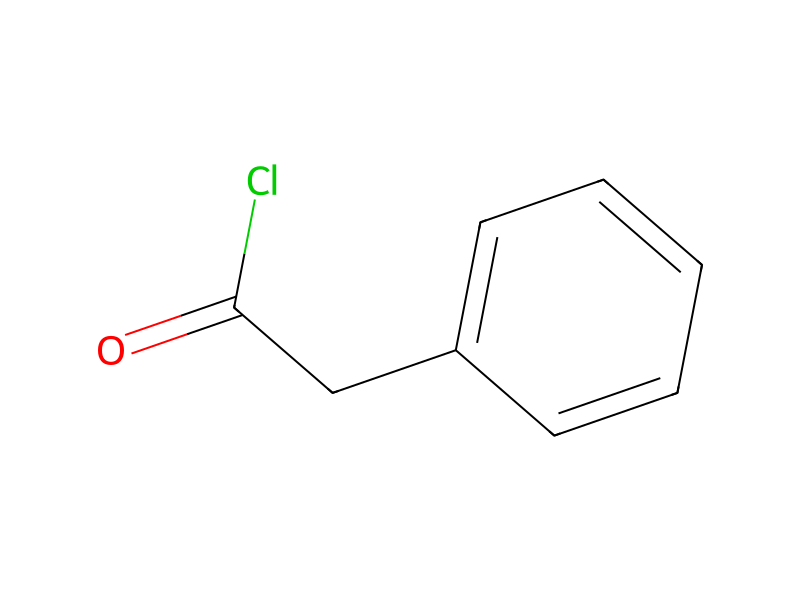
Phenylacetyl chloride → 4-bromophenyl phenylacetate
Reaction equation

[C:1]1([CH2:7][C:8](Cl)=[O:9])[CH:6]=[CH:5][CH:4]=[CH:3][CH:2]=1.[Br:11][C:12]1[CH:17]=[CH:16][C:15]([OH:18])=[CH:14][CH:13]=1>N1C=CC=CC=1>[C:1]1([CH2:7][C:8]([O:18][C:15]2[CH:16]=[CH:17][C:12]([Br:11])=[CH:13][CH:14]=2)=[O:9])[CH:6]=[CH:5][CH:4]=[CH:3][CH:2]=1Participants
4
Reactant 2

Product 1

Reagents, catalysts & solvents 1

Procedure
Phenylacetyl chloride (9.4 g) was added dropwise to 4-bromophenol (10 g) in pyridine, and the reaction mixture was stirred at room temperature for 1 hour then evaporated to dryness under reduced pressure. The residue was taken up in ethyl acetate, washed with water, dried over magnesium sulfate, filtered and evaporated under reduced pressure to give 4-bromophenyl phenylacetate.
Workup
- customthen evaporated to dryness under reduced pressure
- washwashed with water
- dry with materialdried over magnesium sulfate
- filtrationfiltered
- customevaporated under reduced pressure
Sources & evidence
- ORD record
- ord-e62b875f07344a7cb60eaca24d96a755
- Source dataset
- uspto-grants-2000_03
- Patent number
- US06034121
Reaction notes
Loading…