Potassium Carbonate → HCID 54162797, compound
Reaction equation

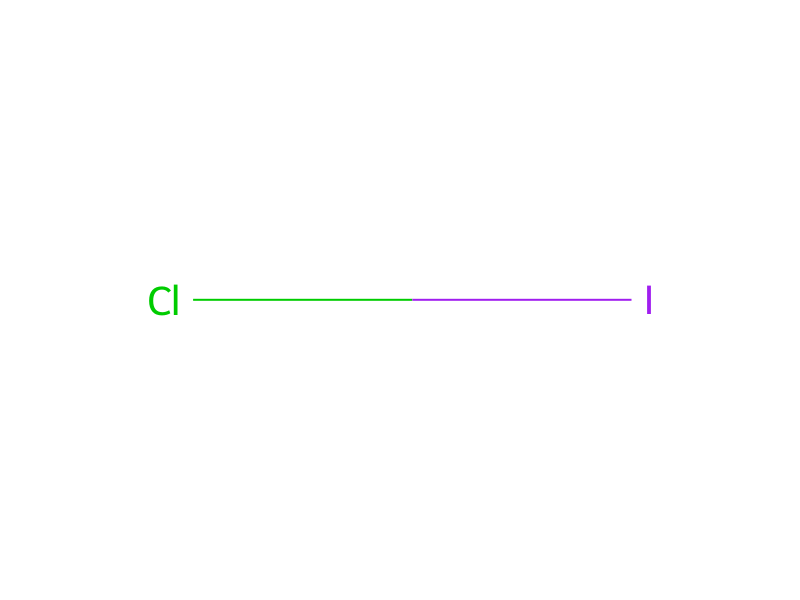
[CH2:1]([O:3][C:4](=[O:24])[CH:5]=[CH:6][C:7]1[C:12]2[O:13][C:14]3[C:19]([Si](C)(C)C)=[CH:18][CH:17]=[CH:16][C:15]=3[C:11]=2[CH:10]=[CH:9][CH:8]=1)[CH3:2].C([O-])([O-])=O.[K+].[K+].[I:31]Cl>C(Cl)(Cl)(Cl)Cl>[CH2:1]([O:3][C:4](=[O:24])[CH:5]=[CH:6][C:7]1[C:12]2[O:13][C:14]3[C:19]([I:31])=[CH:18][CH:17]=[CH:16][C:15]=3[C:11]=2[CH:10]=[CH:9][CH:8]=1)[CH3:2]Participants
Reactant 3


Product 1

Reagents, catalysts & solvents 1

Conditions
- Temperature
- 0 °C
Procedure
A flame-dried, 1 L round-bottomed flask was cooled under Ar and charged with ethyl-6-trimethylsilyl -4-dibenzofuranacrylate (6) (11.37 g, 33.6 mmol), anhydrous K2CO3 (14.22 g, 102.9 mmol), and anhydrous CCl4 (230 mL). The solution was allowed to cool to 0° C. The ICl (5.0 mL, 95.5 mmol) was transferred via a teflon canula to a septum capped graduated cylinder which had been flame-dried under Ar and charged with anhydrous CCl4 (34 mL). The resulting 2.8 M solution was then transferred to the cold reaction flask via the teflon canula. The graduated cylinder and canula were rinsed with an additional 5 mL portion of CCl4. The red wine colored solution was allowed to warm to room temperature and stirred in darkness overnight. The reaction mixture was poured into 500 mL of a 20% Na2S2O3 solution and vigorously stirred. Additional solid Na2S2O3 was added and the mixture was stirred until very pale yellow. The mixture was transferred to a separatory funnel and the layers were separated. The aqueous layer was extracted with CH2Cl2 (3×200 mL). The combined organic layers were washed with 20% Na2S2O3 (3×500 mL), 10% HCl (2×500 mL), 1N NaOH (3×500 mL), and H2O (1×500 mL). The colorless organic layer was then dried over MgSO4 (solution became pale pink) and concentrated in vacuo to give 16.60 g of beige solid. After further drying under high vacuum, the solid was crushed and stirred in a minimal amount of hexanes and ethyl acetate solution (95:5) for 2 hours. This resulted in the removal of the pink color and isolation of a white solid. Drying under high vacuum afforded 12.5 g (95%) of white solid: mp 114-116° C.; 1H NMR (d6-acetone) d 8.15 (dd, Jo=7.7, Jm=1.1, 1H, Ar H8), 8.14 (dd, Jo=7.7, Jm=1.1, 1H, Ar H7), 7.96 (d, J=16.1, 1H, --CHCHCO2Et), 7.95 (d, Jo=7.8, 1H, Ar H9), 7.82 (dt, Jo=7.7, Jp=0.6, 1H, Ar H1), 7.48 (t, Jo=7.6, 1H, Ar H3), 7.25 (t, Jo=7.7, 1H, Ar H2), 7.15 (d, J=16.1, 1H, --CHCHCO2Et), 4.29 (q, J=7.1, 2H, --CO2CH2CH3), 1.34 (t, J=7.1, 3H, --CO2CH2CH3); 13C NMR (d6-acetone) d 167.52, 150.05, 139.50, 137.77, 130.41, 126.59, 126.48, 125.21, 125.03, 124.50, 123.40, 122.41, 121.02, 76.29, 69.67, 61.38, 15.04; MS +FAB (NBA) m/z 393.0001, [M+H]+ calcd for C17H13O3I 392.9988.
Workup
- temperatureA flame-dried, 1 L round-bottomed flask was cooled under Ar
- customcapped
- customhad been flame-dried under Ar
- additioncharged with anhydrous CCl4 (34 mL)
- washThe graduated cylinder and canula were rinsed with an additional 5 mL portion of CCl4
- temperatureto warm to room temperature
- additionThe reaction mixture was poured into 500 mL of a 20% Na2S2O3 solution
- stirringvigorously stirred
- additionAdditional solid Na2S2O3 was added
- stirringthe mixture was stirred until very pale yellow
- customThe mixture was transferred to a separatory funnel
- customthe layers were separated
- extractionThe aqueous layer was extracted with CH2Cl2 (3×200 mL)
- washThe combined organic layers were washed with 20% Na2S2O3 (3×500 mL), 10% HCl (2×500 mL), 1N NaOH (3×500 mL), and H2O (1×500 mL)
- dry with materialThe colorless organic layer was then dried over MgSO4 (solution became pale pink)
- concentrationconcentrated in vacuo
Sources & evidence
- ORD record
- ord-3af2b2c0b2c44f8380919609076d2cf0
- Source dataset
- uspto-grants-2000_03
- Patent number
- US06034211
Reaction notes
Loading…