Benzyl Chloride → HCID 19347933, compound
Reaction equation
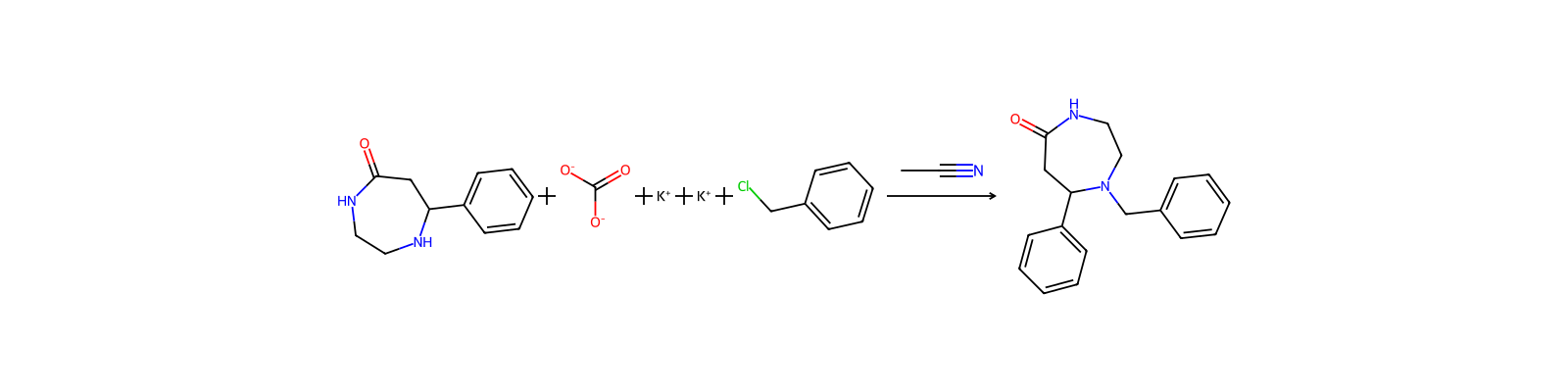
[C:1]1([CH:7]2[NH:13][CH2:12][CH2:11][NH:10][C:9](=[O:14])[CH2:8]2)[CH:6]=[CH:5][CH:4]=[CH:3][CH:2]=1.C(=O)([O-])[O-].[K+].[K+].[CH2:21](Cl)[C:22]1[CH:27]=[CH:26][CH:25]=[CH:24][CH:23]=1>C(#N)C>[CH2:21]([N:13]1[CH:7]([C:1]2[CH:2]=[CH:3][CH:4]=[CH:5][CH:6]=2)[CH2:8][C:9](=[O:14])[NH:10][CH2:11][CH2:12]1)[C:22]1[CH:27]=[CH:26][CH:25]=[CH:24][CH:23]=1Participants
5
Reactant 3



Product 1

Reagents, catalysts & solvents 1

Procedure
1.9 g hexahydro-7-phenyl-1,4-diazepin-5-one (for preparation see Example 1C) in 30 ml acetonitrile were heated to boiling with 2.0 g potassium carbonate and 1.2 g benzyl chloride with reflux cooling for 36 hours. Then filtration was carried out and the filtrate reduced in volume. The remaining residue was shaken with 10% aqueous citric acid solution, the organic phase was separated, dried over magnesium sulfate and reduced in volume under a vacuum. 2.23 g crude 1-benzyl-hexahydro-7-phenyl-1,4-diazepin-5-one were obtained as an oil, which was used for the next synthesis stage without further purification or characterization.
Workup
- temperaturewith reflux
- temperaturecooling for 36 hours
- filtrationThen filtration
- customthe organic phase was separated
- dry with materialdried over magnesium sulfate
Sources & evidence
- ORD record
- ord-6d0163b8cb4649f29ae48e11f811ce12
- Source dataset
- uspto-grants-2000_03
- Patent number
- US06040303
Reaction notes
Loading…