Water → Ethyl 2-(4-methoxybenzamido)-3-oxobutanoate
Reaction equation

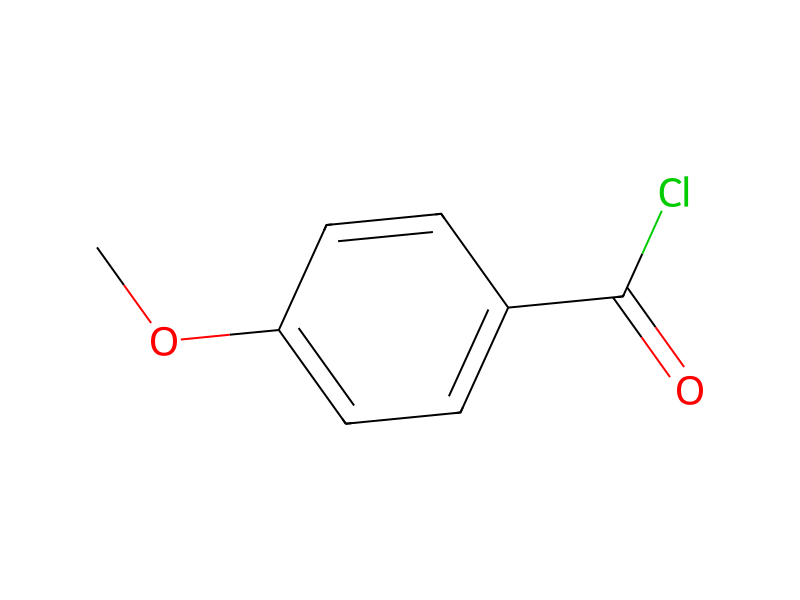
Cl.[NH2:2][CH:3]([C:9](=[O:11])[CH3:10])[C:4]([O:6][CH2:7][CH3:8])=[O:5].C(N(CC)CC)C.[CH3:19][O:20][C:21]1[CH:29]=[CH:28][C:24]([C:25](Cl)=[O:26])=[CH:23][CH:22]=1.O>C(Cl)Cl>[CH3:19][O:20][C:21]1[CH:29]=[CH:28][C:24]([C:25]([NH:2][CH:3]([C:9](=[O:11])[CH3:10])[C:4]([O:6][CH2:7][CH3:8])=[O:5])=[O:26])=[CH:23][CH:22]=1Participants





Procedure
Ethyl 2-amino-3-oxobutanoate hydrochloride (1 g) was suspended in dry methylene chloride (30 ml) and dissolution was effected with addition of triethylamine (1.69 ml). After adding 4-methoxybenzoyl chloride (0.91 ml) dropwise under cooling, the reaction mixture was allowed to warm up to room temperature and to react for 20 minutes. The mixture was treated with water and extracted with methylene chloride. The extract was washed with water, 1N-HCl, 4% aqueous sodium bicarbonate and saturated aqueous NaCl, dried (anhydrous Na2SO4) and concentrated. The residue was dissolved in developing solvent (benzene:ethyl acetate=4:1) and applied on a silica gel column. The first fraction (unpurities) was discarded and the following fraction was pooled and concentrated to give ethyl 2-(4-methoxybenzamido)-3-oxobutanoate (1.28 g, 83%) as white solid, m.p. 67°-69° C.
Workup
- dissolutiondissolution
- temperatureunder cooling
- customto react for 20 minutes
- extractionextracted with methylene chloride
- washThe extract was washed with water, 1N-HCl, 4% aqueous sodium bicarbonate and saturated aqueous NaCl
- dry with materialdried (anhydrous Na2SO4)
- concentrationconcentrated
- dissolutionThe residue was dissolved
- concentrationconcentrated
Sources & evidence
- ORD record
- ord-6f7b2b0bb0a44d4aab9e461e9e5e43fe
- Source dataset
- uspto-grants-1989_11
- Patent number
- US04879295
Reaction notes
Loading…