Hydrogen Bromide → HCID 70376230, compound
Reaction equation

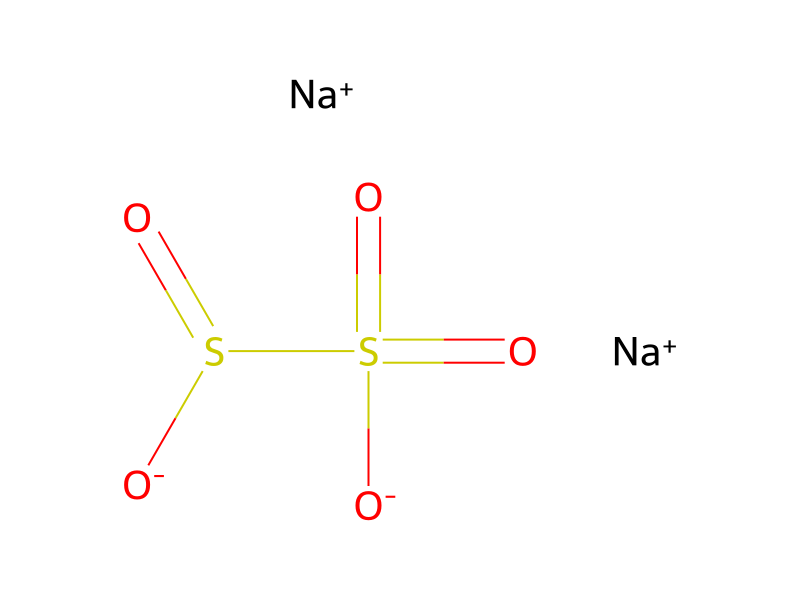
C[O:2][C:3](=[O:20])[C@H:4]([CH2:9][C:10]1[C:15]([CH3:16])=[CH:14][C:13]([O:17]C)=[CH:12][C:11]=1[CH3:19])[NH:5]C(=O)C.S(S([O-])=O)([O-])(=O)=O.[Na+].[Na+].[BrH:30]>C(O)(=O)C>[BrH:30].[CH3:16][C:15]1[CH:14]=[C:13]([OH:17])[CH:12]=[C:11]([CH3:19])[C:10]=1[CH2:9][C@@H:4]([C:3]([OH:20])=[O:2])[NH2:5]Participants
Reactant 3


Product 1

Reagents, catalysts & solvents 1

Procedure
2,6-Dimethyl-(S)-tyrosine hydrobromide was prepared by deprotecting N-acetyl-2,6-dimethyl-O-methyl-(S)-tyrosine methyl ester as follows: In a 100 ml round-bottom flask were placed 18.56 g (66 mmol) of N-acetyl-2,6dimethyl-O-methyl-(S)-tyrosine methyl ester, 0.63 g (3.3 mmol) sodium metabisulfite, 43 ml 48% hydrobromide acid and 21 ml acetic acid. After flushing with nitrogen, the flask was immersed in an oil bath at 120° C. and maintained there for 15 hours. After cooling, the volatiles were removed under reduced pressure at 100° C. to afford a tan solid of the desired product, contaminated with sodium metabisulfite. A sample was derivatized with Marfey's reagent and shown by HPLC analysis to be a 99.7/0.3 mixture of S and R isomers, respectively. 1H NMR analysis indicated: (δ, CD3OD) 6.55 (s, 2H), 4.07 (br t, J=7.5 Hz, 1H), 3.32 (dd, J=7.5 and 14.1 Hz, 1H), 3.15 (dd, J= 7.5 and 14.1 Hz, 1H) and 2.31 (s, 6H). Mass spectrum analysis indicated: 209 (M+), 135 (100%) and 91.
Workup
- customIn a 100 ml round-bottom flask were placed
- customAfter flushing with nitrogen
- customthe flask was immersed in an oil bath at 120° C.
- temperaturemaintained there for 15 hours
- temperatureAfter cooling
- customthe volatiles were removed under reduced pressure at 100° C.
Sources & evidence
- ORD record
- ord-bf6cc9d23102445c93229beed149bd29
- Source dataset
- uspto-grants-1989_11
- Patent number
- US04879398
Reaction notes
Loading…