Dichloromethane → Methyl 2-(4-acetylphenoxy)propanoate
Reaction equation

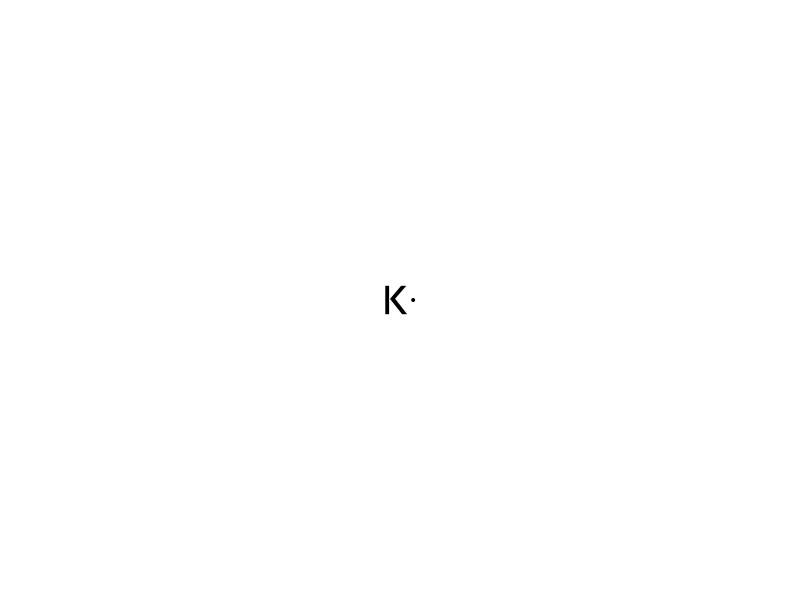
[K].[CH3:2][C:3]([C:5]1[CH:6]=[CH:7][C:8]([OH:11])=[CH:9][CH:10]=1)=[O:4].Br[CH:13]([CH3:18])[C:14]([O:16][CH3:17])=[O:15].C(Cl)Cl>CN(C)C=O.O>[C:3]([C:5]1[CH:10]=[CH:9][C:8]([O:11][CH:13]([CH3:18])[C:14]([O:16][CH3:17])=[O:15])=[CH:7][CH:6]=1)(=[O:4])[CH3:2]Participants






Procedure
To a solution of the potassium salt of 4-hydroxyacetophenone (8.8 g, 0.05 mol) in dimethylformamide (25 mL) is added methyl 2-bromopropanoate (10.2 g, 0.06 mol) over 30 minutes and stirred at 80°-90° C. for 4 hours under nitrogen. The reaction is cooled to room temperature and methylene chloride (75 mL) and water (75 mL) are added. The organic phase is separated, washed with water (100 mL), dried and concentrated to give methyl 2-(4-acetylphenoxy)propanoate (8.5 g) (yield 76%). Methyl 2-(4-acetylphenoxy)propanoate (7.0 g, 31.5 mmol) is combined with 2N NaOH (20 mL) and refluxed overnight. Water (30 mL) is added to the reaction which is then washed with methylene chloride (50 mL). It is then acidified to pH=1 with concentrated hydrochloric acid and extracted with ethyl acetate (3×100 mL). The organic phase is dried and concentrated to provide 2-(4-acetylphenoxy)propanoic acid (5.0 g) (yield 92%): m.p. 104.3° C., IR (KBr) 3000 (br, vs), 2940 (br,s), 1754 (vs), 1650 (vs); 1H NMR (CDCl3) delta 1.69 (d, J=6.8 Hz, 3H), 2.55 (s, 3H), 4.8 (q, J=6.8 Hz, 1H), 6.92 and 7.93 (dd, J=9.0 Hz, 4H).
Workup
- customThe organic phase is separated
- washwashed with water (100 mL)
- customdried
- concentrationconcentrated
Sources & evidence
- ORD record
- ord-59c5936d097e4e9cb24cb94d2d77e1fc
- Source dataset
- uspto-grants-1989_11
- Patent number
- US04883901
Reaction notes
Loading…