Pivalaldehyde → HCID 57831005, compound
Reaction equation

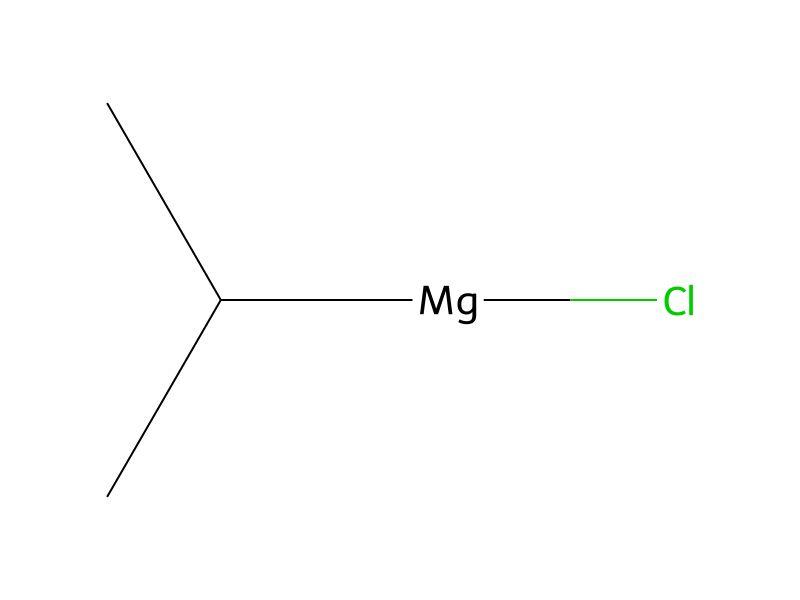
[Cl:1][C:2]1[N:3]=[C:4]2[C:10](I)=[CH:9][N:8]([Si:12]([CH:19]([CH3:21])[CH3:20])([CH:16]([CH3:18])[CH3:17])[CH:13]([CH3:15])[CH3:14])[C:5]2=[N:6][CH:7]=1.C([Mg]Cl)(C)C.[Cl-].[Li+].[CH3:29][C:30]([CH:33]=[O:34])([CH3:32])[CH3:31]>O1CCCC1>[Cl:1][C:2]1[N:3]=[C:4]2[C:10]([CH:33]([OH:34])[C:30]([CH3:32])([CH3:31])[CH3:29])=[CH:9][N:8]([Si:12]([CH:19]([CH3:21])[CH3:20])([CH:16]([CH3:18])[CH3:17])[CH:13]([CH3:15])[CH3:14])[C:5]2=[N:6][CH:7]=1Participants
Reactant 4



Product 1

Reagents, catalysts & solvents 1

Conditions
- Temperature
- -78 °C
Procedure
2-Chloro-7-iodo-5-triisopropylsilanyl-5H-pyrrolo[2,3-b]pyrazine (0.56 g, 1.28 mmol) was dissolved in 10 mL of dry tetrahydrofuran and stirred under argon with cooling to −78° C. A solution of isopropylmagnesium chloride with lithium chloride (3 mL, 1M, 3 mmol) was added via syringe. After 10 m, neat pivaldehyde (0.325 mL, 3 mmol, distilled) was added all at once. After 1 h at −78° C., the reaction was quenched by the addition of saturated aqueous ammonium chloride, then diluted with ethyl acetate and allowed to warm to ambient temperature. The organic layer was then washed successively with saturated aqueous sodium bicarbonate and brine. After drying over magnesium sulfate, the solution was filtered and solvent removed, and carried directly into the next step.
Workup
- customthe reaction was quenched by the addition of saturated aqueous ammonium chloride
- additiondiluted with ethyl acetate
- temperatureto warm to ambient temperature
- washThe organic layer was then washed successively with saturated aqueous sodium bicarbonate and brine
- dry with materialAfter drying over magnesium sulfate
- filtrationthe solution was filtered
- customsolvent removed
Sources & evidence
- ORD record
- ord-b98187823657477fb961a75e19c0413f
- Source dataset
- uspto-grants-2012_02
- Patent number
- US08119636B2
Reaction notes
Loading…