Pyridine → HCID 57551242, compound
Reaction equation

[Br:1][C:2]1[C:7]([F:8])=[CH:6][C:5]([S:9](Cl)(=[O:11])=[O:10])=[C:4]([F:13])[CH:3]=1.[NH2:14][C:15]1[S:16][CH:17]=[CH:18][N:19]=1.N1C=CC=CC=1>>[Br:1][C:2]1[C:7]([F:8])=[CH:6][C:5]([S:9]([NH:14][C:15]2[S:16][CH:17]=[CH:18][N:19]=2)(=[O:11])=[O:10])=[C:4]([F:13])[CH:3]=1Participants

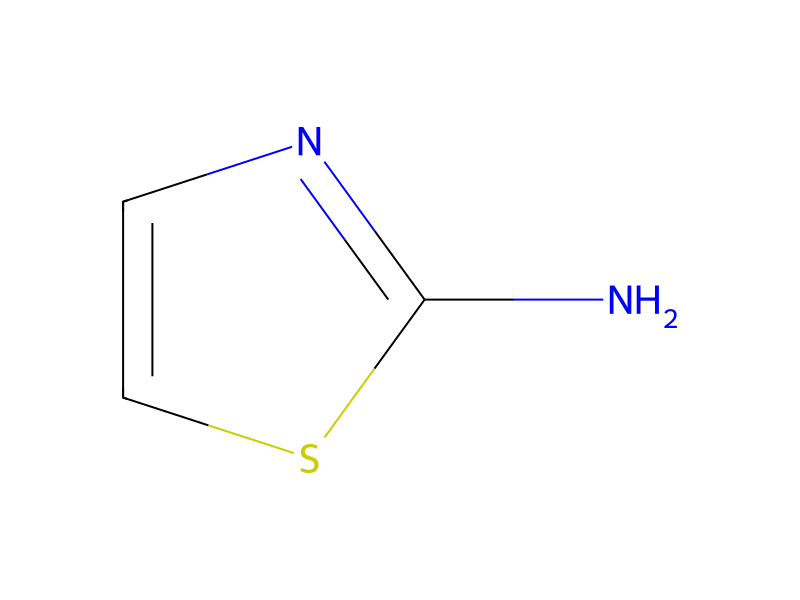


Procedure
4-BROMO-2,5-DIFLUOROBENZENESULFONYL CHLORIDE (10.0 g, 0.0345 mol) and 2-AMINOTHIAZOLE (3.80 g, 0.0379 mol) were mixed in Pyridine (40 mL, 0.5 mol). The reaction was allowed to stir at room temperature for 9 days. The reaction was concentrated in vacuo to a total volume of approximately 40 mL. The residue was triturated with 1N HCl (aq). Acetonitrile was added until the precipitate became free-flowing. The solid was collected by filtration and rinsed with acetonitrile then ethyl ether. The solid was dissolved in boiling acetonitrile and treated with activated carbon then filtered through a celite pad. The filtrate was reduced to ⅓ its original volume by distillation. The mixture was cooled to room temperature. The crystals were collected by filtration and rinsed with ethyl ether. Vacuum drying gave 2.66 g of off-white solid.
Workup
- concentrationThe reaction was concentrated in vacuo to a total volume of approximately 40 mL
- customThe residue was triturated with 1N HCl (aq)
- additionAcetonitrile was added until the precipitate
- filtrationThe solid was collected by filtration
- washrinsed with acetonitrile
- dissolutionThe solid was dissolved
- additiontreated with activated carbon
- filtrationthen filtered through a celite pad
- distillationby distillation
- temperatureThe mixture was cooled to room temperature
- filtrationThe crystals were collected by filtration
- washrinsed with ethyl ether
- customVacuum drying
Sources & evidence
- ORD record
- ord-f22fbf17ea85438fb1f96842044fd864
- Source dataset
- uspto-grants-2012_02
- Patent number
- US08124610B2
Reaction notes
Loading…