4-Toluenesulfonyl chloride → 1-Tosyl-1H-indole-4-carbaldehyde
Reaction equation

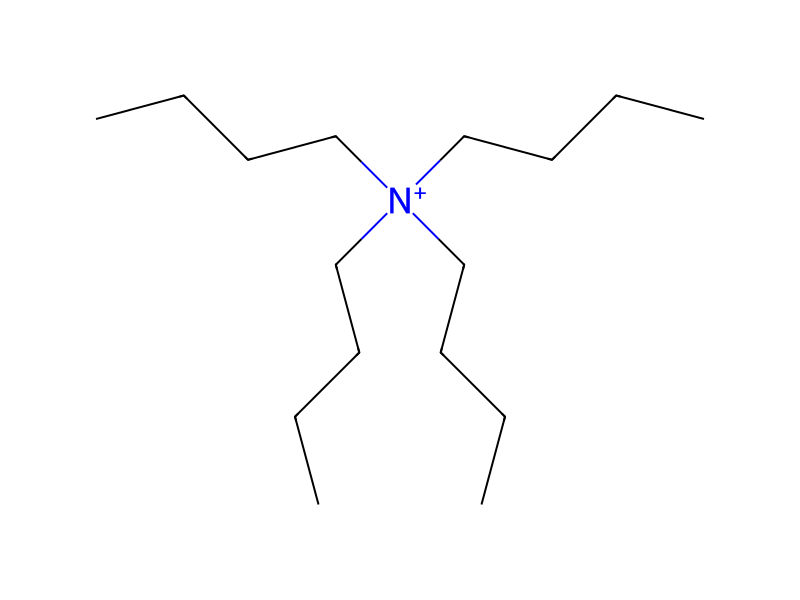
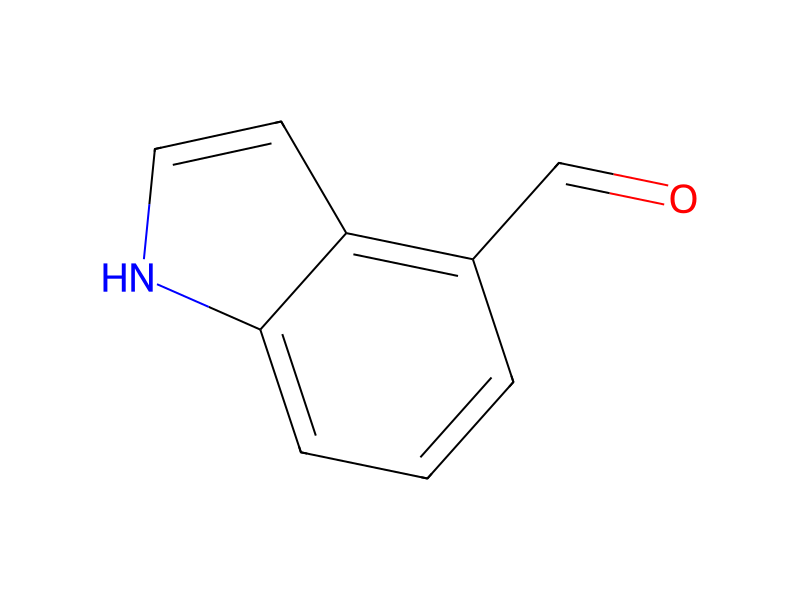
[OH-].[Na+].C([N+](CCCC)(CCCC)CCCC)CCC.[C:20]1([CH3:30])[CH:25]=[CH:24][C:23]([S:26](Cl)(=[O:28])=[O:27])=[CH:22][CH:21]=1.[NH:31]1[C:39]2[CH:38]=[CH:37][CH:36]=[C:35]([CH:40]=[O:41])[C:34]=2[CH:33]=[CH:32]1>C1C=CC=CC=1>[CH3:30][C:20]1[CH:25]=[CH:24][C:23]([S:26]([N:31]2[C:39]3[CH:38]=[CH:37][CH:36]=[C:35]([CH:40]=[O:41])[C:34]=3[CH:33]=[CH:32]2)(=[O:28])=[O:27])=[CH:22][CH:21]=1Participants
6
Reactant 4


Product 1

Reagents, catalysts & solvents 1

Procedure
150 ml of 50% sodium hydroxide, 4.75 g of tetrabutylammonium hydrogenosulfate and 30.24 g of p-toluene sulfonyl chloride were added to a suspension of 20 g of indole 4carboxaldehyde in 600 m1 of benzene and the mixture was stirred or 90 minutes at ambient temperature. After decanting and extracting with benzene, the extracts were washed with water, dried and evaporated to dryness under reduced pressure. The 42.1 g of residue were dissolved in 210 ml of benzene at reflux, and the solution was allowed to cool to ambient temperature over 16 hours, then separated to obtain 23.96 g of the desired product melting at 144 to 146° C. The product was used as is for the following step.
Workup
- customAfter decanting
- extractionextracting with benzene
- washthe extracts were washed with water
- customdried
- customevaporated to dryness under reduced pressure
- dissolutionThe 42.1 g of residue were dissolved in 210 ml of benzene
- temperatureat reflux
- temperatureto cool to ambient temperature over 16 hours
- customseparated
Sources & evidence
- ORD record
- ord-deb4cfc759874f8fbdb7d8ff87c443c5
- Source dataset
- uspto-grants-1993_01
- Patent number
- US05182282
Reaction notes
Loading…