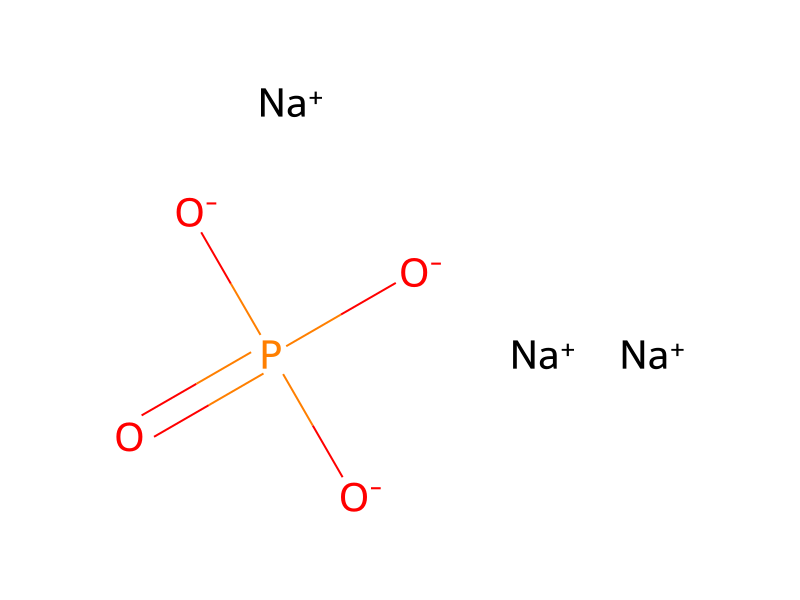
Trisodium Phosphate → HCID 10913907, compound
Reaction equation

[Cl-].[CH3:2][O:3][C:4]1[CH:21]=[CH:20][C:7]([CH2:8][N+:9]2[CH:14]=[CH:13][CH:12]=[CH:11][C:10]=2[CH:15]2OCCO2)=[CH:6][CH:5]=1.P([O-])([O-])([O-])=O.[Na+].[Na+].[Na+].[Cl:30]([O-:34])(=[O:33])(=[O:32])=[O:31].[Li+]>>[Cl:30]([O-:34])(=[O:33])(=[O:32])=[O:31].[CH3:2][O:3][C:4]1[CH:5]=[CH:6][C:7]2[C:20]([CH:21]=1)=[CH:15][C:10]1[CH:11]=[CH:12][CH:13]=[CH:14][N+:9]=1[CH:8]=2Participants
4


Procedure
A mixture of 1-(4-methoxybenzyl)-2-(1,3-dioxolan-2-yl)pyridinium chloride (15 g, 0.049 mol) in 300 g of polyphosphoric acid was allowed to react at 120° C. for 3 hours. The reaction mixture was poured onto ice with stirring. The mixture was neutralized with dibasic sodium phosphate and an aqueous solution of lithium perchlorate (1.1 equiv.) was added. The precipitated solid was filtered and dried to yield 9-methoxybenzo[b]quinolizinium perchlorate (Formula II: R2 =OCH3 ; R1 =H; X- =ClO4-), as a yellow solid.
Workup
- customto react at 120° C. for 3 hours
- additionThe reaction mixture was poured onto ice
- filtrationThe precipitated solid was filtered
- customdried
Sources & evidence
- ORD record
- ord-046044e3ffae4f188c3bd27a8352c77a
- Source dataset
- uspto-grants-1995_07
- Patent number
- US05430036
Reaction notes
Loading…