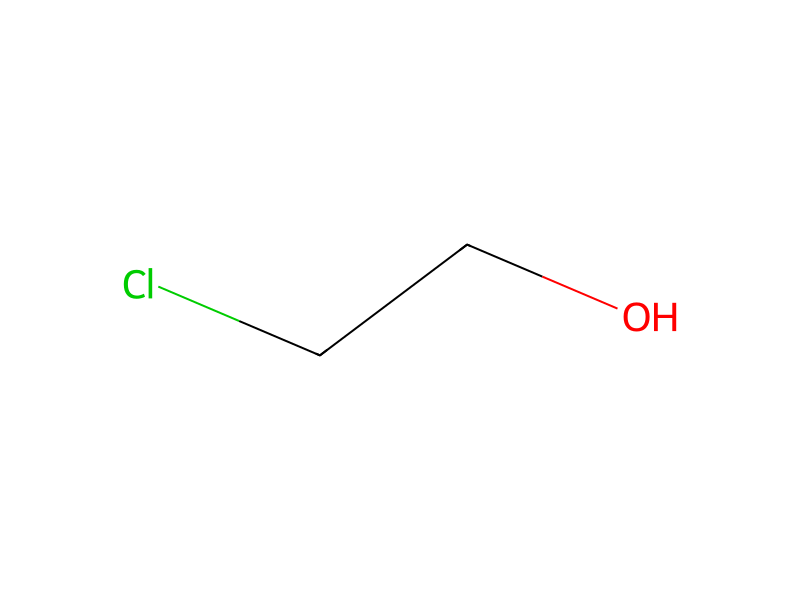
2-Chloroethanol → HCID 11740619, compound
Reaction equation

[C:1]([C:6]1[CH:7]=[N:8][C:9]2[C:14]([C:15]=1[NH:16][C:17]1[CH:22]=[CH:21][C:20]([F:23])=[CH:19][C:18]=1[CH3:24])=[CH:13][CH:12]=[CH:11][C:10]=2[OH:25])(=[O:5])[CH2:2][CH2:3][CH3:4].[CH3:26][C:27](C)([O-:29])C.[K+].ClCCO>O1CCCC1>[C:1]([C:6]1[CH:7]=[N:8][C:9]2[C:14]([C:15]=1[NH:16][C:17]1[CH:22]=[CH:21][C:20]([F:23])=[CH:19][C:18]=1[CH3:24])=[CH:13][CH:12]=[CH:11][C:10]=2[O:25][CH2:26][CH2:27][OH:29])(=[O:5])[CH2:2][CH2:3][CH3:4]Participants
5
Reactant 3


Product 1

Reagents, catalysts & solvents 1

Procedure
A solution of 3-butyryl-4-(4-fluoro-2-methylphenyl-amino)-8-hydroxyquinoline (3.2 g, 9.4 mmol) and potassium t-butoxide (1.83 g, 15 mmol) in tetrahydrofuran (75 ml) was warmed to reflux, 2-chloroethanol (1.3 ml, 20 mmol) added, and heating continued for 2 days. The solvent was evaporated, the residue taken up in dichloromethane, washed with water and brine, dried and evaporated. Chromatography (silica gel, 5% methanol in dichloromethane) gave initially recovered starting material, followed by product fractions which were recrystallised from ethyl acetate/petroleum ether, then from methanol to give 3-butyryl-4-(4-fluoro-2-methylphenylamino)-8-(2-hydroxyethoxy)quinoline as a hygroscopic solid (0.82 g, 23%), m.p. 130°-133°.
Workup
- temperatureto reflux
- temperatureheating
- customThe solvent was evaporated
- washwashed with water and brine
- customdried
- customevaporated
- customChromatography (silica gel, 5% methanol in dichloromethane) gave initially
- customrecovered
- customwere recrystallised from ethyl acetate/petroleum ether
Sources & evidence
- ORD record
- ord-b12015100a1242738bed7b8ba9a3f32e
- Source dataset
- uspto-grants-1995_07
- Patent number
- US05432182
Reaction notes
Loading…