Formaldehyde → 5-(5-Nitroindol-3-ylmethyl)-2,2-dimethyl-1,3-dioxane4,6-dione
Reaction equation

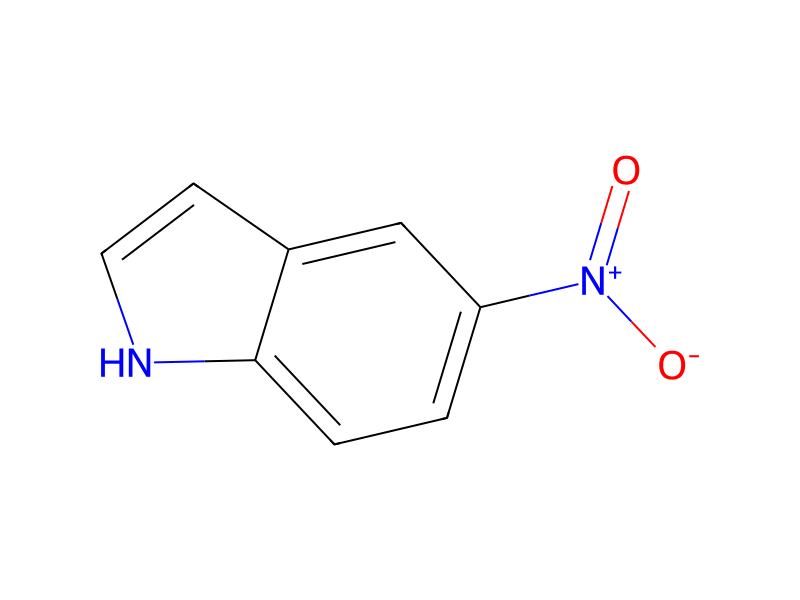
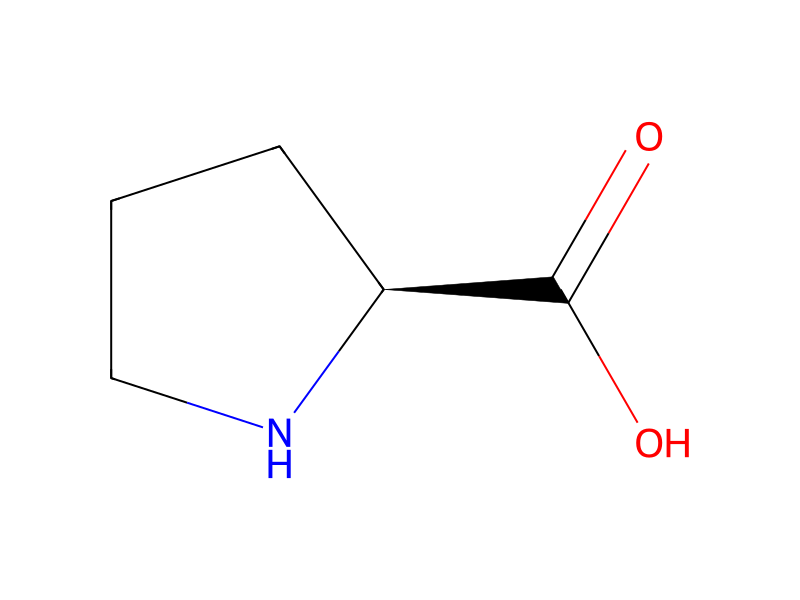
[N+:1]([C:4]1[CH:5]=[C:6]2[C:10](=[CH:11][CH:12]=1)[NH:9][CH:8]=[CH:7]2)([O-:3])=[O:2].[CH3:13][C:14]1([CH3:22])[O:21][C:19](=[O:20])[CH2:18][C:16](=[O:17])[O:15]1.C=O.N1CCC[C@H:26]1C(O)=O>C(#N)C>[N+:1]([C:4]1[CH:5]=[C:6]2[C:10](=[CH:11][CH:12]=1)[NH:9][CH:8]=[C:7]2[CH2:26][CH:18]1[C:19](=[O:20])[O:21][C:14]([CH3:22])([CH3:13])[O:15][C:16]1=[O:17])([O-:3])=[O:2]Participants




Procedure
An adaption of the procedure of Flaugh1 was used. Thus, a solution of 5-nitroindole (50.0 g, 0.31 mol), Meldrum's acid (46.0 g, 0.32 mol), 37% aqueous formaldehyde (26.0 mL, 0.32 mol) and proline (1.8 g, 0,016 mol) in 200 mL of acetonitrile was stirred at room temperature for 18 h. The resulting thick yellow slurry was filtered and the filtercake was washed with acetonitrile, then acetone and finally with ether. This material was dried in vacuo to give the title compound (80.0 g, 81%) as a bright yellow solid, m.p. 182° C. (dec). The mother liquor was concentrated and then diluted with H2O, and the resulting solid was collected and washed and dried as before. This gave a second crop of the product (7.0 g) as a darker yellow solid. Total yield=87.0 g (89%).
Workup
- filtrationThe resulting thick yellow slurry was filtered
- washthe filtercake was washed with acetonitrile
- customThis material was dried in vacuo
Sources & evidence
- ORD record
- ord-af33cdcee8c04c808c2bc21313a031c2
- Source dataset
- uspto-grants-1995_07
- Patent number
- US05434154
Reaction notes
Loading…