Mannitol → 1,2:5,6-Di-O-isopropylidene-D-mannitol
Reaction equation

[CH3:1][C:2]([CH3:4])=[O:3].[CH2:5]([OH:16])[C@H:6]([C@H:8]([C@@H:10]([C@@H:12]([CH2:14]O)[OH:13])[OH:11])[OH:9])[OH:7].[CH2:17](O)[C@H:18]([C@H:20]([C@@H]([C@@H](CO)O)O)O)O>[Cl-].[Zn+2].[Cl-].CC(C)=O>[CH3:1][C:2]1([CH3:4])[O:13][C@@H:12]([C@@H:10]([OH:11])[C@H:8]([OH:9])[C@@H:6]2[O:7][C:18]([CH3:20])([CH3:17])[O:16][CH2:5]2)[CH2:14][O:3]1Participants
5
Reactant 2
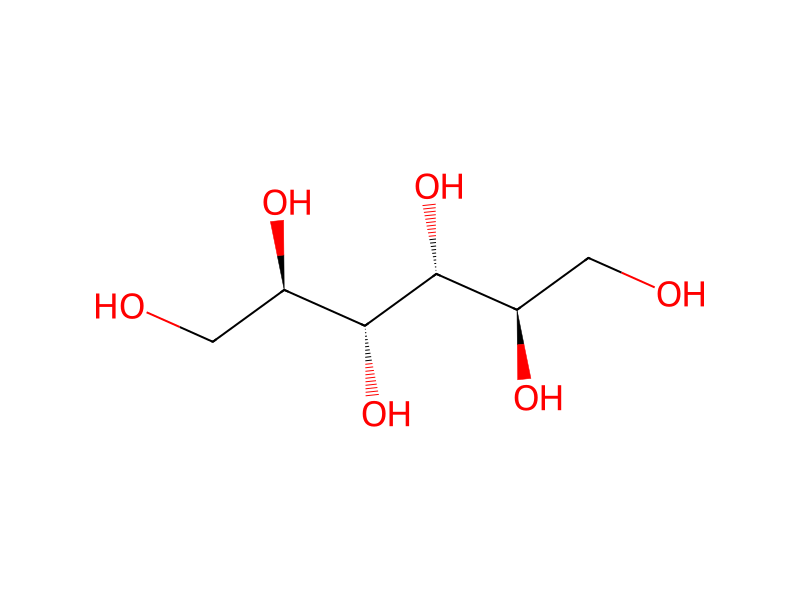

Product 1

Reagents, catalysts & solvents 2


Procedure
In the preparation of the diketonide deriving from D-mannitol acetone is the ketone which is preferentially used. Then, the 1,2,5,6-diacetone D-mannitol is prepared by reacting acetone, to which solid zinc chloride has been added, with D-mannitol with stirring within a temperature range of from 0° C. to +50° C.
Workup
- customIn the preparation of the diketonide
Sources & evidence
- ORD record
- ord-d50c5cfb9ad14af39c5720aa3c0be4ce
- Source dataset
- uspto-grants-1983_11
- Patent number
- US04413142
Reaction notes
Loading…