Trifluoroacetic acid → 4-Fluoro-1,2-dimethoxybenzene
Reaction equation

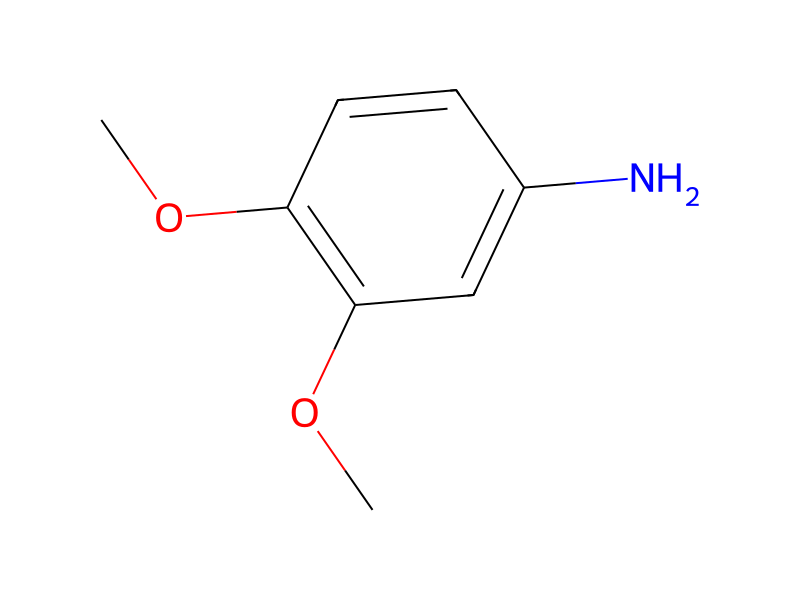
[CH3:1][O:2][C:3]1[CH:4]=[C:5]([CH:7]=[CH:8][C:9]=1[O:10][CH3:11])[NH2:6].[F:12][C:13](F)(F)[C:14]([OH:16])=[O:15]>>[F:12][C:5]1[CH:7]=[CH:8][C:9]([O:10][CH3:11])=[C:3]([O:2][CH3:1])[CH:4]=1.[N:6]1[CH:3]=[CH:9][CH:8]=[CH:7][C:5]=1[O:16][C:14](=[O:15])[C:13]1[CH:5]=[CH:4][CH:3]=[CH:9][CH:8]=1Participants



Procedure
Six bomb tubes, each containing 4.8 g (30.0 mmol) of 4-fluoro-1,2-dimethoxybenzene (obtained from 3,4-dimethoxyaniline by a Balz-Schiemann reaction), 7.5 g (37.5 mmol) of (2-pyridinyl)-benzoate and 300 ml of trifluoroacetic acid, are heated at 100° for 41/2 hours while stirring magnetically. The contents of all six bomb tubes is poured into 600 ml of water while stirring vigorously and the solid substance that separates out is filtered with suction. The filtrate is extracted several times with toluene. The solid substance is dissolved in the combined toluene extracts. The toluene solution is washed with water and saturated sodium chloride solution, dried over magnesium sulphate and concentrated to dryness by evaporation. The resulting semi-solid oil is dissolved in 500 ml of warm isopropanol and treated with carbon. The filtered solution is concentrated in vacuo until crystallisation begins. After complete crystallisation, the (4,5-dimethoxy-2-fluorophenyl)-phenylmethanone is filtered with suction and washed with cold isopropanol, yielding white crystals having a melting point of 102°-104°.
Sources & evidence
- ORD record
- ord-6c1b39e56f3f4be7abbed4eafb91f7c9
- Source dataset
- uspto-grants-1983_11
- Patent number
- US04414214
Reaction notes
Loading…