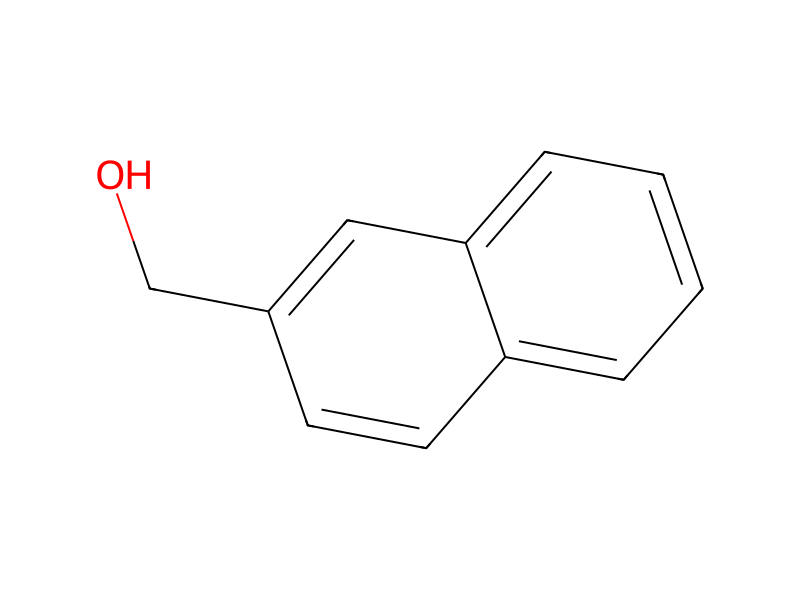
2-Naphthalenemethanol → 5-Fluoro-3-(naphth-2-ylmethoxy)bromobenzene
Reaction equation

[CH:1]1[C:10]2[C:5](=[CH:6][CH:7]=[CH:8][CH:9]=2)[CH:4]=[CH:3][C:2]=1[CH2:11][OH:12].[Br:13][C:14]1[CH:19]=[C:18]([F:20])[CH:17]=[C:16](F)[CH:15]=1>>[F:20][C:18]1[CH:17]=[C:16]([O:12][CH2:11][C:2]2[CH:3]=[CH:4][C:5]3[C:10](=[CH:9][CH:8]=[CH:7][CH:6]=3)[CH:1]=2)[CH:15]=[C:14]([Br:13])[CH:19]=1Participants
3


Procedure
Using the procedure described in the first paragraph of the portion of Example 3 which is concerned with the preparation of starting materials, 2-naphthalenemethanol was reacted with 1-bromo-3,5-difluorobenzene to give 5-fluoro-3-(naphth-2-ylmethoxy)bromobenzene (92%), m.p. 65°-67° C.
Sources & evidence
- ORD record
- ord-f19f9733aba84d49a5819fbe6a086129
- Source dataset
- uspto-grants-1995_04
- Patent number
- US05403859
Reaction notes
Loading…