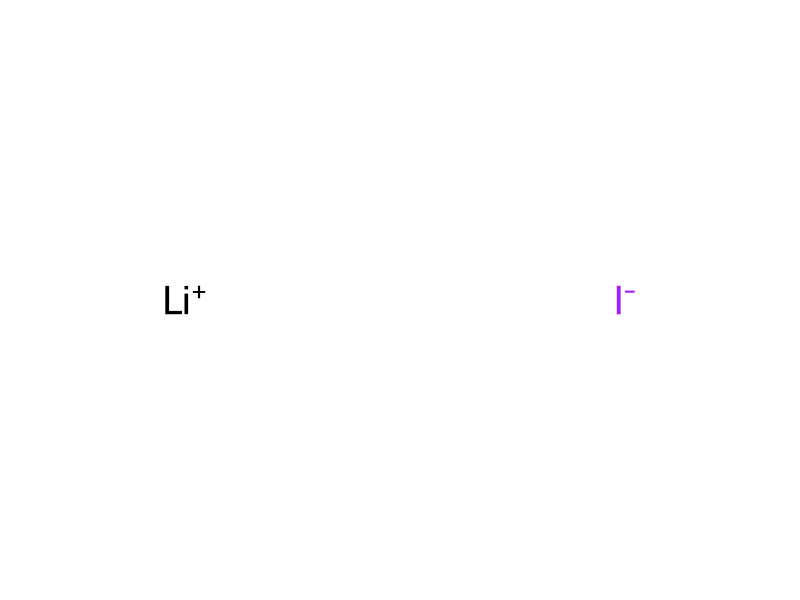
Lithium iodide → HCID 10335553, compound
Reaction equation

[CH3:1][O:2][CH:3]([O:22][CH3:23])[CH2:4][N:5]1[C:10](=[O:11])[C:9]([C:12]([O:14]CC)=[O:13])=[CH:8][N:7]=[C:6]1[C:17]1[S:18][CH:19]=[CH:20][CH:21]=1.[I-].[Li+]>N1C=CC=CC=1>[CH3:23][O:22][CH:3]([O:2][CH3:1])[CH2:4][N:5]1[C:10](=[O:11])[C:9]([C:12]([OH:14])=[O:13])=[CH:8][N:7]=[C:6]1[C:17]1[S:18][CH:19]=[CH:20][CH:21]=1Participants
4
Reactant 2

Product 1

Reagents, catalysts & solvents 1

Conditions
- Temperature
- 110 °C
Procedure
To a solution of ethyl 1-(2,2-dimethoxyethyl)-2-(2-thienyl)pyrimidin-6(1H)-one-5-carboxylate in pyridine (33 mL) was added lithium iodide (3.32 g) and the resulting mixture was heated at 110° C. overnight. The pyridine was evaporated and residual traces of pyridine were removed by evaporation with toluene. The residue was dissolved in 1N hydrochloric acid and the product was extracted into ethyl acetate. The solution was dried and evaporated to give an oil which crystallized from ether to provide 1-(2,2-dimethoxyethyl)-2-(2-thienyl)pyrimidin-6(1H)-one-5-carboxylic acid as a brown solid; MS: m/z=311(M+1).
Workup
- customThe pyridine was evaporated
- customresidual traces of pyridine were removed by evaporation with toluene
- dissolutionThe residue was dissolved in 1N hydrochloric acid
- extractionthe product was extracted into ethyl acetate
- customThe solution was dried
- customevaporated
- customto give an oil which
- customcrystallized from ether
Sources & evidence
- ORD record
- ord-6593a990467144d48324962d517610c1
- Source dataset
- uspto-grants-1993_10
- Patent number
- US05254558
Reaction notes
Loading…