Dicyclohexylcarbodiimide → HCID 19788722, compound
Reaction equation

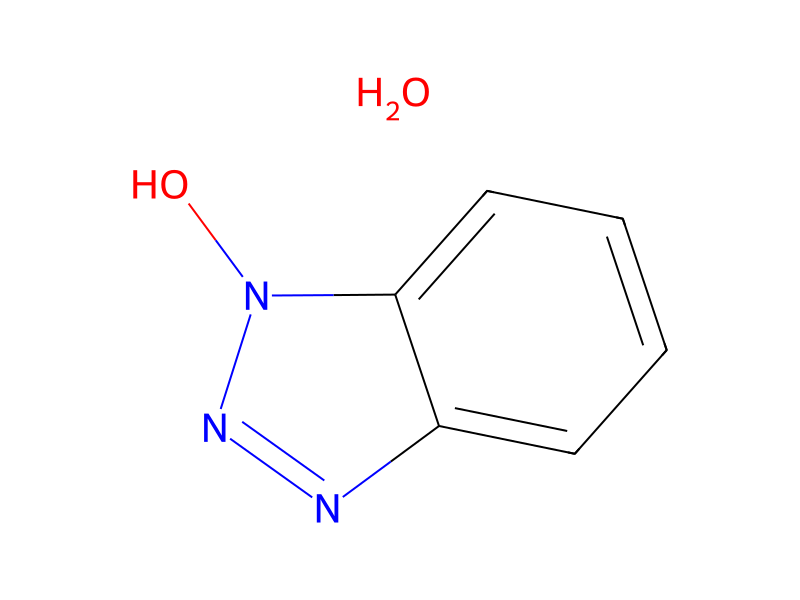
[CH3:1][S:2]([NH:5][C:6]1[CH:14]=[CH:13][C:9]([C:10]([OH:12])=O)=[CH:8][CH:7]=1)(=[O:4])=[O:3].O.ON1C2C=CC=CC=2N=N1.C1(N=C=NC2CCCCC2)CCCCC1.[CH3:41][C:42]1[N:47]=[C:46]([CH2:48][CH2:49][N:50]2[CH2:55][CH2:54][NH:53][CH2:52][CH2:51]2)[CH:45]=[CH:44][CH:43]=1>CN(C=O)C>[CH3:41][C:42]1[N:47]=[C:46]([CH2:48][CH2:49][N:50]2[CH2:55][CH2:54][N:53]([C:10](=[O:12])[C:9]3[CH:8]=[CH:7][C:6]([NH:5][S:2]([CH3:1])(=[O:3])=[O:4])=[CH:14][CH:13]=3)[CH2:52][CH2:51]2)[CH:45]=[CH:44][CH:43]=1Participants





Procedure
4-(Methylsulfonylamino) benzoic acid (2.16 g, 10.05 mmol) was added to a stirring solution of 1-hydroxybenzotriazole hydrate (1.36 g, 10.05 mmol) and dicyclohexylcarbodiimide (2.08 g 10.05 mmol) in DMF (30 mL) at 25° C. under nitrogen. After 45 minutes, 1-[2-(6-methyl-2-pyridyl)ethyl]piperazine (2.27 g, 11.05 mmol) was added as a suspension in DMF (15 mL). The resulting mixture was stirred at room temperature overnight. The work-up was performed as disclosed in Example 5 to give 2.94 g (73%) of the title compound which was treated with ethanolic HCl to afford 2.15 g of product as a dihydrochloride: mp 165°-167° C.; 1H NMR (DMSO-d6): δ 10.14 (s, 1H), 8.19 (m, 1H), 7.63 (m, 2H), 7.45 (d, J=8.72 Hz, 2H), 7.25 (d, J=8.71 Hz, 2H), 3.85-3.20 (m, 12H), 3.06 (s, 3H), 2.67 (s, 3H); IR (KBr): 3420, 3000, 2560, 1640 cm-1 ; MS (m/z) 403 (MH+, 25%) 217 (30), 91 (100).
Sources & evidence
- ORD record
- ord-2b236c55a84a45589a106111a2f4a188
- Source dataset
- uspto-grants-1993_10
- Patent number
- US05254689
Reaction notes
Loading…