Formaldehyde → HCID 86747326, compound
Reaction equation

[Cl:1][C:2]1[N:7]=[CH:6][C:5]([CH2:8][N:9]2[CH2:13][CH2:12][NH:11][C:10]2=[CH:14][N+:15]([O-:17])=[O:16])=[CH:4][CH:3]=1.[CH2:18]=O.[C:20]([O:24][CH2:25][CH3:26])(=[O:23])[CH2:21][SH:22]>C(O)C>[Cl:1][C:2]1[N:7]=[CH:6][C:5]([CH2:8][N:9]2[CH2:13][CH2:12][NH:11][C:10]2=[C:14]([N+:15]([O-:17])=[O:16])[CH2:18][S:22][CH2:21][C:20]([O:24][CH2:25][CH3:26])=[O:23])=[CH:4][CH:3]=1Participants
Reactant 3

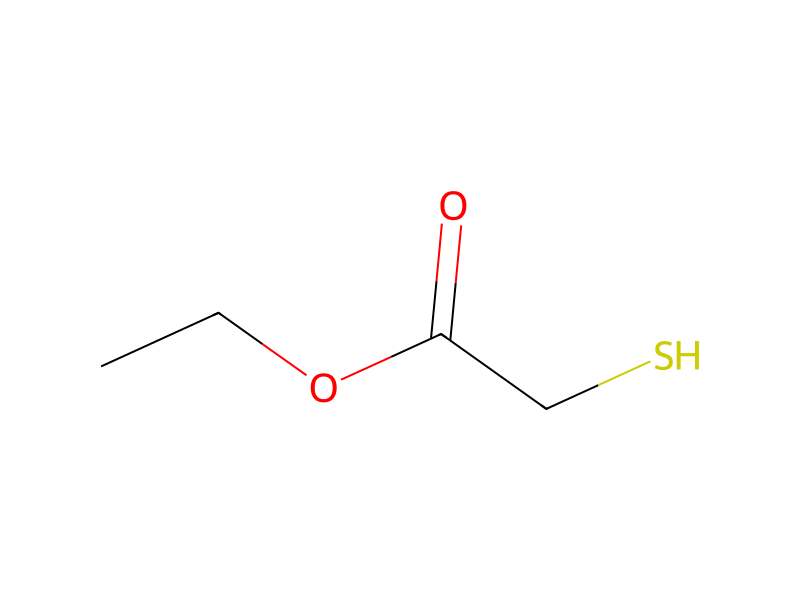

Product 1

Reagents, catalysts & solvents 1

Procedure
0.22 g of 1-(6-chloro-3-pyridylmethyl)-2-nitromethyleneimidazolidine, 0.08 g of 37% formaldehyde aqueous solution and 0.1 g of ethyl thioglycolate were added to 5 ml of ethanol, and were reacted under reflux for 3 hours. After completing the reaction, ethanol was distilled off under reduced pressure, and a small amount of ethyl acetate was added to the residue thus obtained to filter the insoluble materials out, thus obtaining 0.25 g of the aimed product (Compound No. 1) having a melting point of from 122.8° to 124.3° C. wherein i is 1, can be obtained, and when the oxidizing agent is used in a molar amount of two times as large as the compound having the formula (I-1), the compound having the formula (I-2) wherein i is 2, can be obtained. (iii) When Z is an alkyl group or an acyl group: ##STR13## (wherein X, Y and j are as defined above; Z' is an alkyl group or an acyl group; and Q is a halogen atom or an acid residue).
Workup
- customwere reacted
- temperatureunder reflux for 3 hours
- distillationwas distilled off under reduced pressure
- additiona small amount of ethyl acetate was added to the residue
- customthus obtained
- filtrationto filter the insoluble materials out,
Sources & evidence
- ORD record
- ord-ff89ebdd9dc34b84ba9a548dc75bf7ee
- Source dataset
- uspto-grants-1993_10
- Patent number
- US05256674
Reaction notes
Loading…