Oxalic Acid → 3-Methylindole-1-acetaldehyde
Reaction equation

[CH3:1][C:2]1[C:10]2[C:5](=[CH:6][CH:7]=[CH:8][CH:9]=2)[N:4]([CH2:11][CH2:12][OH:13])[CH:3]=1.FC(F)(F)C(O)=O.N1C=CC=CC=1.C(O)(=O)C(O)=O>CCOCC.CO.O>[CH3:1][C:2]1[C:10]2[C:5](=[CH:6][CH:7]=[CH:8][CH:9]=2)[N:4]([CH2:11][CH:12]=[O:13])[CH:3]=1Participants
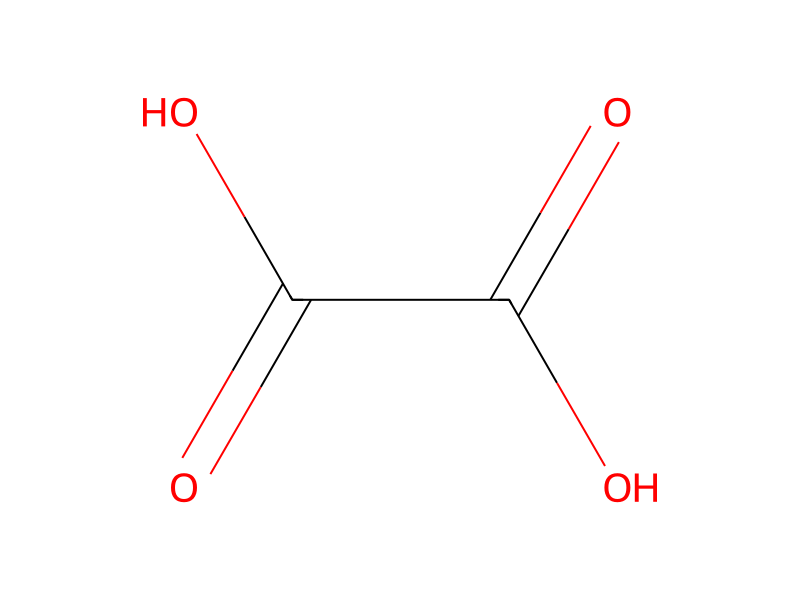






Procedure
N,N-dicyclohexylcarbodiimide (9.0 g) is added to a cooled, stirred solution of 3-methylindole-1-ethanol (3.0 g) in 30 ml of dimethyl sulfoxidebenzene (2:1) containing trifluoroacetic acid (0.6 ml) and pyridine (1.12 ml). The reaction is stirred at room temperature under nitrogen for 5 hours. The reaction mixture is now diluted with 300 ml of ether, followed by the dropwise addition of a solution of oxalic acid (3.78 g) in 11 ml of methanol. After 30 minutes, water (300 ml) is added and the insoluble material is collected. The organic phase is washed with water (2X), 5% aqueous sodium bicarbonate (2X) and water (2X). After drying (MgSO4) the organic phase is evaporated to yield 3-methylindole-1-acetaldehyde. The latter compound is then converted to its corresponding gem-dithiol with hydrogen sulfide and reduced with lithium aluminium hydride according to the method of T.L. Cairns et al., J. Amer. Chem. Soc., 74, 3982 (1952), to yield the title compound, γ maxCHCl3 2570 cm-1.
Workup
- waitAfter 30 minutes
- customthe insoluble material is collected
- washThe organic phase is washed with water (2X), 5% aqueous sodium bicarbonate (2X) and water (2X)
- dry with materialAfter drying (MgSO4) the organic phase
- customis evaporated
Sources & evidence
- ORD record
- ord-8f875fa2e9b5498aa60fa4696f2b54fe
- Source dataset
- uspto-grants-1976_06
- Patent number
- US03962236
Reaction notes
Loading…