Potassium Phosphate, Dibasic → HCID 195283, compound
Reaction equation

Cl.[NH2:2][CH2:3][P:4](=[O:19])([O:12][C:13]1[CH:18]=[CH:17][CH:16]=[CH:15][CH:14]=1)[O:5][C:6]1[CH:11]=[CH:10][CH:9]=[CH:8][CH:7]=1.P([O-])([O-])(O)=O.[K+].[K+]>O>[NH2:2][CH2:3][P:4](=[O:19])([O:5][C:6]1[CH:7]=[CH:8][CH:9]=[CH:10][CH:11]=1)[O:12][C:13]1[CH:18]=[CH:17][CH:16]=[CH:15][CH:14]=1Participants
4
Reactant 2
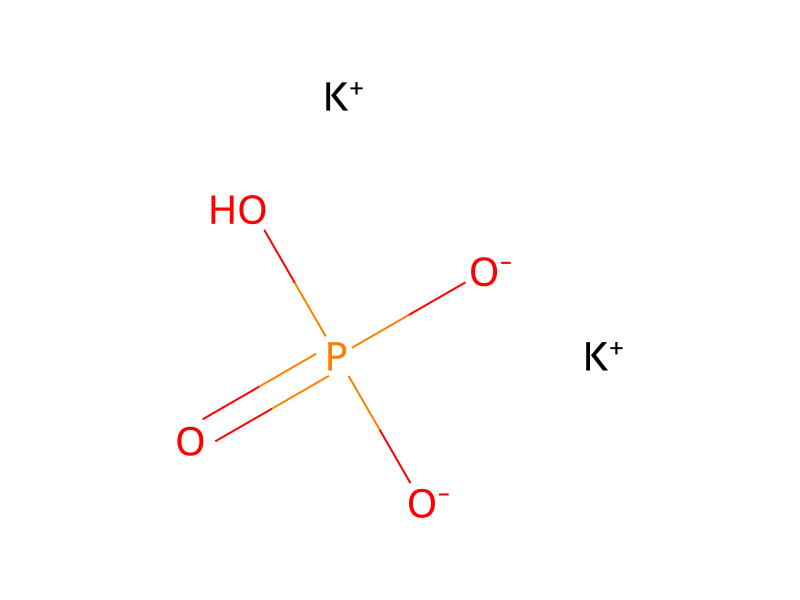

Product 1

Reagents, catalysts & solvents 1

Procedure
To a solution of diphenyl aminomethylphosphonate hydrochloride (134.8 g) in water (500 ml) is added dipotassium hydrogen phosphate (235.5 g) and water (1000 ml). The mixture is stirred until clear, then extracted with four portions of methylene chloride. The organic phase is dried over magnesium sulfate, filtered, and evaporated in vacuo to afford diphenyl aminomethylphosphonate.
Workup
- extractionthen extracted with four portions of methylene chloride
- dry with materialThe organic phase is dried over magnesium sulfate
- filtrationfiltered
- customevaporated in vacuo
Sources & evidence
- ORD record
- ord-0ca19dba244141d6a778277ccb93c896
- Source dataset
- uspto-grants-1976_06
- Patent number
- US03962224
Reaction notes
Loading…