Benzylamine → 6-chloro-1-hydroxy-2-(trifluoromethyl)-1H-imidazo(4,5-b)pyridine benzylamine salt
Reaction equation

[Cl:1][C:2]1[CH:3]=[C:4]2[N:10]([OH:11])[C:9]([C:12]([F:15])([F:14])[F:13])=[N:8][C:5]2=[N:6][CH:7]=1.[CH2:16]([NH2:23])[C:17]1[CH:22]=[CH:21][CH:20]=[CH:19][CH:18]=1>C(OCC)(=O)C>[CH2:16]([NH2:23])[C:17]1[CH:22]=[CH:21][CH:20]=[CH:19][CH:18]=1.[Cl:1][C:2]1[CH:3]=[C:4]2[N:10]([OH:11])[C:9]([C:12]([F:13])([F:14])[F:15])=[N:8][C:5]2=[N:6][CH:7]=1Participants
4
Reactant 2
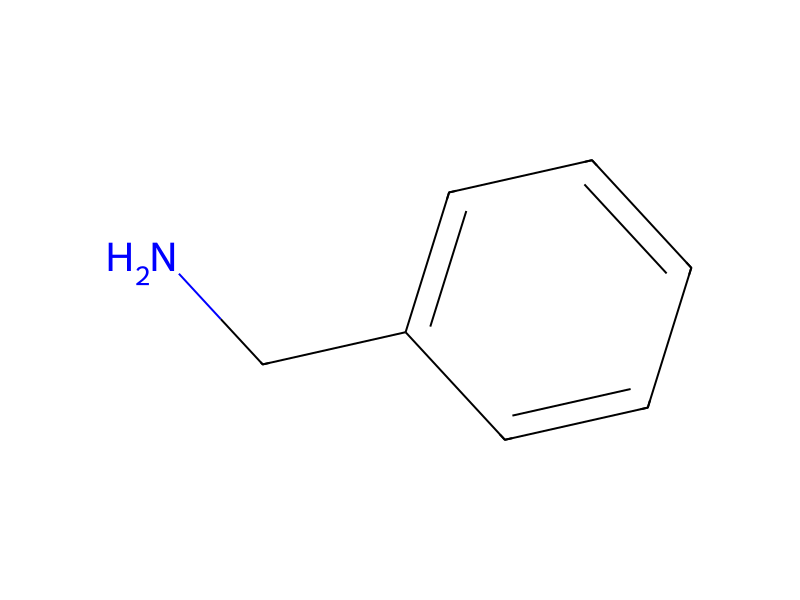

Product 1

Reagents, catalysts & solvents 1

Procedure
6-CHLORO-1-hydroxy-2-(Trifluoromethyl)-1H-imidazo(4,5-b)-pyridine (1.4 grams) was mixed with 15 milliliters of ethyl acetate. The mixture was heated to reflux, and 0.6 milliliter of benzylamine was added dropwise. The mixture was then refluxed for another 30 minutes, cooled, and filtered, yielding the desired 6-chloro-1-hydroxy-2-(trifluoromethyl)-1H-imidazo(4,5-b)pyridine benzylamine salt, m.p., 200°-02°C. NMR analysis in hexadeuterodimethyl sulfoxide showed a peak at 236 cps (2H); a peak at 437 cps (5H); two meta-coupled doublets at the 462 cps (1H), the other at 500 cps (1H); and a broad peak at 474 cps (3H).
Workup
- temperatureThe mixture was heated
- temperatureto reflux
- temperatureThe mixture was then refluxed for another 30 minutes
- temperaturecooled
- filtrationfiltered
Sources & evidence
- ORD record
- ord-2e72d331ad1840efb9851f5e482aa78d
- Source dataset
- uspto-grants-1976_06
- Patent number
- US03963734
Reaction notes
Loading…