Hydrochloric Acid → 4-(Butylsulfanyl)-1-methyl-3,5-diphenyl-1H-pyrazole
Reaction equation

Br[C:2]1[C:3]([C:14]2[CH:19]=[CH:18][CH:17]=[CH:16][CH:15]=2)=[N:4][N:5]([CH3:13])[C:6]=1[C:7]1[CH:12]=[CH:11][CH:10]=[CH:9][CH:8]=1.[CH2:20]([SH:24])[CH2:21][CH2:22][CH3:23].N1C2C(=CC=CC=2)C=CC=1.Cl>N1C=CC=CC=1>[CH2:20]([S:24][C:2]1[C:3]([C:14]2[CH:19]=[CH:18][CH:17]=[CH:16][CH:15]=2)=[N:4][N:5]([CH3:13])[C:6]=1[C:7]1[CH:12]=[CH:11][CH:10]=[CH:9][CH:8]=1)[CH2:21][CH2:22][CH3:23]Participants
6

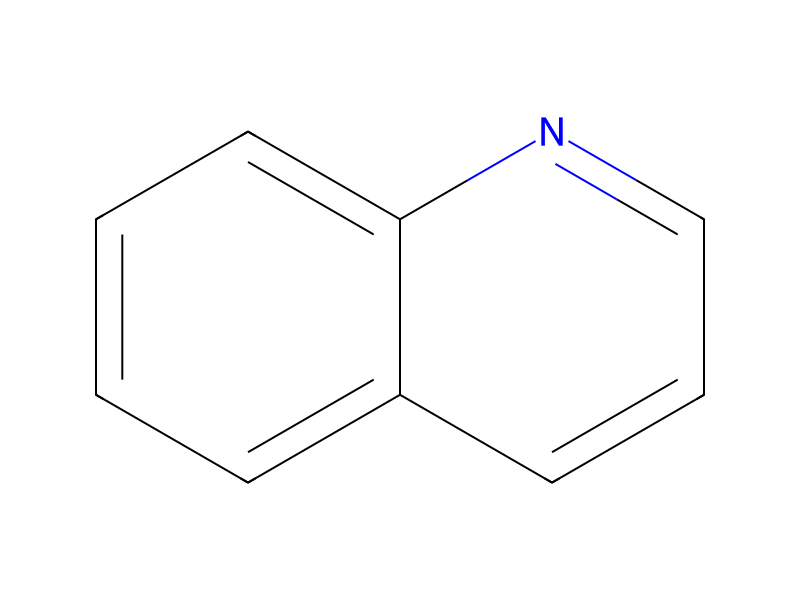



Procedure
A mixture of 4-bromo-1-methyl-3,5-diphenylpyrazole (21 g, 0.0671 mole), copper(1)salt of butanethiol (12.58 g, 0.08 mole), pyridine (10 ml) and quinoline (100 ml) is stirred and heated at 175° to 180°C for 8 hours. The reaction mixture is cooled, poured into dilute hydrochloric acid (500 ml) and extracted with benzene. The benzene layer is separated and stripped in vacuo to give a brown oil. The oil is slurried with petroleum ether (b.p. 40° to 60°C), filtered and the filtrate stripped in vacuo to give a brown syrup 21 g (97%), >95% pure by glc.
Workup
- temperatureheated at 175° to 180°C for 8 hours
- temperatureThe reaction mixture is cooled
- extractionextracted with benzene
- customThe benzene layer is separated
- customto give a brown oil
- filtrationfiltered
Sources & evidence
- ORD record
- ord-0d2f07c3e25446bfb059d3854d999992
- Source dataset
- uspto-grants-1976_06
- Patent number
- US03963742
Reaction notes
Loading…