Hydrochloric Acid → 2-(5-Hydroxypentyl)cyclopentanone 2-(5-acetoxypentyl)-cyclopentanone
Reaction equation

CC([O:4][CH2:5][C:6]1[C:19]2[C:14](=[CH:15][CH:16]=[CH:17][CH:18]=2)[C:13]([CH2:20][O:21][C:22]([CH3:24])=[O:23])=C2C=1C=CC=C2)=O.Cl>O>[OH:21][CH2:20][CH2:13][CH2:14][CH2:15][CH2:16][CH:17]1[CH2:18][CH2:19][CH2:6][C:5]1=[O:4].[C:22]([O:21][CH2:20][CH2:13][CH2:14][CH2:15][CH2:16][CH:17]1[CH2:18][CH2:19][CH2:6][C:5]1=[O:4])(=[O:23])[CH3:24]Participants
4
Reactant 2

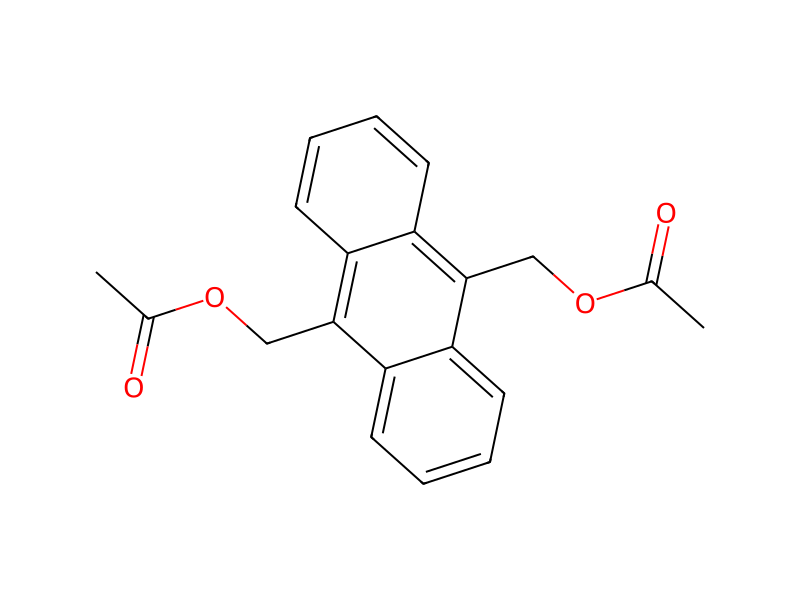
Product 1

Reagents, catalysts & solvents 1

Procedure
A mixture of 4,500 g. (16.2 moles) of 2-(5-acetoxypentyl)-2-carbomethoxy/carboethoxy-cyclopentanone (Example 54), 2.2 l. of glacial acetic, 1 l. of concentrated hydrochloric acid, and 1 l. of water is refluxed for 18 hours, cooled, and partitioned between saturated brine and benzene. The organic phase is washed with saturated brine, dried (MgSO4), and evaporated in vacuo to yield 3155 g. of an oil.
Workup
- additionA mixture of 4,500 g
- temperaturecooled
- custompartitioned between saturated brine and benzene
- washThe organic phase is washed with saturated brine
- dry with materialdried (MgSO4)
- customevaporated in vacuo
- customto yield 3155 g
Sources & evidence
- ORD record
- ord-3e04906fea2045c086540db3fad77fef
- Source dataset
- uspto-grants-1976_06
- Patent number
- US03966773
Reaction notes
Loading…