Acetic Acid → 2-(p-Bromophenyl)-1-(2-pyridyl)-2-propanol
Reaction equation

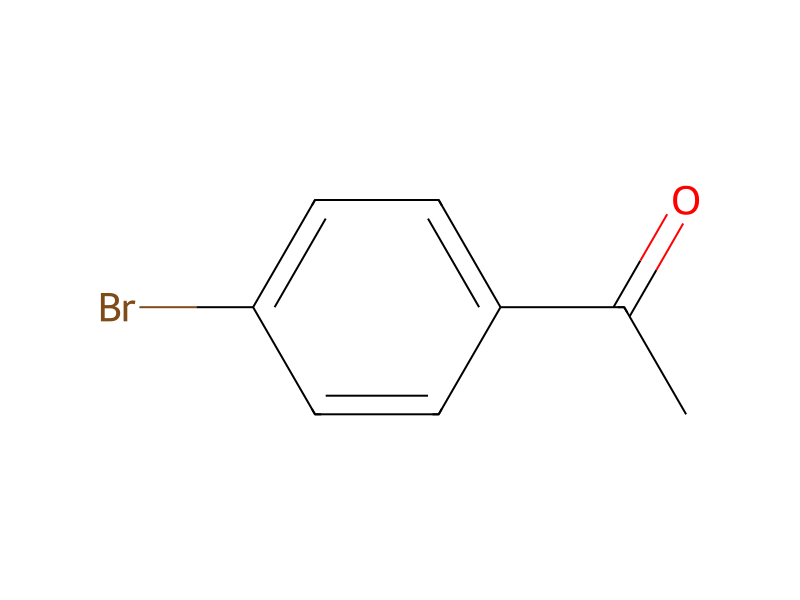
[Br:1][C:2]1[CH:7]=[CH:6][C:5]([C:8](=[O:10])[CH3:9])=[CH:4][CH:3]=1.[N:11]1[CH:16]=[CH:15][CH:14]=[CH:13][C:12]=1[CH3:17].C(O)(=O)C>C1C=CC=CC=1>[Br:1][C:2]1[CH:7]=[CH:6][C:5]([C:8]([OH:10])([CH3:9])[CH2:17][C:12]2[CH:13]=[CH:14][CH:15]=[CH:16][N:11]=2)=[CH:4][CH:3]=1.[Br:1][C:2]1[CH:7]=[CH:6][C:5]([C:8]([CH3:9])=[CH:17][C:12]2[CH:13]=[CH:14][CH:15]=[CH:16][N:11]=2)=[CH:4][CH:3]=1Participants



Procedure
2-(p-Bromophenyl)-1-(2-pyridyl)-2-propanol is prepared from p-bromoacetophenone and 2-picoline according to the method of Villani, et al., J. Med. Chem., 13, 359 (1970) in 63% yield. This alcohol (129.1 g.) is dehydrated by heating in 1150 ml. of acetic acid-12 N hydrochloric acid (3:1) at reflux temperature for 4 hr. The mixture is evaporated in vacuo, made basic with concentrated ammonium hydroxide, and extracted with ethyl acetate. The ethyl acetate extract is washed with water and brine, dried over sodium sulfate, and evaporated to give a dark brown oil. A solution of the oil in benzene is passed through a column of silica gel. Evaporation of the eluate gave 46.4 g (26% yield) of crystalline 2-(p-bromophenyl)-1-(2-pyridyl)propene, m.p. 71.5°-73.5° C. (corr.).
Workup
- temperatureby heating in 1150 ml
- customThe mixture is evaporated in vacuo
- extractionextracted with ethyl acetate
- extractionThe ethyl acetate extract
- washis washed with water and brine
- dry with materialdried over sodium sulfate
- customevaporated
- customto give a dark brown oil
- customEvaporation of the eluate
Sources & evidence
- ORD record
- ord-a9d27b58eac14c00a4e76034f2dc212c
- Source dataset
- uspto-grants-1981_12
- Patent number
- USRE030812
Reaction notes
Loading…