Acrylonitrile → 4-oxo-4-pyridin-4-ylbutanenitrile
Reaction equation

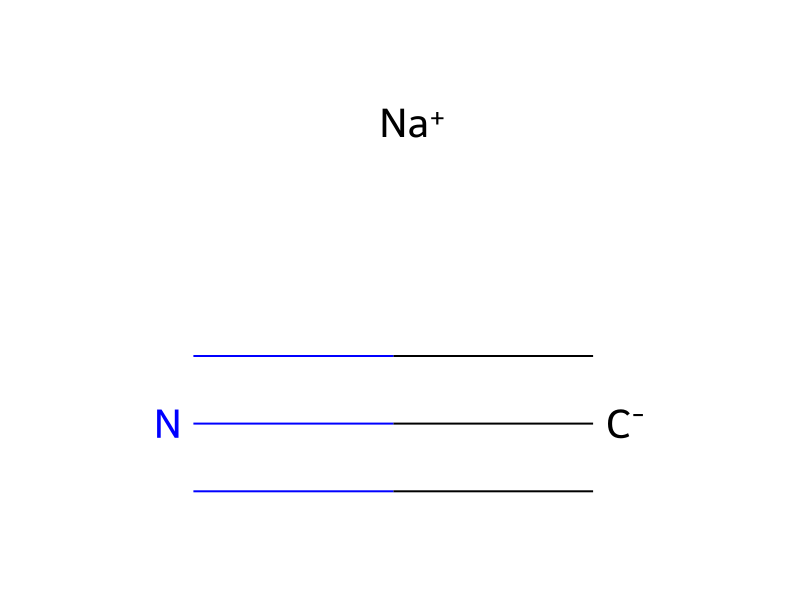
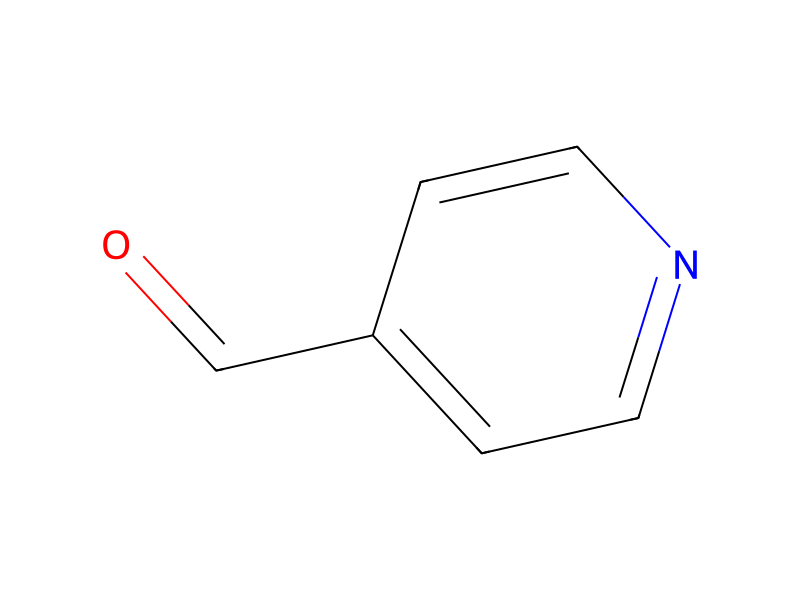
[C-]#N.[Na+].[N:4]1[CH:9]=[CH:8][C:7]([CH:10]=[O:11])=[CH:6][CH:5]=1.[C:12](#[N:15])[CH:13]=[CH2:14]>C(#N)C>[O:11]=[C:10]([C:7]1[CH:8]=[CH:9][N:4]=[CH:5][CH:6]=1)[CH2:14][CH2:13][C:12]#[N:15]Participants
Reactant 3

Product 1

Reagents, catalysts & solvents 1

Procedure
C-1. 4-Oxo-4-(4-pyridinyl)butanenitrile--To a stirred mixture containing 29.4 g. of sodium cyanide and 500 ml. of acetonitrile, after stirring said mixture for ten minutes, was added dropwise over a period of three hours a solution containing 64.2 g. of 4-pyridinecarboxaldehyde in 500 ml. of acetonitrile and the resulting mixture was stirred at room temperature for one hour. To the stirred mixture was added slowly over a period of one hour a solution of 24.5 g. of acrylonitrile in 200 ml. of acetonitrile and the resulting reaction mixture was stirred overnight at room temperature. The reaction mixture was stripped in vacuo of solvent at a temperature not exceeding 54° C. The semi-solid residue was cooled, mixed well with 400 ml. of chloroform, and the mixture filtered. The chloroform was distilled off in vacuo at a temperature not exceeding 50° C. and the residual oily residue was extracted with three 200 ml. portions of toluene. The toluene solution was filtered through diatomaceous earth and the filtrate was distilled in vacuo below 50° C. to remove the toluene. The residue on chilling crystallized. A tiny sample was saved and the remainder was dissolved in 50 ml. of warm isopropyl alcohol. The solution was cooled and then diluted slowly with 125 ml. of ether, chilled and seeded with a crystal obtained from said tiny sample. The crystalline product that separated was collected, washed with 25 ml. of 1:3 (v:v) mixture of isopropyl alcohol:ether, and air-dried to yield 52.1 g of 4-oxo-4-(4-pyridinyl)butanenitrile, m.p. 53.5°-55° C.
Workup
- customfor ten minutes
- additionwas added dropwise over a period of three hours a solution
- additioncontaining 64.2 g
- additionTo the stirred mixture was added slowly over a period of one hour a solution of 24.5 g
- customexceeding 54° C
- temperatureThe semi-solid residue was cooled
- additionmixed well with 400 ml
- filtrationof chloroform, and the mixture filtered
- distillationThe chloroform was distilled off in vacuo at a temperature not
- customexceeding 50° C.
- extractionthe residual oily residue was extracted with three 200 ml
- filtrationThe toluene solution was filtered through diatomaceous earth
- distillationthe filtrate was distilled in vacuo below 50° C.
- customto remove the toluene
- temperatureThe residue on chilling
- customcrystallized
- dissolutionthe remainder was dissolved in 50 ml
- temperatureThe solution was cooled
- additiondiluted slowly with 125 ml
- temperatureof ether, chilled
- customobtained
- customThe crystalline product that separated
- customwas collected
- washwashed with 25 ml
- additionof 1:3 (v:v) mixture of isopropyl alcohol
- dry with materialether, and air-dried
Sources & evidence
- ORD record
- ord-60c1346b4fc94d3386aecd7589803cf3
- Source dataset
- uspto-grants-1981_12
- Patent number
- US04304777
Reaction notes
Loading…