Ethanol → Toluene 2,4-Diisocyanate
Reaction equation

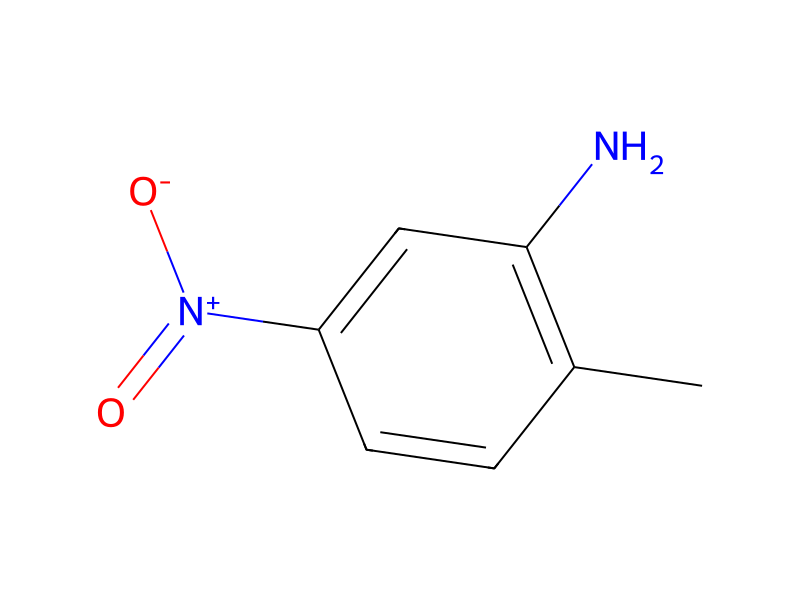
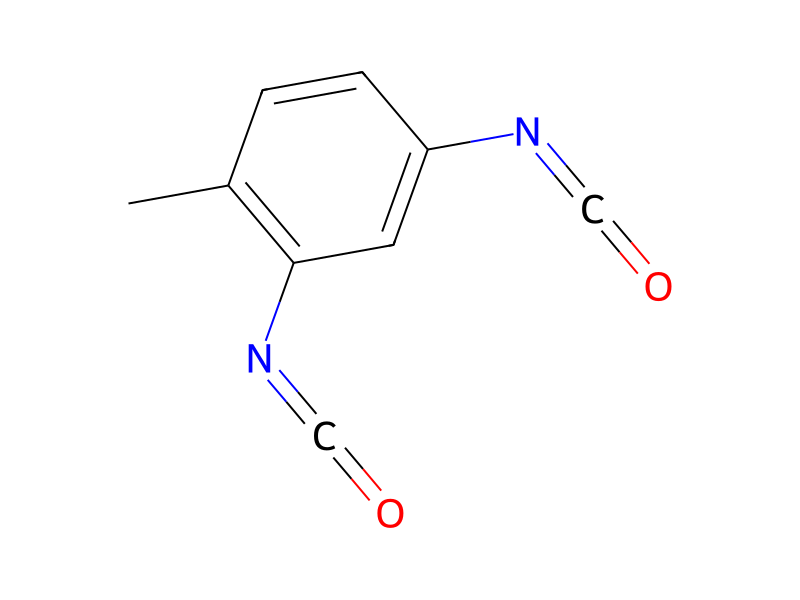
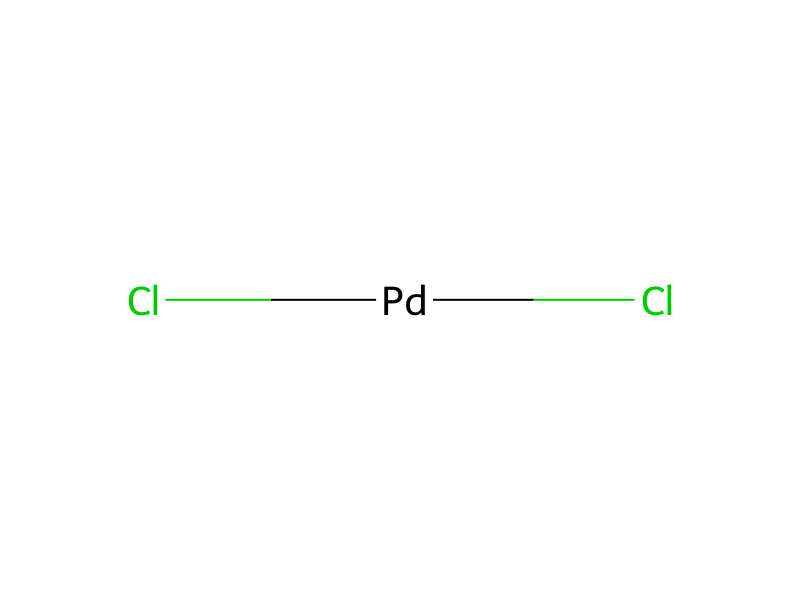
[NH2:1][C:2]1[CH:7]=[C:6]([NH2:8])[CH:5]=[CH:4][C:3]=1[CH3:9].NC1C=C([N+]([O-])=O)C=CC=1C.N[C:22](N)=[O:23].[C]=O.[CH2:27]([OH:29])C>Cl[Pd]Cl>[N:1]([C:2]1[CH:7]=[C:6]([N:8]=[C:22]=[O:23])[CH:5]=[CH:4][C:3]=1[CH3:9])=[C:27]=[O:29]Participants
7
Reactant 5




Product 1
Reagents, catalysts & solvents 1
Procedure
250 g of the following mixture were introduced into a 0.7 liter autoclave: 2×10⁻³ % by weight of PdCl2, 4% by weight of FeOCl, 14.8% by weight of a bis-urea of 2,4-diamino toluene and 2-amino-4-nitrotoluene and 81% by weight of ethanol. The nitro groups of the urea used are oxidizing agents for the oxycarbonylation of the urea function. 120 bar of carbon monoxide were forced in at room temperature. The mixture was allowed to react for two hours at 180° C. The bis-urea was converted quantitatively. The bis-urethane of 2,4-diisocyanatotoluene was obtained with a selectivity of 50 mol % in addition to 10 mol % of isomeric aminourethanes.
Workup
- customwere forced in at room temperature
- customto react for two hours at 180° C
Sources & evidence
- ORD record
- ord-6aa5440d67bb4c6180faee262f866adb
- Source dataset
- uspto-grants-1981_12
- Patent number
- US04304922
Reaction notes
Loading…