Hydrochloric Acid → 4-(Hexadecylamino)benzoic acid
Reaction equation

[NH2:1][C:2]1[CH:10]=[CH:9][C:5]([C:6]([OH:8])=[O:7])=[CH:4][CH:3]=1.[OH-].[K+].Br[CH2:14][CH2:15][CH2:16][CH2:17][CH2:18][CH2:19][CH2:20][CH2:21][CH2:22][CH2:23][CH2:24][CH2:25][CH2:26][CH2:27][CH2:28][CH3:29].[Cl-].C([P+](CCCC)(CCCC)CCCC)CCCCCCCCCCCCCCC.Cl>C(O)C>[CH2:29]([NH:1][C:2]1[CH:10]=[CH:9][C:5]([C:6]([OH:8])=[O:7])=[CH:4][CH:3]=1)[CH2:28][CH2:27][CH2:26][CH2:25][CH2:24][CH2:23][CH2:22][CH2:21][CH2:20][CH2:19][CH2:18][CH2:17][CH2:16][CH2:15][CH3:14]Participants

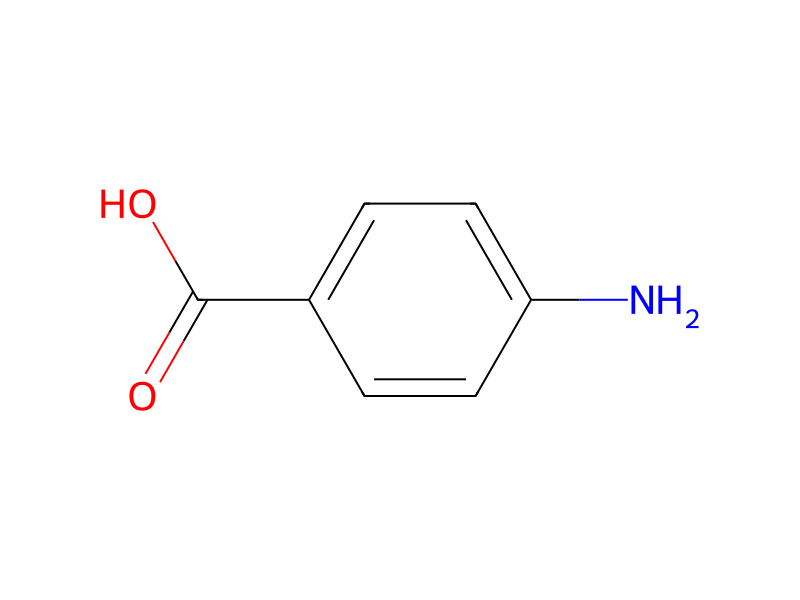





Procedure
27.4 g (0.2 mol) of 4-aminobenzoic acid, 11.2 g of KOH, 64 g (0.21 mol) of 1-bromohexadecane and 4.64 g (10 mmol) of hexadecyltributylphosphonium chloride were suspended in 250 ml of ethanol (96%) and the reaction mixture was stirred for 12 hours at reflux temperature. While the solution was still hot, there were added, drop by drop, 80 ml of conc. HCl and the reaction mixture was left to cool down to ambient temperature. Thereupon the precipitated product was separated on a suction filter, washed with water and dried. After the crystallization of the crude product from benzene, there was obtained the 4-(n-hexadecylamino)-benzoic acid, m.p. 107°-107° C., complete m.p. 122°-126° C., which could be optionally converted into its sodium salt.
Workup
- temperatureat reflux temperature
- additionthere were added
- customThereupon the precipitated product was separated on a suction
- filtrationfilter
- washwashed with water
- customdried
- customAfter the crystallization of the crude product from benzene
Sources & evidence
- ORD record
- ord-753192602afc4e6bbffd5580619d74ca
- Source dataset
- uspto-grants-1981_12
- Patent number
- US04304929
Reaction notes
Loading…