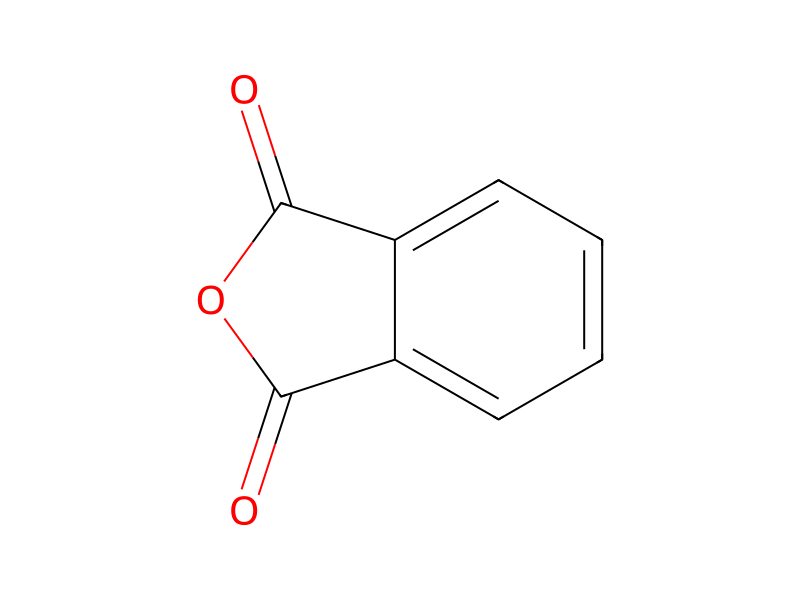
Phthalic Anhydride → HCID 12248790, compound
Reaction equation

[C:1]1(=[O:11])[O:6][C:4](=[O:5])[C:3]2=[CH:7][CH:8]=[CH:9][CH:10]=[C:2]12.[C:12]1([C:18]2[NH:19][C:20]3[C:25]([CH:26]=2)=[CH:24][CH:23]=[CH:22][CH:21]=3)[CH:17]=[CH:16][CH:15]=[CH:14][CH:13]=1>C1(C)C(C)=CC=CC=1>[C:12]1([C:18]2[NH:19][C:20]3[C:25]([C:26]=2[C:4]([C:3]2[CH:7]=[CH:8][CH:9]=[CH:10][C:2]=2[C:1]([OH:6])=[O:11])=[O:5])=[CH:24][CH:23]=[CH:22][CH:21]=3)[CH:17]=[CH:16][CH:15]=[CH:14][CH:13]=1Participants
4
Reactant 2

Product 1

Reagents, catalysts & solvents 1

Conditions
- Temperature
- 110 °C
Procedure
A suspension of 14.8 g (0.10 mole) of phthalic anhydride, 10.5 g (0.05 mole) of 2-phenylindole and 82 ml of xylene was heated to 110° C. briefly, cooled to and maintained at 95° C. for approximately two hours. The solution was cooled to ambient temperature and the solid which separated was collected by filtration and dried to obtain 10.6 g of 2-[(2-phenyl-3-indolyl)carbonyl]benzoic acid (Formula VIII: Ro =R1 =R2 =R3 =R6 =Y1 =H; R5 =C6H5) which melted at 106°-107° C. and had a nuclear magnetic resonance spectrum consistent with the assigned structure.
Workup
- temperaturecooled to and
- temperaturemaintained at 95° C. for approximately two hours
- temperatureThe solution was cooled to ambient temperature
- customthe solid which separated
- filtrationwas collected by filtration
- customdried
Sources & evidence
- ORD record
- ord-0ca92c9f42234df791aeffe84d6f43e6
- Source dataset
- uspto-grants-1981_12
- Patent number
- US04307018
Reaction notes
Loading…