Sodium Chloride → 2-n-Pentyl-(1-carbomethoxy-2-oxopropyl)-1-cyclopentanone
Reaction equation

[Na].[C:2]([O:8][CH3:9])(=[O:7])[CH2:3][C:4]([CH3:6])=[O:5].[CH2:10]([C:15]1[C:16](=[O:20])[CH2:17][CH2:18][CH:19]=1)[CH2:11][CH2:12][CH2:13][CH3:14].[Cl-].[Na+]>C(O)(=O)C.CO>[CH2:10]([C:15]1([CH:3]([C:2]([O:8][CH3:9])=[O:7])[C:4](=[O:5])[CH3:6])[CH2:19][CH2:18][CH2:17][C:16]1=[O:20])[CH2:11][CH2:12][CH2:13][CH3:14]Participants
7






Procedure
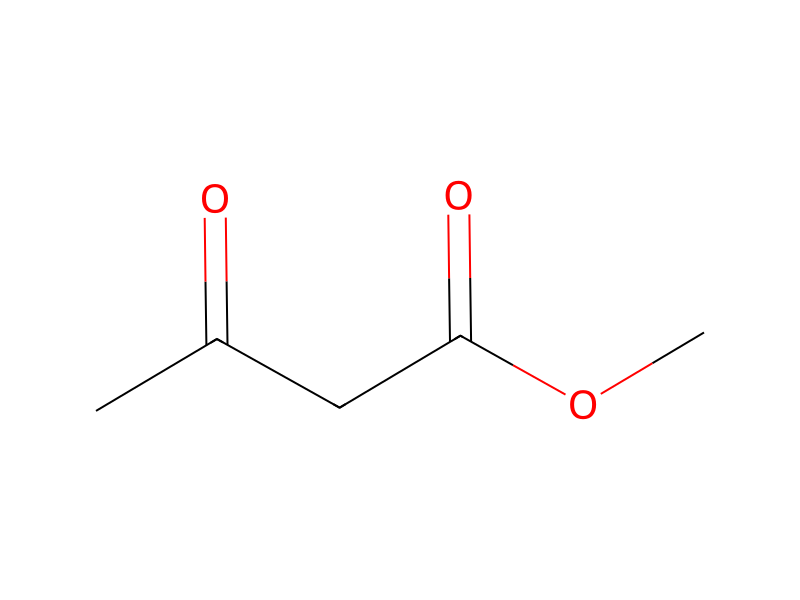
750 ml of absolute methanol was introduced into a 2 liter flask. Then 17.3 g of sodium were added thereto, and 580 g of methyl acetoacetate were then added after which 456 g of 2-n-pentyl-cyclopent-2-en-1-one were added and the mixture was allowed to stand for 48 hours at the ambient temperature. The reaction product was neutralised with 45 g of acetic acid and then poured into 3 liters of a 10% aqueous sodium chloride solution. The product was then worked up as described in Example 1 (a). There were thus obtained 567 g (yield=70%) of 2-n-pentyl-(1-carbomethoxy-2-oxopropyl)-1-cyclopentanone having: nD20 =1.4702, d420 =1.0545.
Workup
- additionwere added
Sources & evidence
- ORD record
- ord-b8655013e2644d6997bab63a1be11387
- Source dataset
- uspto-grants-1981_12
- Patent number
- US04308179
Reaction notes
Loading…