Hydrogen Bromide → 2-Bromo-1,3-diethyl-5-methylbenzene
Reaction equation

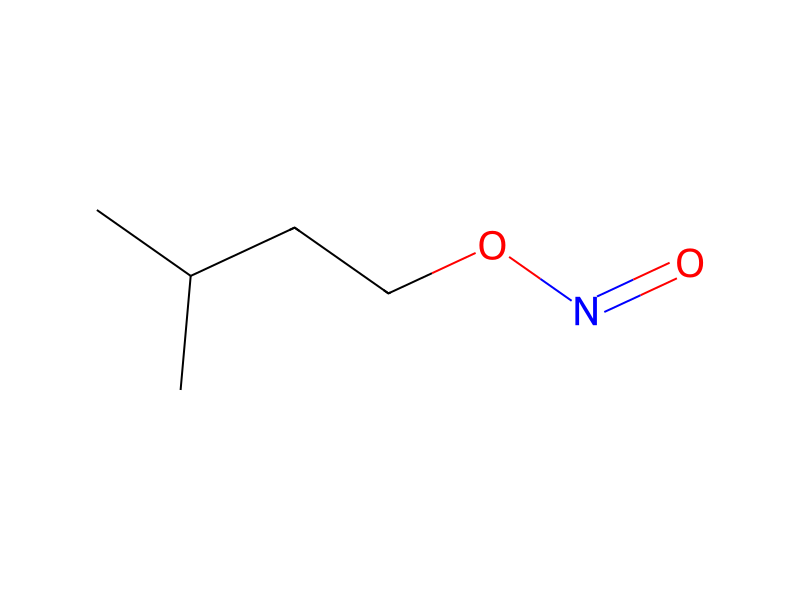
[BrH:1].[CH2:2]([C:4]1[CH:10]=[C:9]([CH3:11])[CH:8]=[C:7]([CH2:12][CH3:13])[C:5]=1N)[CH3:3].[Br-].[Na+].N(OCCC(C)C)=O>ClC1C=CC=CC=1Cl>[Br:1][C:5]1[C:4]([CH2:2][CH3:3])=[CH:10][C:9]([CH3:11])=[CH:8][C:7]=1[CH2:12][CH3:13]Participants
Reactant 4



Product 1

Reagents, catalysts & solvents 1

Conditions
- Temperature
- 50 °C
Procedure
Gaseous hydrogen bromide (1.05 equiv.) is fed into a mixture of 2,6-diethyl-4-methylaniline (1.00 equiv.) and sodium bromide (0.10 equiv.) in o-dichlorobenzene. The resulting salt suspension is cooled to 50° C. Isoamyl nitrite (1.05 equiv.) and additional gaseous hydrogen bromide (0.3 equiv.) are fed subsurface simultaneously at 50-55° C. over a 2-hour period to afford 1-bromo-2,6-diethyl-4-methylbenzene as a yellow to light brown solution. The reaction mass is neutralized with 25% caustic solution (ca. 0.3 equiv.). The bottom aqueous phase is separated off. Isoamyl alcohol and o-dichlorobenzene are sequentially stripped off to produce the crude 2,6-diethyl-4-methylbromobenzene material with an assay of 90% and an isolated yield of 87-90%. The product can be further purified by vacuum distillation at 95° C./5 mmHg to give an assay of 97-99%.
Workup
- customsimultaneously at 50-55° C.
- customover a 2-hour
Sources & evidence
- ORD record
- ord-c8a2f0a74c954579bd73cb06e49ea521
- Source dataset
- uspto-grants-2011_10
- Patent number
- US08030529B2
Reaction notes
Loading…