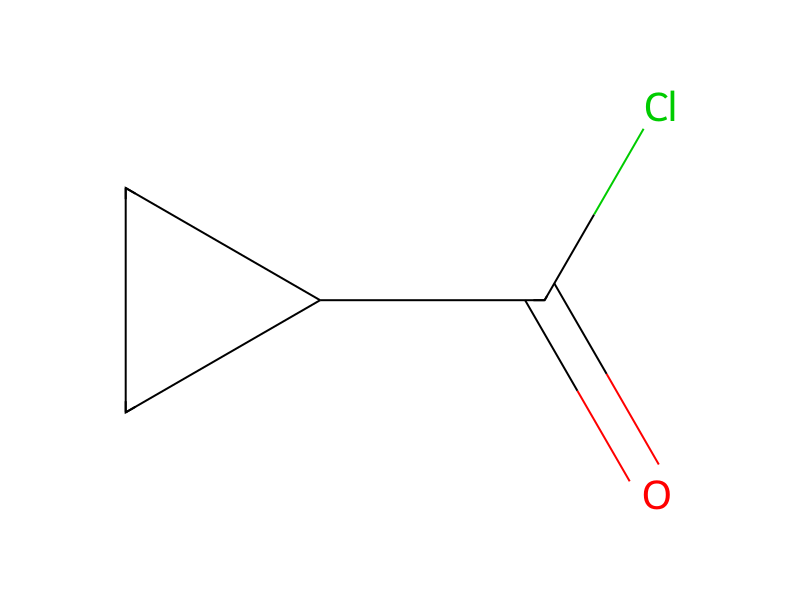
Cyclopropanecarbonyl chloride → HCID 86615651, compound
Reaction equation
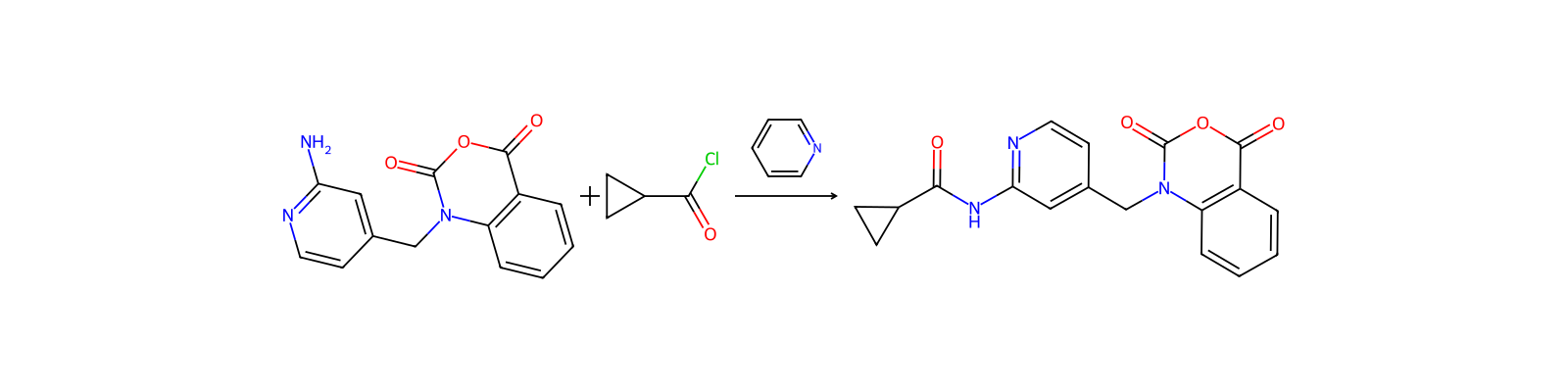
[NH2:1][C:2]1[CH:7]=[C:6]([CH2:8][N:9]2[C:14]3[CH:15]=[CH:16][CH:17]=[CH:18][C:13]=3[C:12](=[O:19])[O:11][C:10]2=[O:20])[CH:5]=[CH:4][N:3]=1.[CH:21]1([C:24](Cl)=[O:25])[CH2:23][CH2:22]1>N1C=CC=CC=1>[O:20]=[C:10]1[N:9]([CH2:8][C:6]2[CH:5]=[CH:4][N:3]=[C:2]([NH:1][C:24]([CH:21]3[CH2:23][CH2:22]3)=[O:25])[CH:7]=2)[C:14]2[CH:15]=[CH:16][CH:17]=[CH:18][C:13]=2[C:12](=[O:19])[O:11]1Participants
Reactant 2

Product 1

Reagents, catalysts & solvents 1

Procedure
To a stirred solution of 1-(2-amino-pyridin-4-ylmethyl)-1H-benzo[d][1,3]oxazine-2,4-dione (1.1 g, see preparation 7b) in pyridine (15 ml) was added cyclopropanecarbonyl chloride (512 mg). The reaction mixture was stirred at room temperature for 30 minutes, and the solvent was evaporated under reduced pressure. The remaining oil was dissolved in EtOAc and washed with water and brine. The organic layer was concentrated under reduced pressure and the resulting solid material was isolated by filtration and dried in vacuo, affording cyclopropanecarboxylic acid [4-(2,4-dioxo-4H-benzo[d][1,3]oxazin-1-ylmethyl)-pyridin-2-yl]-amide. Step 2: The above obtained anhydride intermediate was converted into the title compound by reaction with O-cyclopentyl-methylhydroxyl-amine hydrochloride (see preparation 66), using general procedure 1A. 13C-NMR (DMSO-d6) δ 172.4, 166.9, 152.3, 151.3, 148.5, 147.8, 132.4, 127.9, 117.3, 114.7, 113.3, 111.4, 111.3, 79.4, 45.4, 37.6, 28.9, 24.9, 14.1, 7.4.
Workup
- customthe solvent was evaporated under reduced pressure
- dissolutionThe remaining oil was dissolved in EtOAc
- washwashed with water and brine
- concentrationThe organic layer was concentrated under reduced pressure
- customthe resulting solid material was isolated by filtration
- customdried in vacuo
Sources & evidence
- ORD record
- ord-ebe49bbfe0a3412b9a1a7ab27c242501
- Source dataset
- uspto-grants-2011_10
- Patent number
- US08034811B2
Reaction notes
Loading…