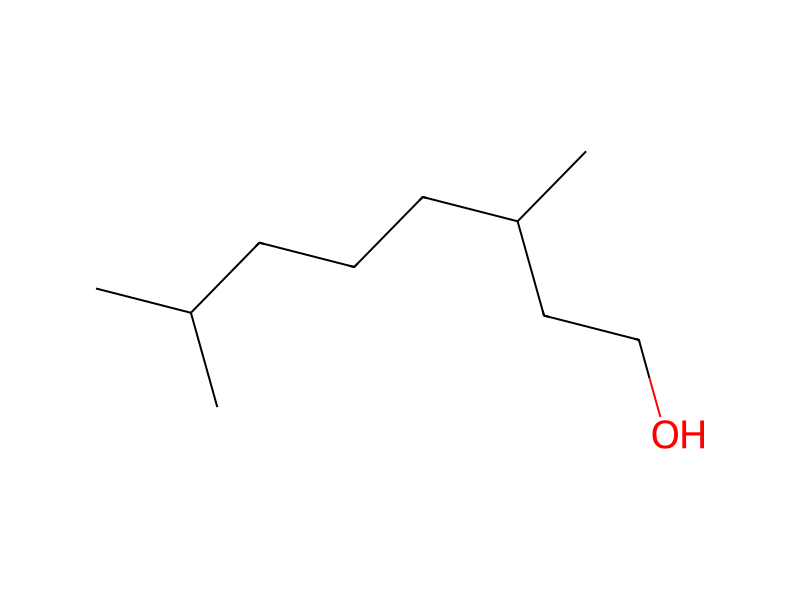
3,7-Dimethyl-1-octanol → HCID 57815684, compound
Reaction equation
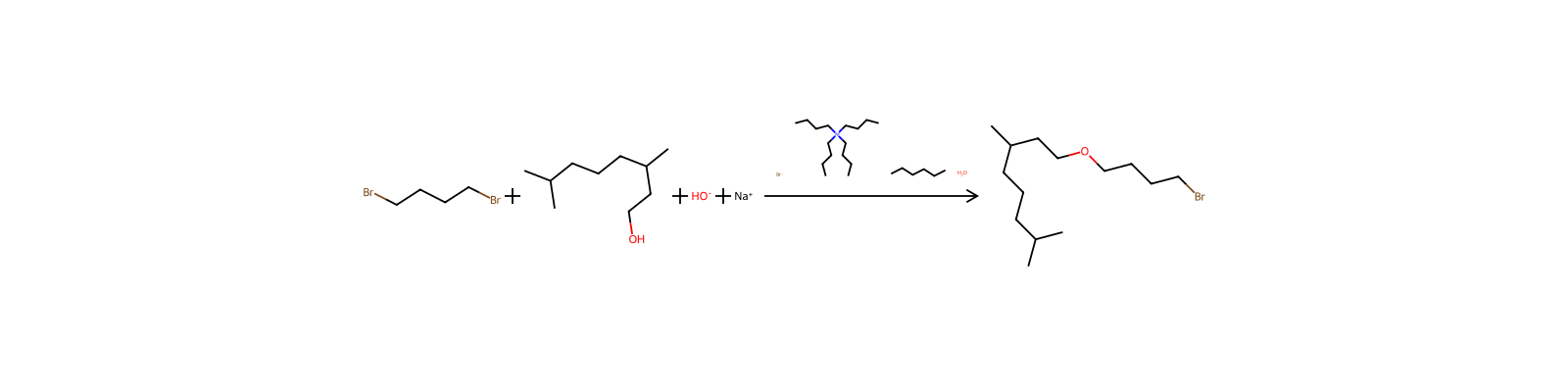
[Br:1][CH2:2][CH2:3][CH2:4][CH2:5]Br.[CH3:7][CH:8]([CH2:12][CH2:13][CH2:14][CH:15]([CH3:17])[CH3:16])[CH2:9][CH2:10][OH:11].[OH-].[Na+]>[Br-].C([N+](CCCC)(CCCC)CCCC)CCC.CCCCCC.O>[CH3:7][CH:8]([CH2:12][CH2:13][CH2:14][CH:15]([CH3:17])[CH3:16])[CH2:9][CH2:10][O:11][CH2:5][CH2:4][CH2:3][CH2:2][Br:1]Participants






Procedure
1,4-Dibromobutane (22.7 g, 105 mmol), 3,7-dimethyloctanol (4.99 g, 31.5 mmol) and tetrabutylammonium bromide (585 mg, 1.81 mmol) were dissolved in hexane (40 mL). Sodium hydroxide solution (50% w/v, 40 mL) was added to the reaction mixture and then the whole was heated at reflux for 2 d. The reaction mixture was cooled to room temperature, diluted with hexane (40 mL) and water (40 mL) and transferred to a separatory funnel. The product was extracted into the organic layer and the aqueous layer was further extracted with ether (3×20 mL). The combined organic layers were dried (Na2SO4) and the solvent was removed under reduced pressure. The dibromobutane in the crude product was removed under reduced pressure and heating at 120° C. under high vacuum (Kugelrohr). This gave the product as a honey-coloured oil (6.24 g, 68%).
Workup
- temperaturethe whole was heated
- temperatureat reflux for 2 d
- customtransferred to a separatory funnel
- extractionThe product was extracted into the organic layer
- extractionthe aqueous layer was further extracted with ether (3×20 mL)
- dry with materialThe combined organic layers were dried (Na2SO4)
- customthe solvent was removed under reduced pressure
- customThe dibromobutane in the crude product was removed under reduced pressure
- temperatureheating at 120° C. under high vacuum (Kugelrohr)
Sources & evidence
- ORD record
- ord-66f41b6d91954891a8d4e718097d190f
- Source dataset
- uspto-grants-2011_10
- Patent number
- US08038737B2
Reaction notes
Loading…