Water → HCID 91038914, compound
Reaction equation
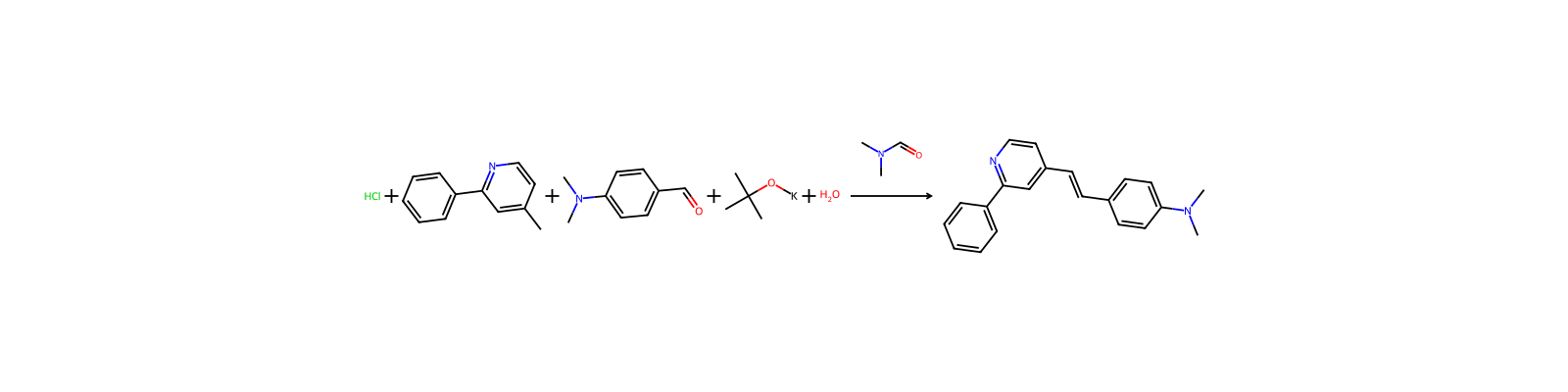
Cl.[C:2]1([C:8]2[CH:13]=[C:12]([CH3:14])[CH:11]=[CH:10][N:9]=2)[CH:7]=[CH:6][CH:5]=[CH:4][CH:3]=1.[CH3:15][N:16]([CH3:25])[C:17]1[CH:24]=[CH:23][C:20]([CH:21]=O)=[CH:19][CH:18]=1.C(O[K])(C)(C)C.O>CN(C=O)C>[C:2]1([C:8]2[CH:13]=[C:12]([CH:14]=[CH:21][C:20]3[CH:23]=[CH:24][C:17]([N:16]([CH3:25])[CH3:15])=[CH:18][CH:19]=3)[CH:11]=[CH:10][N:9]=2)[CH:7]=[CH:6][CH:5]=[CH:4][CH:3]=1Participants
6





Procedure
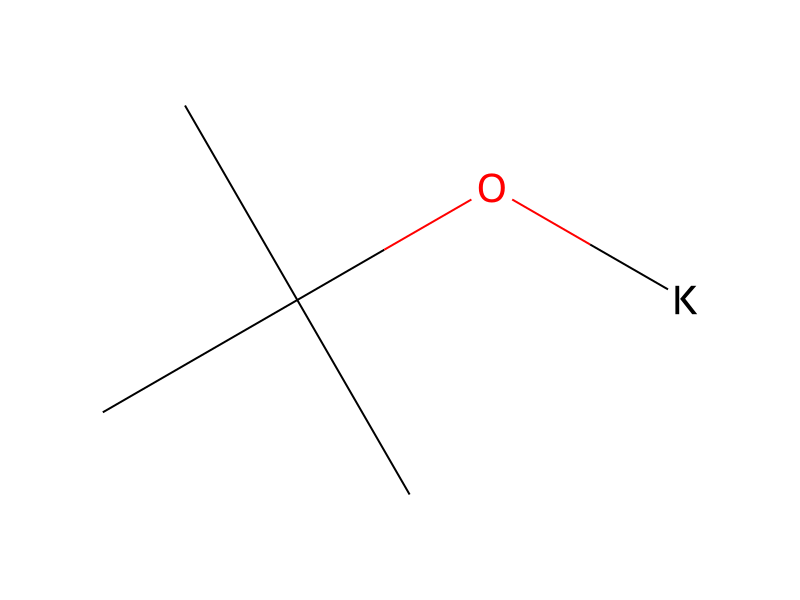
To a mixture of 2-phenyl-4-methylpyridine hydrochloride (1 g, 4.86 mmol) and 4-dimethylaminobenzaldehyde (0.725 g, 4.86 mmol) in anhydrous DMF (30 ml) was added solid tBuOK and the resulting mixture was stirred 5 hours at room temperature under nitrogen. Water (200 ml) was then added, the resulting yellow precipitate was filtered off and successively washed with water and Et2O to afford 650 mg (44%) of the titled compound as a yellow solid.
Workup
- filtrationthe resulting yellow precipitate was filtered off
- washsuccessively washed with water and Et2O
Sources & evidence
- ORD record
- ord-7dbc53b0411a4c90acbbc8900e2d2c84
- Source dataset
- uspto-grants-2011_10
- Patent number
- US08039124B2
Reaction notes
Loading…