Potassium Carbonate → HCID 11558165, compound
Reaction equation

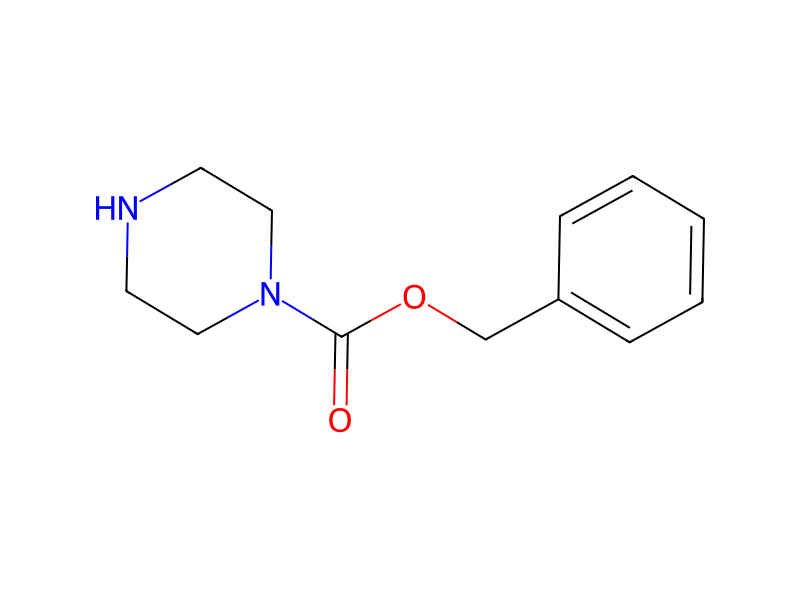
[N:1]1([C:7]([O:9][CH2:10][C:11]2[CH:16]=[CH:15][CH:14]=[CH:13][CH:12]=2)=[O:8])[CH2:6][CH2:5][NH:4][CH2:3][CH2:2]1.ClC[CH2:19][C:20](=[O:22])[CH3:21].C(=O)([O-])[O-].[K+].[K+]>C(#N)C.C(OCC)C>[C:20]([CH2:21][N:4]1[CH2:5][CH2:6][N:1]([C:7]([O:9][CH2:10][C:11]2[CH:16]=[CH:15][CH:14]=[CH:13][CH:12]=2)=[O:8])[CH2:2][CH2:3]1)(=[O:22])[CH3:19]Participants
6
Reactant 3


Product 1

Reagents, catalysts & solvents 2


Procedure
A mixture of benzyl 1-piperazinecarboxylate (4.1 ml), chloromethyl acetone (1.8 ml) and potassium carbonate (8.8 g) in acetonitrile (40 ml) was stirred overnight at ambient temperature. The reaction mixture was diluted in diethyl ether and the solution was partitioned between diethyl ether and water. The water phase was extracted with diethyl ether, the organic phases were combined and washed with water, brine, dried over magnesium sulphate and evaporated. The residue was purified by flash chromatography using dichloromethane/methanol saturated with ammonia (3.5 M) (98/2). Evaporation of the solvent gave benzyl 4-(acetylmethyl)-1-piperazinecarboxylate (3.7 g, 63%) as a yellow oil.
Workup
- customthe solution was partitioned between diethyl ether and water
- extractionThe water phase was extracted with diethyl ether
- washwashed with water, brine
- dry with materialdried over magnesium sulphate
- customevaporated
- customThe residue was purified by flash chromatography
- customEvaporation of the solvent
Sources & evidence
- ORD record
- ord-510105aaf4104320a1962a4dd5e41bd3
- Source dataset
- uspto-grants-2011_08
- Patent number
- US07989460B2
Reaction notes
Loading…