p-Toluenesulfonic acid → (+)-Pantolactone
Reaction equation

[CH3:1][C:2]1([CH3:9])[C@@H:7]([OH:8])[C:5](=[O:6])[O:4][CH2:3]1.ClC(Cl)(Cl)C(=N)OCC1C=CC=CC=1.ClC(Cl)(Cl)C(=N)OCC1C=CC(OC)=CC=1.FC(F)(F)S(O)(=O)=O.CC1C=CC(S(O)(=O)=O)=CC=1.C12(CS(O)(=O)=O)C(C)(C)C(CC1)CC2=O.FC(F)(F)C(O)=O.[B-](F)(F)(F)F.C1C=CC([C+](C2C=CC=CC=2)C2C=CC=CC=2)=CC=1.Cl(OC(C1C=CC=CC=1)(C1C=CC=CC=1)C1C=CC=CC=1)(=O)(=O)=O.FC(F)(F)S(O[Si](C)(C)C)(=O)=O.[Sn]>C1CCCCC1.ClCCl.C(#N)C.C1(C)C=CC=CC=1>[CH3:1][C:2]1([CH3:9])[C@H:7]([OH:8])[C:5](=[O:6])[O:4][CH2:3]1Participants
Reactant 11
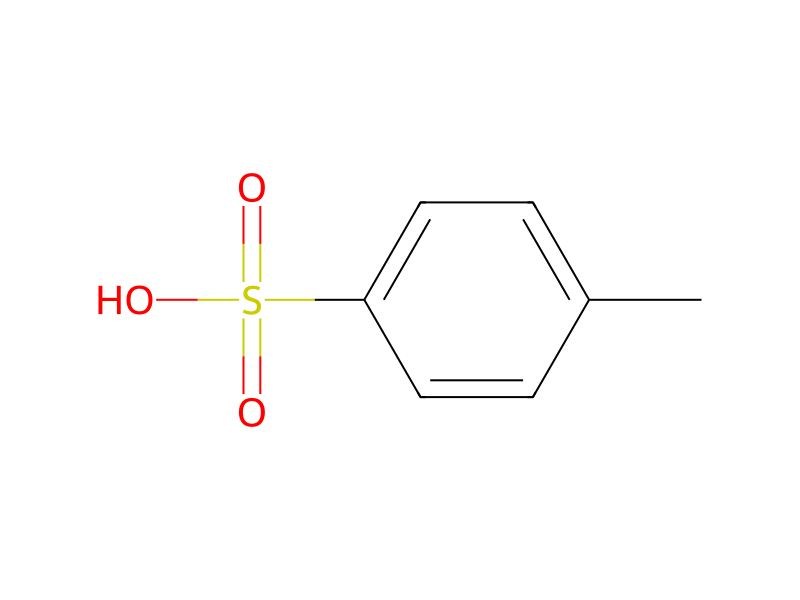 HCID 6101p-Toluenesulfonic acid
 HCID 6422Trifluoroacetic acid
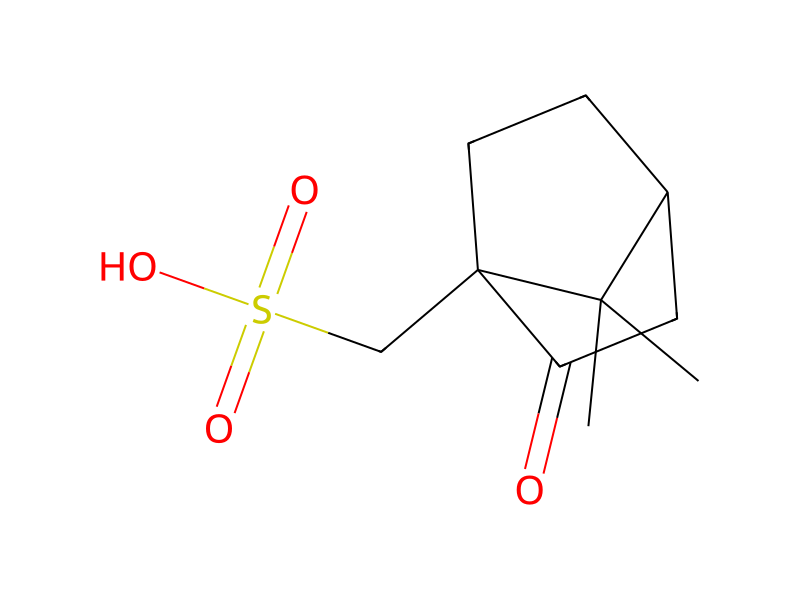 HCID 18462Bicyclo[2.2.1]heptane-1-methanesulfonic acid, 7,7-dimethyl-2-oxo-, (1S)-
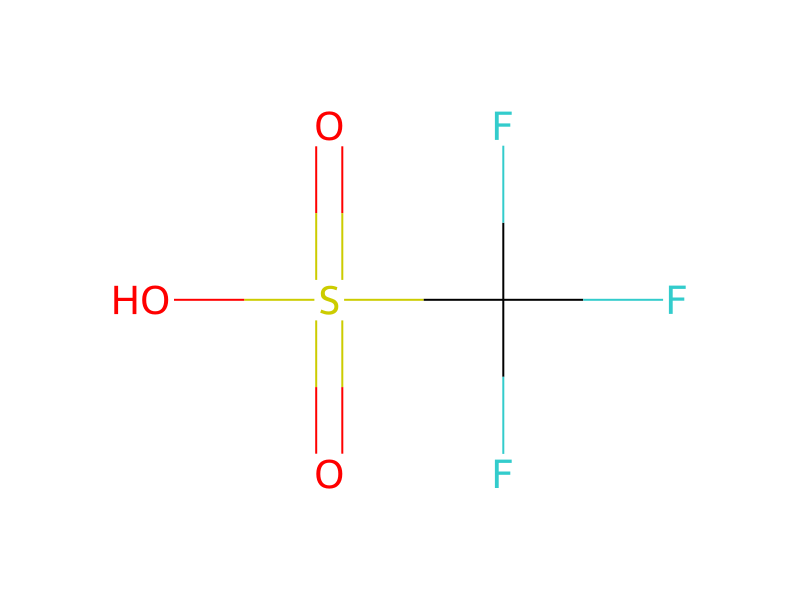 HCID 62406Trifluoromethanesulfonic acid
 HCID 65367Trimethylsilyl triflate
 HCID 144968Benzyl 2,2,2-trichloroacetimidate
 HCID 439368D-Pantolactone
 HCID 2723955Triphenylcarbenium tetrafluoroborate
 HCID 5352426Tin atom
 HCID 10904004Triphenylmethyl perchlorate
 HCID 110872634-Methoxybenzyl 2,2,2-Trichloroacetimidate
Product 1

Reagents, catalysts & solvents 4
Conditions
- Temperature
- 0 °C
Procedure
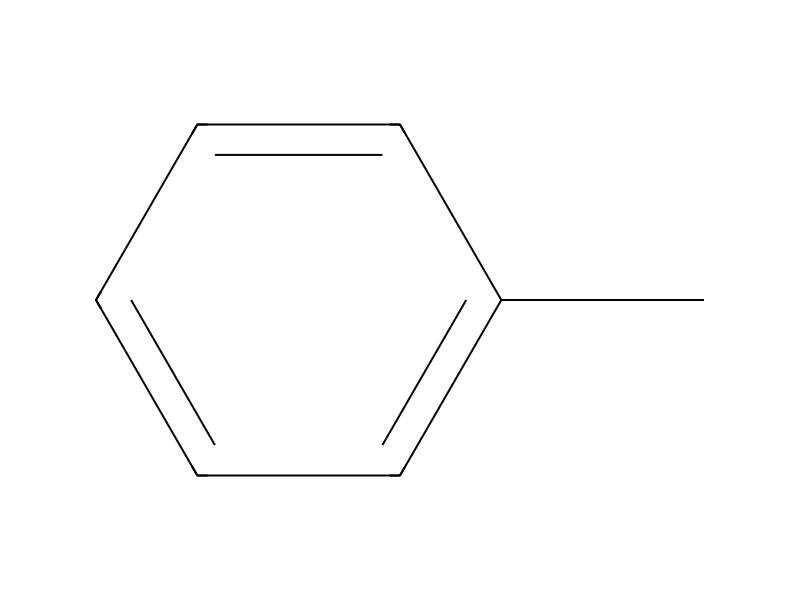
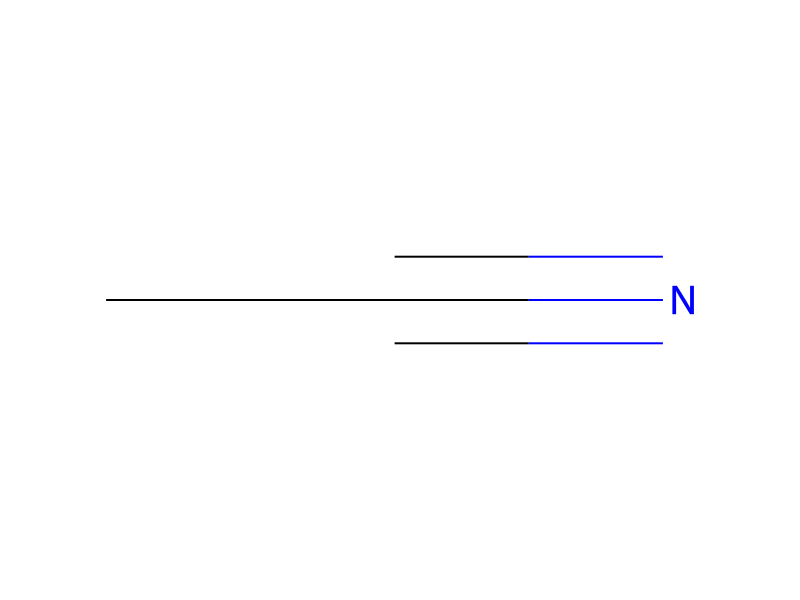
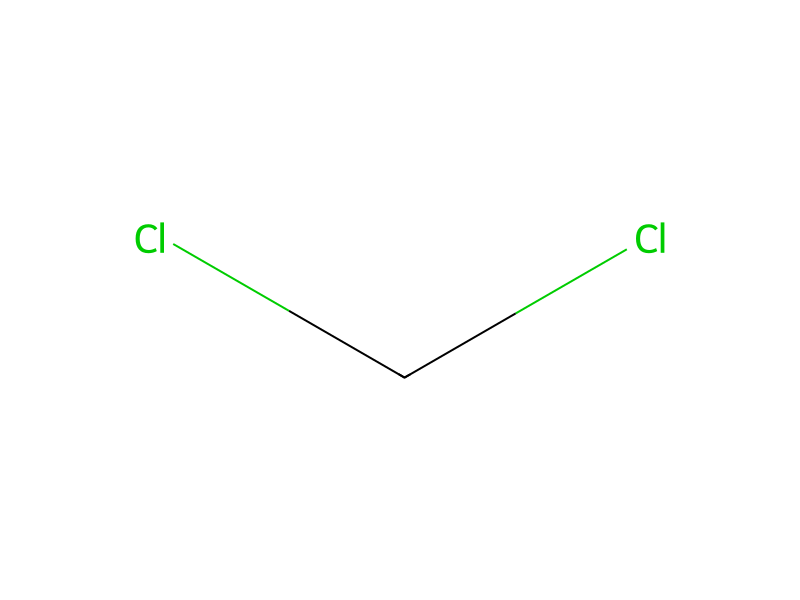
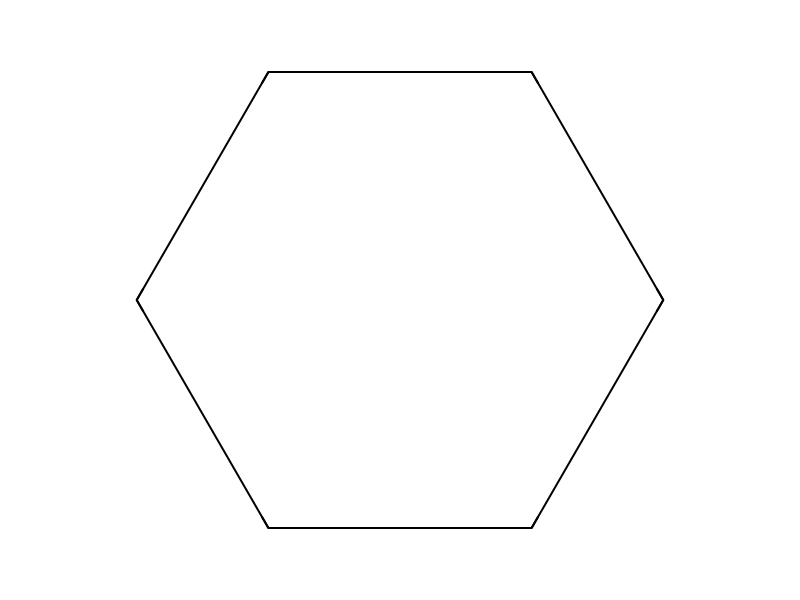
Adapting procedures or variations thereof according to O'Brien et al., Tetrahedron Lett. 2002, 43, 5491-5494; Weinges et al., Chem. Ber. 1994, 127, 1305-1309; Johnston et al., J. Chem. Soc. Perkin Trans. 1, 2000, 5, 681-695; Iversen et al, J. Chem. Soc. Chem. Commun. 1981, 1240-1241; Wessel et al. J. Chem. Soc. Perkin Trans. 1, 1985, 2247-2250; Enders et al., Org. Syntheses 2002, 78, 177-183; and Ra1 et al., Tetrahedron Lett. 2003, 44, 2267-2269, in a representative example, an oven-dried three necked 3,000 mL round bottomed flask equipped with a Tallboys 138 over-head mechanical stirrer was charged under a nitrogen atmosphere with 97.6-117.1 g (750-900 mmol, 1.25-1.5 mol-eq.) of D-pantolactone. The lactone was dissolved in a mixture of 700 mL of anhydrous cyclohexane (Chx) and 300 mL of anhydrous dichloromethane (DCM). One-hundred twelve (112) mL (151.5 g, 600 mmol) of commercially available O-benzyl 2,2,2-trichloroacetimidate or suitable derivative thereof such as O-(4-methoxybenzyl) 2,2,2-trichloroacetimidate were added and the solution cooled to ca. 0° C. (ice bath). Ca. 2.65 mL (ca. 4.50 g, ca. 30 mmol, ca. 5 mol-%) of anhydrous trifluoromethanesulfonic acid (triflic acid) was added dropwise to the stirred reaction mixture. (Caution: The O-benzylation reaction is exothermic!) Other useful catalyst systems include Brønstedt-acids such as paratoluenesulfonic acid (TsOH), camphorsulphonic acid (CSA), trifluoroacetic acid (TFA), and Lewis-acids such as trifluoroborane diethyl ether complex (BF3.Et2O), trityl tetrafluoroborate (TrBF4), trityl perchlorate (TrClO4), trimethylsilyl trifluoromethanesulfonate (TMSOTf), or tin- and lanthanide triflates (Sn(OTf)2, Ln(OTf)3 in similar or other suitable solvents or mixtures thereof such as toluene or acetonitrile. The reaction was stirred with gradual warming to room temperature for approximately 24 hours. The reaction was then quenched by addition of water and the reaction mixture was diluted with hexane (Hxn). The reaction mixture was stirred for an additional three hours to ensure hydrolysis of unreacted O-benzyl or (4-methoxybenzyl) 2,2,2-trichloroacetimidate. The reaction mixture was filtered to remove part of the precipitated 2,2,2-trichloroacetamide. After phase separation, the aqueous phase was extracted three more times with hexanes (Hxn), diethyl ether (Et2O), or other suitable solvent. The combined organic extracts were washed with a saturated aqueous solution of sodium hydrogen carbonate (NaHCO3), brine, and dried over anhydrous magnesium sulfate (MgSO4). After filtration and evaporation of the solvents under reduced pressure using a rotary evaporator, the O-protected D- or D/L-pantolactone was obtained as a yellow-brown to colorless, clear oil, typically of high chemical purity as determined by TLC and/or 1H NMR spectroscopy, that solidified upon refrigeration (4° C.). The material thus prepared was generally of sufficient purity to be used directly in the next step without further isolation or purification. Optionally, the isolated material was further purified by silica gel column chromatography using ethyl acetate (EtOAc) and hexane (Hxn) or n-heptane (Hptn) mixtures and/or gradients as eluent to provide O-protected D-pantolactone as a colorless, viscous oil or solid. O-protected D-pantolactone was also further purified by crystallization from pentane (Pnt), hexanes (Hxn), or n-heptane (Hptn) to provide colorless crystals.
Workup
- customequipped with a Tallboys 138 over-head mechanical stirrer
- custom(Caution: The O-benzylation reaction
- temperaturewith gradual warming to room temperature for approximately 24 hours
- customThe reaction was then quenched by addition of water
- additionthe reaction mixture was diluted with hexane (Hxn)
- stirringThe reaction mixture was stirred for an additional three hours
- customhydrolysis of unreacted O-benzyl or (4-methoxybenzyl) 2,2,2-trichloroacetimidate
- filtrationThe reaction mixture was filtered
- customto remove part of the precipitated 2,2,2-trichloroacetamide
- customAfter phase separation
- extractionthe aqueous phase was extracted three more times with hexanes (Hxn), diethyl ether (Et2O), or other suitable solvent
- washThe combined organic extracts were washed with a saturated aqueous solution of sodium hydrogen carbonate (NaHCO3), brine
- dry with materialdried over anhydrous magnesium sulfate (MgSO4)
- filtrationAfter filtration and evaporation of the solvents under reduced pressure
- customa rotary evaporator
Sources & evidence
- ORD record
- ord-95e960614e194c248bb8591024b580dd
- Source dataset
- uspto-grants-2011_08
- Patent number
- US07994218B2
Reaction notes
Loading…