Iodine → HCID 44178039, compound
Reaction equation

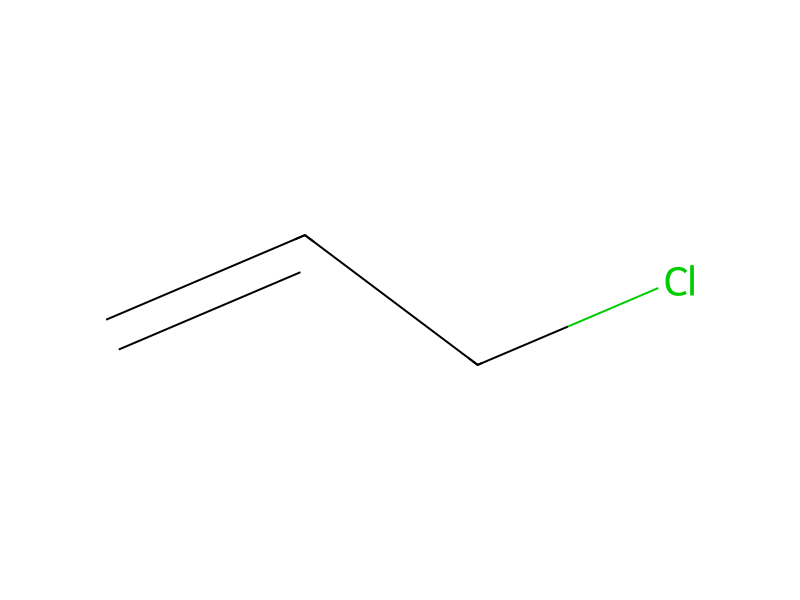
C(Cl)C=C.FC(F)(F)C(O)=O.Br[C:13]1[S:14][CH:15]=[C:16]([CH3:18])[N:17]=1.II.[Cl:21][C:22]1[CH:27]=[CH:26][CH:25]=[C:24]([Cl:28])[C:23]=1[C:29]1[N:30]([C:35]2[CH:40]=[CH:39][C:38]([C:41]3[CH:46]=[CH:45][CH:44]=[C:43]([S:47]([CH3:50])(=[O:49])=[O:48])[CH:42]=3)=[CH:37][CH:36]=2)[CH:31]=[C:32](I)[N:33]=1>C(#N)C.CCOCC.[Zn].C1C=CC(P(C2C=CC=CC=2)[C-]2C=CC=C2)=CC=1.C1C=CC(P(C2C=CC=CC=2)[C-]2C=CC=C2)=CC=1.Cl[Pd]Cl.[Fe+2].C(Cl)Cl>[Cl:28][C:24]1[CH:25]=[CH:26][CH:27]=[C:22]([Cl:21])[C:23]=1[C:29]1[N:30]([C:35]2[CH:36]=[CH:37][C:38]([C:41]3[CH:46]=[CH:45][CH:44]=[C:43]([S:47]([CH3:50])(=[O:49])=[O:48])[CH:42]=3)=[CH:39][CH:40]=2)[CH:31]=[C:32]([C:13]2[S:14][CH:15]=[C:16]([CH3:18])[N:17]=2)[N:33]=1Participants
Reactant 5




Product 1

Reagents, catalysts & solvents 5





Procedure
Into a 5 mL microwave vial was weighed 174 mg (2.7 mmol) of zinc powder and 45 mg (200 μmol) of anhydrous CoBr2. The solids were suspended in 1.7 mL of acetonitrile, and the resulting suspension was treated with 45 μL (0.55 mmol) of allyl chloride, followed by 15 μL of trifluoroacetic acid (33% v/v on allyl chloride). After stirring for 10 minutes at ambient temperature, the suspension was treated with 302 mg (1.7 mmol) of 2-bromo-4-methylthiazole as a solution in 300 μL of acetonitrile. After 2 hours stirring at ambient temperature an aliquot of the reaction suspension was treated with iodine in Et2O, quenched by addition of aqueous sodium thiosulfate to reduce the iodine, and dried over Na2SO4. GC/MS analysis of this sample showed a large quantity of iodo(methylthiazole) from iodination of the thiazole zinc reagent, and no trace of remaining 2-bromo-4-methylthiazole. Into the reaction vessel was added 156 mg (0.0.27 mmol) of 2-(2,6-dichlorophenyl)-4-iodo-1-(3′-(methylsulfonyl)biphenyl-4-yl)-1H-imidazole, 39 mg (48 μmol) of PdCl2(dppf).CH2Cl2. The reaction mixture was heated to 120° C. for 1 hour in the Biotage Initiator microwave reactor. LC/MS at this time showed a large peak for the desired product. The reaction mixture was treated with decolorizing carbon and diluted with EtOAc and with 1N HCl. The black suspension was filtered through a pad of Celite. The layers were separated and the acidic aqueous was extracted with EtOAc (3×). Combined organics were washed with saturated aqueous NaHCO3, brine, dried over Na2SO4, filtered and concentrated in vacuo to afford a brown film. The crude product was purified on the reverse phase preparative HPLC eluting w i t h acetonitrile/water. (Phenomenex Axia Gemini C18 30×100 mm 5 μm, A=H2O with 0.1% trifluoroacetic acid, B=acetonitrile with 0.1% trifluoroacetic acid, 17 minute gradient from 30% B to 100% B at 35 mL/minute). Product fractions were combined, made basic by the addition of sat. NaHCO3, and concentrated in vacuo to remove the acetonitrile. The resulting basic aqueous was extracted with CH2Cl2 (3×), and the organics were dried over Na2SO4, filtered and concentrated in vacuo. The resulting 2-(2-(2,6-dichlorophenyl)-1-(3′-(methylsulfonyl)biphenyl-4-yl)-1H-imidazol-4-yl)-4-methylthiazole was isolated as a pale brown powder, yield; 58.4 mg (39% yield); 1H NMR (400 MHz, CDCl3): δ 8.12-8.10 (m, 1H), 7.95-7.92 (m, 2H), 7.86-7.82 (m, 1H), 7.68-7.63 (m, 1H) 7.61-7.56 (m, 2H), 7.41-7.36 (m, 2H), 7.35-7.29 (m, 3H), 6.87-6.86 (m, 1H), 3.09 (s, 3H), 2.51 (d, J=1.0 Hz, 3H); MS (ES): 540.0 [M+H]+.
Workup
- stirringAfter 2 hours stirring at ambient temperature an aliquot of the reaction suspension
- customquenched by addition of aqueous sodium thiosulfate
- dry with materialdried over Na2SO4
- temperatureThe reaction mixture was heated to 120° C. for 1 hour in the Biotage Initiator microwave reactor
Sources & evidence
- ORD record
- ord-d41229ae616148c5805c89062e774ab9
- Source dataset
- uspto-grants-2011_08
- Patent number
- US07998995B2
Reaction notes
Loading…