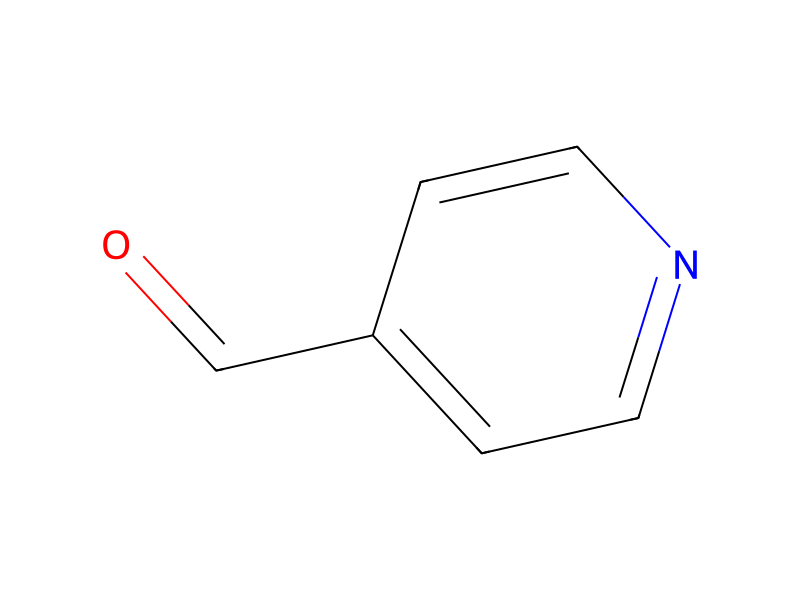
4-Pyridinecarboxaldehyde → HCID 59149811, compound
Reaction equation

[N:1]1[CH:6]=[CH:5][C:4]([CH:7]=O)=[CH:3][CH:2]=1.[CH3:9][C@H:10]1[CH2:15][NH:14][CH2:13][CH2:12][N:11]1[C:16]1[CH:17]=[CH:18][C:19]2[N:20]([C:22]([C:25]([F:28])([F:27])[F:26])=[N:23][N:24]=2)[N:21]=1>>[CH3:9][C@H:10]1[CH2:15][N:14]([CH2:7][C:4]2[CH:5]=[CH:6][N:1]=[CH:2][CH:3]=2)[CH2:13][CH2:12][N:11]1[C:16]1[CH:17]=[CH:18][C:19]2[N:20]([C:22]([C:25]([F:27])([F:26])[F:28])=[N:23][N:24]=2)[N:21]=1Participants
3


Procedure
A mixture of pyridine-4-carboxaldehyde and 6-[(2S)-2-methylpiperazin-1-yl]-3-(trifluoromethyl)-[1,2,4]triazolo[4,3-b]pyridazine was allowed to react by General Synthetic Method 5 to give 6-[(2S)-2-methyl-4-(pyridin-4-ylmethyl)piperazin-1-yl]-3-(trifluoromethyl)[1,2,4]triazolo[4,3-b]pyridazine in 53% yield.
Workup
- customto react by General Synthetic Method 5
Sources & evidence
- ORD record
- ord-cf346ca0bd8446f5836af6f026275164
- Source dataset
- uspto-grants-2011_08
- Patent number
- US08003649B2
Reaction notes
Loading…