Carbazole → 9-(3-Bromophenyl)-9H-carbazole
Reaction equation

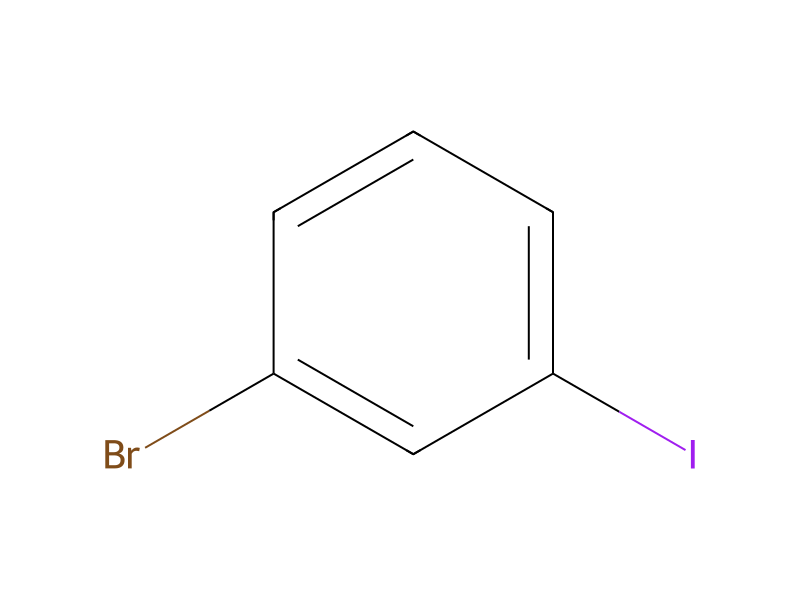
[CH:1]1[C:13]2[NH:12][C:11]3[C:6](=[CH:7][CH:8]=[CH:9][CH:10]=3)[C:5]=2[CH:4]=[CH:3][CH:2]=1.I[C:15]1[CH:16]=[C:17]([Br:21])[CH:18]=[CH:19][CH:20]=1.[Na]>C1C=CC(/C=C/C(/C=C/C2C=CC=CC=2)=O)=CC=1.C1C=CC(/C=C/C(/C=C/C2C=CC=CC=2)=O)=CC=1.C1C=CC(/C=C/C(/C=C/C2C=CC=CC=2)=O)=CC=1.[Pd].[Pd].C1C=CC(P(C2C=CC=CC=2)[C-]2C=CC=C2)=CC=1.C1C=CC(P(C2C=CC=CC=2)[C-]2C=CC=C2)=CC=1.[Fe+2].C1(C)C=CC=C(C)C=1>[Br:21][C:17]1[CH:16]=[C:15]([N:12]2[C:11]3[CH:10]=[CH:9][CH:8]=[CH:7][C:6]=3[C:5]3[C:13]2=[CH:1][CH:2]=[CH:3][CH:4]=3)[CH:20]=[CH:19][CH:18]=1Participants
Reactant 3


Product 1

Reagents, catalysts & solvents 3



Procedure
The 300 mL round bottom flask, equipped with magnetic stirrer and refluxed condenser, was charged with carbazole (7.1 g, 42.5 mmol), 3-iodobromobenzene (25.00 g, 88 mmol), Pd2(dba)3 (800 mg, 1 mol %), dppf (1′,1′-bis(diphenylphosphino)ferrocene (975 mg, 2 mol %), sodium t-buthoxide (6.3 g) and m-xylene (100 ml). The reaction mixture was heated to reflux and stirred under nitrogen atmosphere for 48 hours. Then reaction was cooled down to room temperature, filtered through silica plug and evaporated. The residue was subjected to column chromatography on silica gel, eluent gradient mixture hexane —hexane/ethyl acetate mixture 9:1, providing 7.00 g of 9-(3-bromo -phenyl) -9H-carbazole as white solid, structure was confirmed by NMR and GCMS spectroscopy.
Workup
- customThe 300 mL round bottom flask, equipped with magnetic stirrer
- temperaturerefluxed condenser
- temperatureThe reaction mixture was heated
- temperatureto reflux
- customThen reaction
- filtrationfiltered through silica plug
- customevaporated
Sources & evidence
- ORD record
- ord-39711de559d74713b836ac7e6b918ccd
- Source dataset
- uspto-grants-2011_08
- Patent number
- US08007927B2
Reaction notes
Loading…