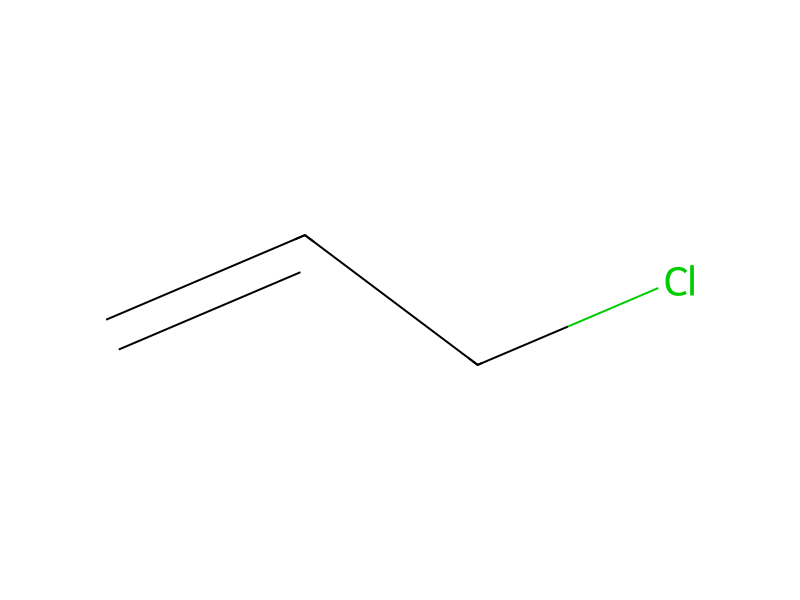
Allyl chloride → HCID 20277835, compound
Reaction equation

[CH3:1][N:2]([CH3:12])[C:3]1[CH:11]=[CH:10][C:6]([C:7]([OH:9])=[O:8])=[CH:5][CH:4]=1.CN(C)[C:15]1[CH:23]=CC(C(Cl)=O)=C[CH:16]=1.C(Cl)C=C.CN(C)C1C=CC(C([O-])=O)=CC=1.[Na+]>CN(C)C=O>[CH2:23]([O:8][C:7](=[O:9])[C:6]1[CH:10]=[CH:11][C:3]([N:2]([CH3:12])[CH3:1])=[CH:4][CH:5]=1)[CH:15]=[CH2:16]Participants
6



Procedure
Esters of p-dimethylaminobenzoic acid can be prepared by several methods. U.S. Pat. No. 2,202,865 describes the preparation of esters by reacting p-dimethylaminobenzoyl chloride with alcohols. Another method is by reacting an alkali salt of p-dimethylaminobenzoic acid with an alkene halide. Either method can be used but the latter is preferred. For example, if allyl chloride is added to sodium p-dimethylaminobenzoate in a suitable solvent such as dimethylformamide using a quaternary ammonium salt catalyst, allyl-p-dimethylaminobenzoate is obtained in yield of about 60%.
Sources & evidence
- ORD record
- ord-86abfd276f774e4996499dc8cf43d88f
- Source dataset
- uspto-grants-1978_03
- Patent number
- US04078054
Reaction notes
Loading…