Acetic Anhydride → 19-Acetoxyandrost-4-en-3,17-dione
Reaction equation

[OH:1][CH2:2][C@@:3]12[C@@H:20]3[C@H:11]([C@H:12]4[C@@:16]([CH2:18][CH2:19]3)([CH3:17])[C:15](=[O:21])[CH2:14][CH2:13]4)[CH2:10][CH2:9][C:8]1=[CH:7][C:6](=[O:22])[CH2:5][CH2:4]2.[C:23](OC(=O)C)(=[O:25])[CH3:24]>N1C=CC=CC=1>[C:23]([O:1][CH2:2][C@@:3]12[C@@H:20]3[C@H:11]([C@H:12]4[C@@:16]([CH2:18][CH2:19]3)([CH3:17])[C:15](=[O:21])[CH2:14][CH2:13]4)[CH2:10][CH2:9][C:8]1=[CH:7][C:6](=[O:22])[CH2:5][CH2:4]2)(=[O:25])[CH3:24]Participants
4
Reactant 2

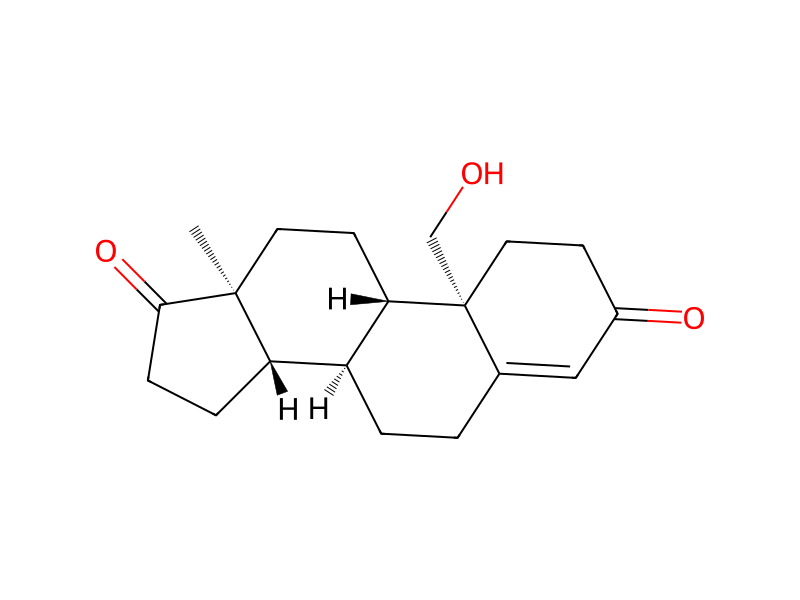
Product 1

Reagents, catalysts & solvents 1

Procedure
A solution of 19-hydroxyandrost-4-ene-3,17-dione in acetic anhydride and pyridine is allowed to stand overnight after which the reaction mixture is poured into ice water. The resulting solid is collected, dried and recrystallized from hexane to give 19-acetoxyandrost-4-ene-3,17-dione.
Workup
- customThe resulting solid is collected
- customdried
- customrecrystallized from hexane
Sources & evidence
- ORD record
- ord-86189e90cd1540e8824d57294aa5db8c
- Source dataset
- uspto-grants-1978_03
- Patent number
- US04078061
Reaction notes
Loading…