Sodium Sulfate → 2-Methyl-1,2,3,4-tetrahydrobenzo[g]isoquinolin-5-amine
Reaction equation

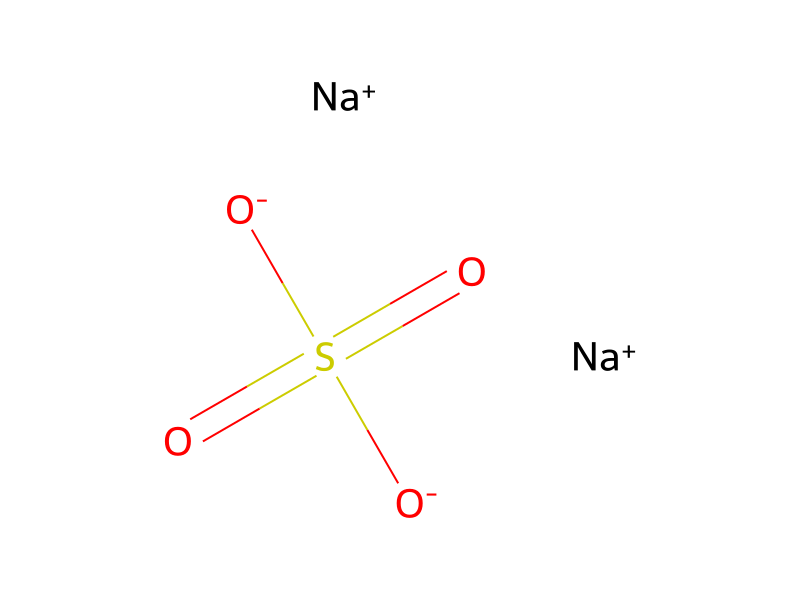
C(O[C:4]([N:6]1[CH2:15][CH2:14][C:13]2[C:8](=[CH:9][C:10]3[CH:20]=[CH:19][CH:18]=[CH:17][C:11]=3[C:12]=2[NH2:16])[CH2:7]1)=O)C.[H-].[Al+3].[Li+].[H-].[H-].[H-].S([O-])([O-])(=O)=O.[Na+].[Na+]>O1CCCC1>[NH2:16][C:12]1[C:11]2[CH:17]=[CH:18][CH:19]=[CH:20][C:10]=2[CH:9]=[C:8]2[C:13]=1[CH2:14][CH2:15][N:6]([CH3:4])[CH2:7]2Participants
Reactant 3


Product 1

Reagents, catalysts & solvents 1

Procedure
A solution of 50.0 g of 5-amino-1,2,3,4-tetrahydrobenzo[g]isoquinolin-2-ylcarboxylic acid ethyl ester (see Example 4a-c for production) in 1.2 litres of anhydrous tetrahydrofuran is added dropwise at temperatures of between 15° - 30° to a suspension of 23.0 g of lithium aluminium hydride in 500 ml of anhydrous tetrahydrofuran while cooling. The reaction mixture is stirred for 5 hours at the boiling temperature, is cooled to 0° and is decomposed by the dropwise addition of 90 ml of a saturated sodium sulphate solution at 0° - 5°. The precipitated inorganic product is filtered off, is washed with tetrahydrofuran and concentrated by evaporation. The title compound crystallizes from the evaporation residue with the addition of ethanol and is again recrystallized from ethanol. M.Pt.: 97° - 99°.
Workup
- temperaturewhile cooling
- temperatureis cooled to 0°
- filtrationThe precipitated inorganic product is filtered off
- washis washed with tetrahydrofuran
- concentrationconcentrated by evaporation
- customThe title compound crystallizes from the evaporation residue with the addition of ethanol
- customis again recrystallized from ethanol
Sources & evidence
- ORD record
- ord-1b8cdd42f1b94523a537b2a09dc0d04f
- Source dataset
- uspto-grants-1978_03
- Patent number
- US04081543
Reaction notes
Loading…