Citric Acid → 2-[2-(Dodecyloxy)-2-oxoethyl]-2-hydroxybutanedioic acid
Reaction equation

[C:1]([OH:13])(=[O:12])[CH2:2][C:3]([CH2:8][C:9]([OH:11])=[O:10])([C:5]([OH:7])=[O:6])[OH:4].[CH2:14](O)[CH2:15][CH2:16][CH2:17][CH2:18][CH2:19][CH2:20][CH2:21][CH2:22][CH2:23][CH2:24][CH3:25].C1(C)C=CC(S(O)(=O)=O)=CC=1>O1CCOCC1>[CH2:25]([O:10][C:9](=[O:11])[CH2:8][C:3]([CH2:2][C:1]([OH:13])=[O:12])([C:5]([OH:7])=[O:6])[OH:4])[CH2:24][CH2:23][CH2:22][CH2:21][CH2:20][CH2:19][CH2:18][CH2:17][CH2:16][CH2:15][CH3:14]Participants
5
Reactant 3


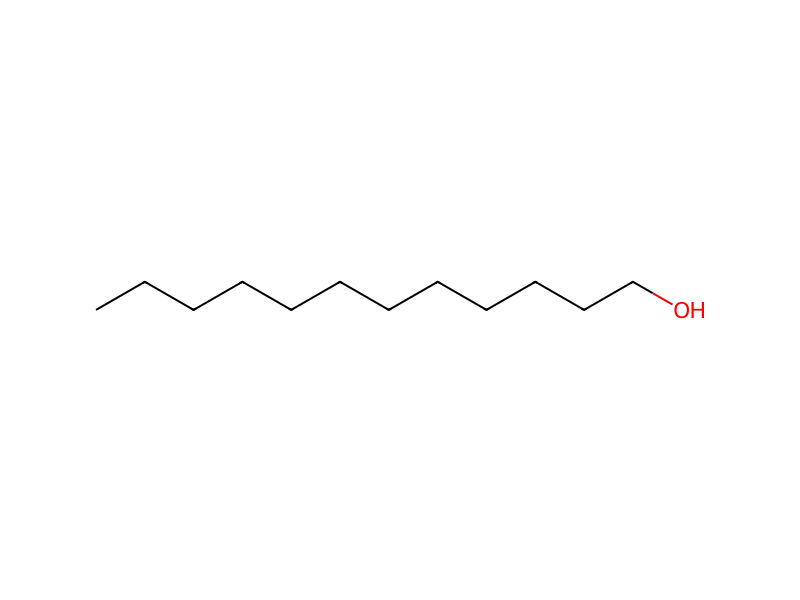
Product 1

Reagents, catalysts & solvents 1

Procedure
A blend of citric acid (63 grams, 0.3 mole), dodecyl alcohol (55.8 grams, 0.31 mole), p-toluene sulfonic acid (0.1 gram, 0.6 mole) and 300 ml. of dioxane was refluxed for 72 hours, passing the condensed vapor through 4A molecular sieve. The dioxane solvent was then evaporated under reduced pressure (30 mm.) to a 150 gram residue. This mixture was diluted with 200 ml. of toluene and the reaction mixture subsequently stripped to 60° C. at 5 mm. pressure. The residue was an amber oil which solidified to a cream colored soft solid, weight 106.6 grams (Theory 108 grams).
Workup
- customThe dioxane solvent was then evaporated under reduced pressure (30 mm.) to a 150 gram residue
- additionThis mixture was diluted with 200 ml
- customsubsequently stripped to 60° C. at 5 mm
Sources & evidence
- ORD record
- ord-a245c73507f34b3c9c7c843f1a9816b0
- Source dataset
- uspto-grants-1981_06
- Patent number
- US04271032
Reaction notes
Loading…