Resorcinol → 3-Isopropylphenol
Reaction equation

C1(C=CC=C(O)C=1)O.C(C1C=C(C=CC=1)C(O)(C)C)(C)C.C(C1C=C(C=CC=1)C(O)(C)C)(=O)C.[C:35]([C:38]1[CH:39]=[C:40]([OH:44])[CH:41]=[CH:42][CH:43]=1)([CH3:37])=[CH2:36].C(C1C=C(C(=O)C)C=CC=1)(C)=C.C(C1C=C(C(C)C)C=CC=1)(C)=C>CC(C)=O>[CH:35]([C:38]1[CH:39]=[C:40]([OH:44])[CH:41]=[CH:42][CH:43]=1)([CH3:37])[CH3:36]Participants
8
Reactant 6
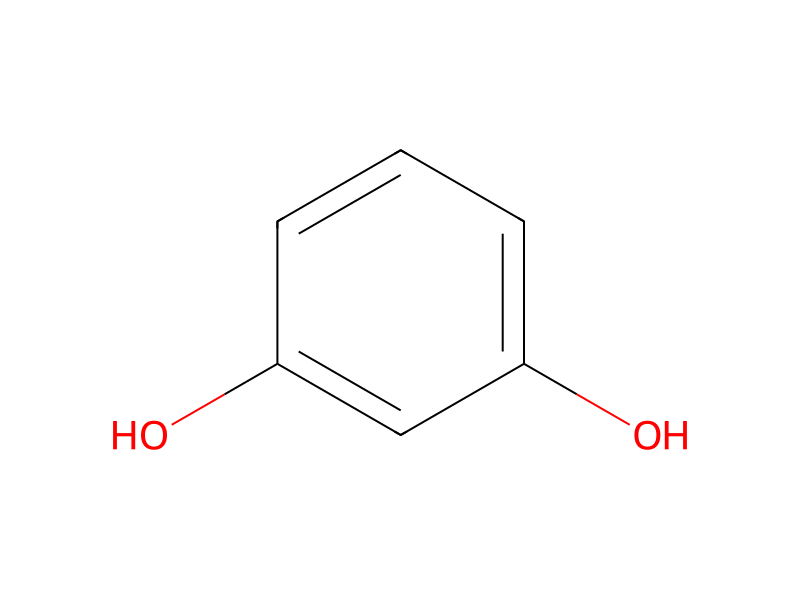


Product 1

Reagents, catalysts & solvents 1

Procedure
The reaction mixture formed by the acid-decomposition contains not only resorcin, acetone and the inert solvent used but also various by-products, for example, carbinols such as m-isopropyl-α,α-dimethylbenzyl alcohol, m-acetyl-α,α-dimethylbenzyl alcohol and m-hydroxy-α,α-dimethylbenzyl alcohol, olefins such as m-isopropenylphenol, m-isopropenylacetophenone and m-isopropenylcumene, peroxides which are estimated to have been formed by condensation reaction between carbinols or olefins and hydroperoxides, m-isopropylphenol, m-hydroxyacetophenone, and high-boiling-point condensates.
Workup
- customThe reaction mixture formed by the acid-decomposition
Sources & evidence
- ORD record
- ord-d15bd9b88d374309b04d2b44561763e1
- Source dataset
- uspto-grants-1981_06
- Patent number
- US04273623
Reaction notes
Loading…