2-Phenylindole → HCID 54180223, compound
Reaction equation

[C:1]1([C:7]2[NH:8][C:9]3[C:14]([CH:15]=2)=[CH:13][CH:12]=[CH:11][CH:10]=3)[CH:6]=[CH:5][CH:4]=[CH:3][CH:2]=1.[Cl:16][C:17]1=[C:18]([Cl:24])[C:19]([O:21][C:22]1=[O:23])=[O:20]>C(Cl)CCl>[C:1]1([C:7]2[NH:8][C:9]3[C:14]([C:15]=2[C:19](=[O:20])[C:18]([Cl:24])=[C:17]([Cl:16])[C:22]([OH:23])=[O:21])=[CH:13][CH:12]=[CH:11][CH:10]=3)[CH:6]=[CH:5][CH:4]=[CH:3][CH:2]=1Participants
4
Reactant 2

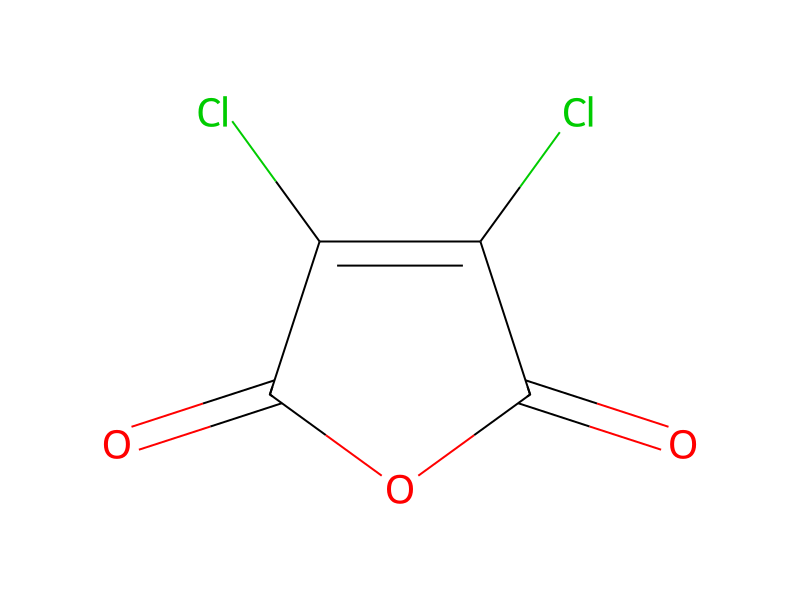
Product 1

Reagents, catalysts & solvents 1

Procedure
A mixture of 10.0 g (0.052 mole) of 2-phenylindole, 8.8 g (0.052 mole) of dichloromaleic anhydride and 150 ml of ethylene dichloride was stirred at ambient temperature for approximately 48 hours. The solid that formed was collected by filtration and dried at 60° C. in vacuo to obtain 4-(2-phenyl-3-indolyl)-2,3-dichloro-4-oxo-2-butenoic acid (Formula VIII: R=Y=H; R1 =C6H5) as a tan-colored solid which melted over the range 150°-152° C.
Workup
- customThe solid that formed
- filtrationwas collected by filtration
- customdried at 60° C. in vacuo
Sources & evidence
- ORD record
- ord-e50ce1a979c0471899d26365f361ca95
- Source dataset
- uspto-grants-1981_06
- Patent number
- US04275121
Reaction notes
Loading…