Ethanolamine → benzyl N-(2-hydroxyethyl)carbamate
Reaction equation

[CH2:1]([CH2:3][NH2:4])[OH:2].Cl[C:6]([O:8][CH2:9][C:10]1[CH:15]=[CH:14][CH:13]=[CH:12][CH:11]=1)=[O:7]>[OH-].[Na+].O1CCOCC1>[C:6]([NH:4][CH2:3][CH2:1][OH:2])([O:8][CH2:9][C:10]1[CH:15]=[CH:14][CH:13]=[CH:12][CH:11]=1)=[O:7]Participants
Reactant 2

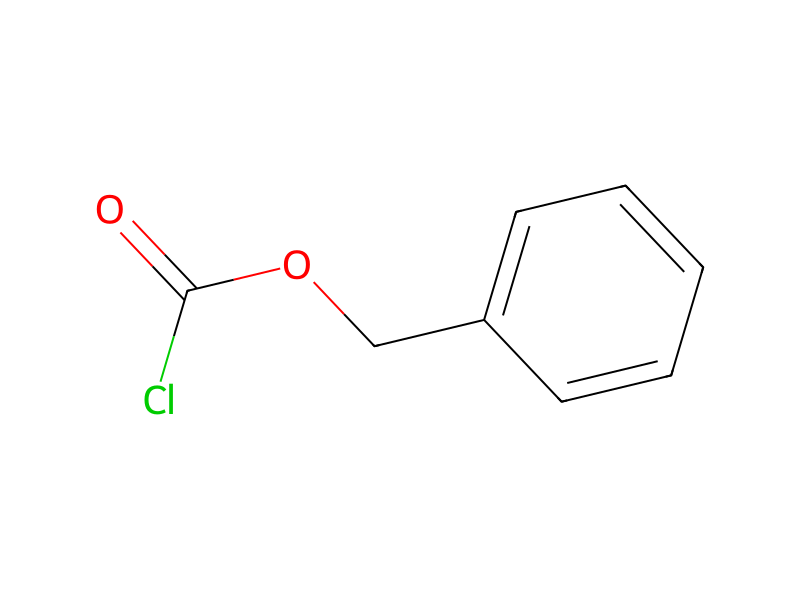
Product 1

Reagents, catalysts & solvents 2


Procedure
The procedure is generally as depicted in FIG. 16. Dissolve 6.1 g (10 mmol) of ethanolamine in 10 mL of 1N NaOH. Cool the solution with an ice bath and add to it a solution of 1.7 g (10 mmol) of benzyl chloroformate dissolved in 10 mL of 1,4-dioxane, dropwise, over a period of 30 minutes. When the addition is complete, remove the ice bath and stir for 30 minutes. Add 100 mL of ethyl acetate and wash with 3×50 mL of 1.0N HCl. Wash the ethyl acetate layer with 50 mL of brine. Dry the ethyl acetate layer over anhydrous sodium sulfate. Filter and concentrate the filtrate to a residue. Final purification is achieved by flash chromatography on silica gel with ethyl acetate/hexane as the eluent. N-Cbz-ethanolamine, compound 52, is isolated as an oil.
Workup
- temperatureCool the solution with an ice bath
- additionWhen the addition
- customremove the ice bath
- additionAdd 100 mL of ethyl acetate
- washwash with 3×50 mL of 1.0N HCl
- washWash the ethyl acetate layer with 50 mL of brine
- dry with materialDry the ethyl acetate layer over anhydrous sodium sulfate
- filtrationFilter
- concentrationconcentrate the filtrate to a residue
- customFinal purification
Sources & evidence
- ORD record
- ord-a275997db7ea4ce694fb6cc51fdd1a23
- Source dataset
- uspto-grants-1992_12
- Patent number
- US05175257
Reaction notes
Loading…