Triethylamine → HCID 10381677, compound
Reaction equation

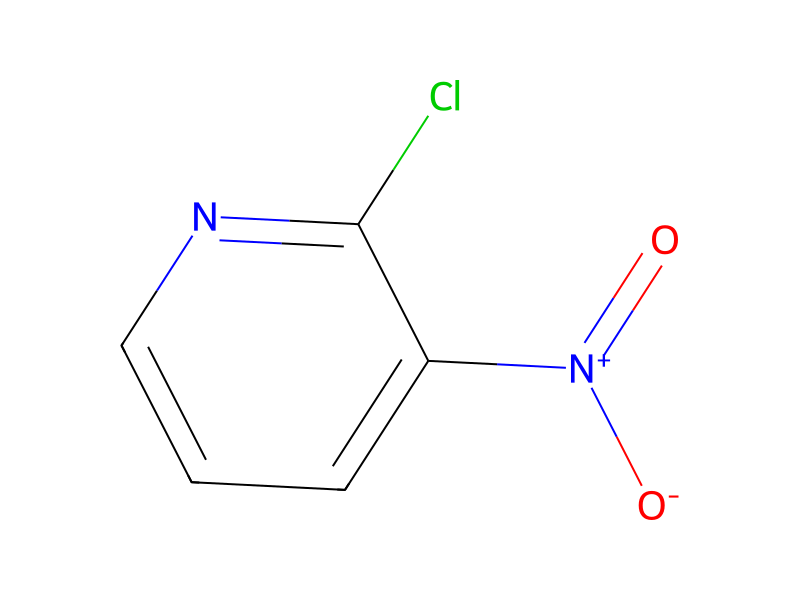
[NH2:1][C:2]1[CH:3]=[C:4]2[C:8](=[CH:9][CH:10]=1)[NH:7][CH:6]=[C:5]2[CH2:11][CH2:12][N:13]([CH3:15])[CH3:14].Cl[C:17]1[C:22]([N+:23]([O-:25])=[O:24])=[CH:21][CH:20]=[CH:19][N:18]=1.C(N(CC)CC)C>O1CCOCC1>[CH3:15][N:13]([CH3:14])[CH2:12][CH2:11][C:5]1[C:4]2[C:8](=[CH:9][CH:10]=[C:2]([NH:1][C:17]3[C:22]([N+:23]([O-:25])=[O:24])=[CH:21][CH:20]=[CH:19][N:18]=3)[CH:3]=2)[NH:7][CH:6]=1Participants
Reactant 3


Product 1

Reagents, catalysts & solvents 1

Conditions
- Temperature
- 101 °C
Procedure
5-Amino-3-(2-dimethylaminoethyl)indole [Shaw, E. and Woolley, D. W., J. Am. Chem. Soc., 1877 (1953)] and 2-chloro-3-nitropyridine were used. Triethylamine was used as base, p-dioxane was used as solvent, and the reaction was heated at reflux (101° C.) for 3 hours. Chromatography afforded the title compound (67%) as a dark red foam: mp, 59.0°-61.0° C.; 1H NMR (CDCl3) δ8.66 (br s, 1H), 8.51 (dd, J=8.3 and 1.8 Hz, 1H), 8.41 (dd, J=4.4 and 1.8 Hz, 1H), 7.76 (br s, 1H), 7.30-7.24 (m, 2H), 6.97(d, J=2.1 Hz, 1H), 6.73 (dd, J=8.3 and 4.4 Hz, 1H), 2.97-2.91 (m, 2H), 2.70-2.63 (m, 2H), 2.36 (s, 6H); 13C NMR (CDCl3) δ155.7, 151.5, 135.5, 134.5, 129.4, 128.2, 127.9, 122.8, 119.3, 114.4, 114.3, 113.0, 111.5, 60.3, 45.4, 23.7. Anal. calcd. for C17N19O2.1/3H2O: C, 61.62; H, 5.98; N, 21.13. Found: C, 61.53; H, 5.65; N, 20.80.
Workup
- temperaturethe reaction was heated
Sources & evidence
- ORD record
- ord-982c73b460e143df894515c0e01c3cad
- Source dataset
- uspto-grants-1997_06
- Patent number
- US05639752
Reaction notes
Loading…