4-Toluenesulfonyl chloride → Cyclohexyl p-toluenesulfonate
Reaction equation

[CH:1]1([OH:7])[CH2:6][CH2:5][CH2:4][CH2:3][CH2:2]1.[C:8]1([CH3:18])[CH:13]=[CH:12][C:11]([S:14](Cl)(=[O:16])=[O:15])=[CH:10][CH:9]=1>N1C=CC=CC=1>[C:8]1([CH3:18])[CH:13]=[CH:12][C:11]([S:14]([O:7][CH:1]2[CH2:6][CH2:5][CH2:4][CH2:3][CH2:2]2)(=[O:16])=[O:15])=[CH:10][CH:9]=1Participants
Reactant 2

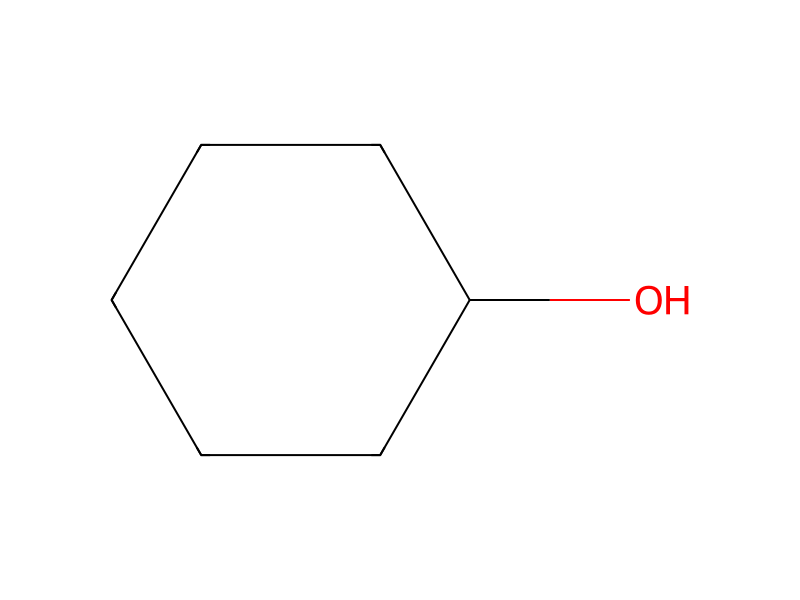
Product 1

Reagents, catalysts & solvents 1

Procedure
A round-bottomed flask (100 cc) was charged with cyclohexyl alcohol (5.01 9, 50.0 mmol) and p-toluenesulfonyl chloride (10.6 g, 55.6 mmol), followed by the addition of pyridine (20 mL) under ice cooling to form a solution. The solution was stirred for 8 h as it was warmed gradually to room temperature. After completion of the reaction, the reaction mixture was poured into ice water and stirred thoroughly. Following extraction with ether (50 mL×2), the organic layers were washed with 2N HCl, water and saturated brine and dried with anhydrous magnesium sulfate. After the desiccant was removed, the solvent was distilled off under vacuum to give cyclohexyl p-toluenesulfonate as a colorless clear oil (12.7 g; yield=99.0%). 1H-NMR(CDCl3,TMS,ppm): δ1.12-1.88(10H,m), 2.43(3H,s), 4.46(1H,m), 7.28(2H,d,J=8.9Hz), 7.76(2H,d,J=8.9Hz).
Workup
- customto form a solution
- customAfter completion of the reaction
- stirringstirred thoroughly
- extractionextraction with ether (50 mL×2)
- washthe organic layers were washed with 2N HCl, water and saturated brine
- dry with materialdried with anhydrous magnesium sulfate
- customAfter the desiccant was removed
- distillationthe solvent was distilled off under vacuum
Sources & evidence
- ORD record
- ord-b30bf5716b3546b49897ecb11b9b30ca
- Source dataset
- uspto-grants-1997_06
- Patent number
- US05639915
Reaction notes
Loading…