Phosphorus tribromide → 4-(Bromomethyl)-5-cyclopropyl-3-(2,6-dichlorophenyl)isoxazole
Reaction equation

[CH:1]1([C:4]2[O:8][N:7]=[C:6]([C:9]3[C:14]([Cl:15])=[CH:13][CH:12]=[CH:11][C:10]=3[Cl:16])[C:5]=2[CH2:17]O)[CH2:3][CH2:2]1.P(Br)(Br)[Br:20].C(=O)(O)[O-].[Na+]>ClCCl>[Br:20][CH2:17][C:5]1[C:6]([C:9]2[C:14]([Cl:15])=[CH:13][CH:12]=[CH:11][C:10]=2[Cl:16])=[N:7][O:8][C:4]=1[CH:1]1[CH2:3][CH2:2]1Participants
5
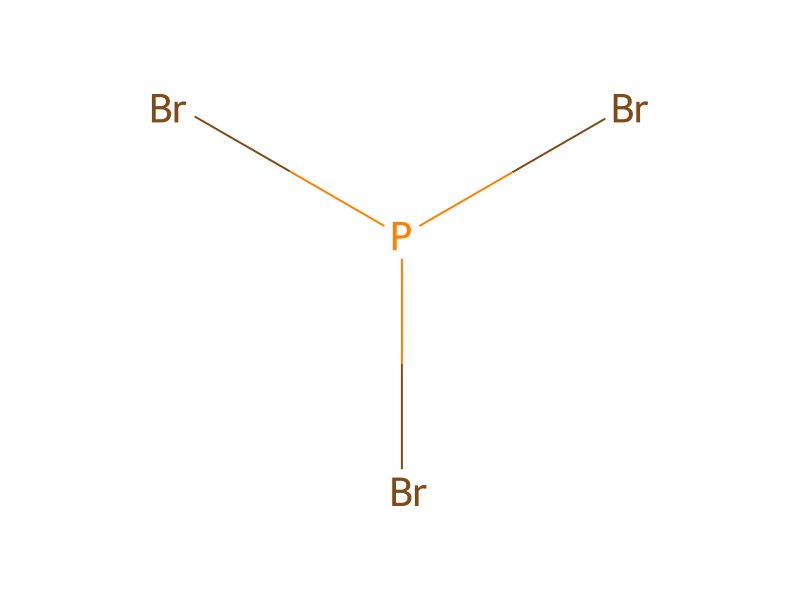




Procedure
Alternate procedure: Cool a solution of (5-cyclopropyl-3-(2,6-dichloro-phenyl)-isoxazol-4-yl)-methanol (100 g, 0.35 mol) in dichloromethane (1200 mL) to −10° C. Add phosphorous tribromide (105 g, 0.39 mol) dropwise while maintaining the internal temperature between −5° C. and 0° C. Stir at −5° C. to 0° C. for 30 min. Allow to warm to between 20° C. and 25° C. and stir at 20° C. to 35° C. for 2 h. Cool the reaction mixture to 0° C. to 5° C. Add an aqueous solution of sodium bicarbonate (775 mL) dropwise. Separate the phases. Extract the aqueous phase with dichloromethane (2×350 mL). Wash the combined organic phases with water (3×500 mL). Concentrate the organic phase to afford 115 g (94%) of the title compound as a solid.
Workup
- temperatureto warm to between 20° C. and 25° C.
- stirringstir at 20° C. to 35° C. for 2 h
- temperatureCool the reaction mixture to 0° C. to 5° C
- customSeparate the phases
- extractionExtract the aqueous phase with dichloromethane (2×350 mL)
- washWash the combined organic phases with water (3×500 mL)
- concentrationConcentrate the organic phase
Sources & evidence
- ORD record
- ord-e6b6b0800c7f4f429aa0a58738644800
- Source dataset
- uspto-grants-2012_04
- Patent number
- US08153624B2
Reaction notes
Loading…