Potassium Carbonate → 1-Isopropenyl-4,5-dimethoxy-2-nitro-benzene
Reaction equation

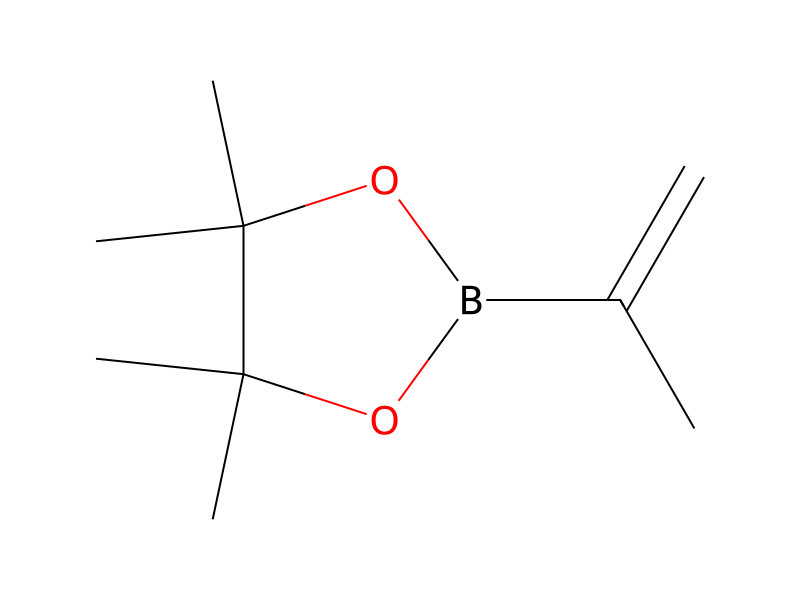
Br[C:2]1[CH:7]=[C:6]([O:8][CH3:9])[C:5]([O:10][CH3:11])=[CH:4][C:3]=1[N+:12]([O-:14])=[O:13].C(=O)([O-])[O-].[K+].[K+].[C:21](B1OC(C)(C)C(C)(C)O1)([CH3:23])=[CH2:22]>O1CCOCC1.C1C=CC([P]([Pd]([P](C2C=CC=CC=2)(C2C=CC=CC=2)C2C=CC=CC=2)([P](C2C=CC=CC=2)(C2C=CC=CC=2)C2C=CC=CC=2)[P](C2C=CC=CC=2)(C2C=CC=CC=2)C2C=CC=CC=2)(C2C=CC=CC=2)C2C=CC=CC=2)=CC=1>[C:21]([C:2]1[CH:7]=[C:6]([O:8][CH3:9])[C:5]([O:10][CH3:11])=[CH:4][C:3]=1[N+:12]([O-:14])=[O:13])([CH3:23])=[CH2:22]Participants
6
Reactant 3


Product 1

Reagents, catalysts & solvents 2


Conditions
- Temperature
- 100 °C
Procedure
1-Bromo-4,5-dimethoxy-2-nitro-benzene (6.55 g, 25.0 mmol), potassium carbonate (2 eq, 6.91 g) and tetrakis(triphenylphosphine)palladium(0) (0.125 eq, 3.61 g) were dissolved in dioxane. Isopropenylboronic acid pinacol ester (1 eq, 4.7 ml) was added and the mixture was heated to 100° C. overnight. Upon cooling the mixture was filtered through celite. The filtrate was concentrated in vacuo, and the residue was purified by flash chromatography (gradient 9:1 to 1:1 Hexanes/Ethyl Acetate) to give 1-isopropenyl-4,5-dimethoxy-2-nitro-benzene (1.59 g, 28.5%) as a yellow oil.
Workup
- temperatureUpon cooling the mixture
- filtrationwas filtered through celite
- concentrationThe filtrate was concentrated in vacuo
- customthe residue was purified by flash chromatography (gradient 9:1 to 1:1 Hexanes/Ethyl Acetate)
Sources & evidence
- ORD record
- ord-8a05b740cc2140619e5aff7f443c6dcb
- Source dataset
- uspto-grants-2012_04
- Patent number
- US08153809B2
Reaction notes
Loading…