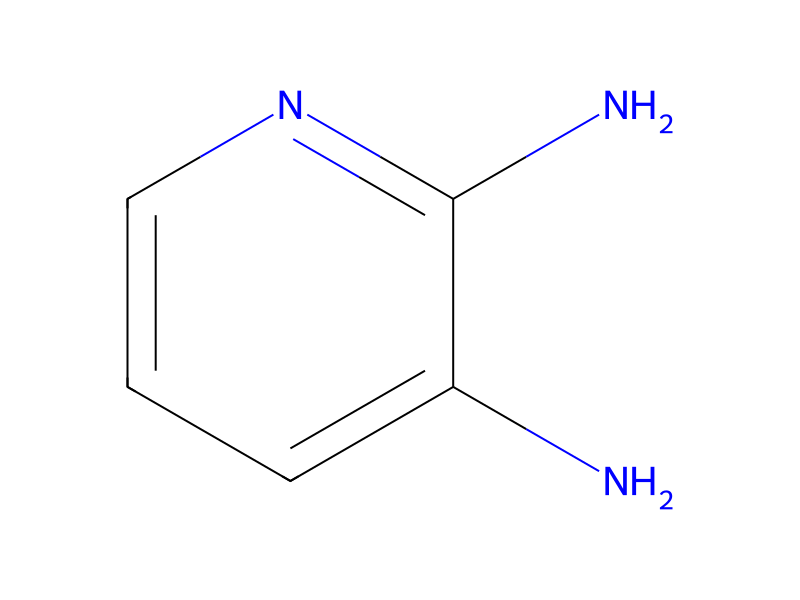
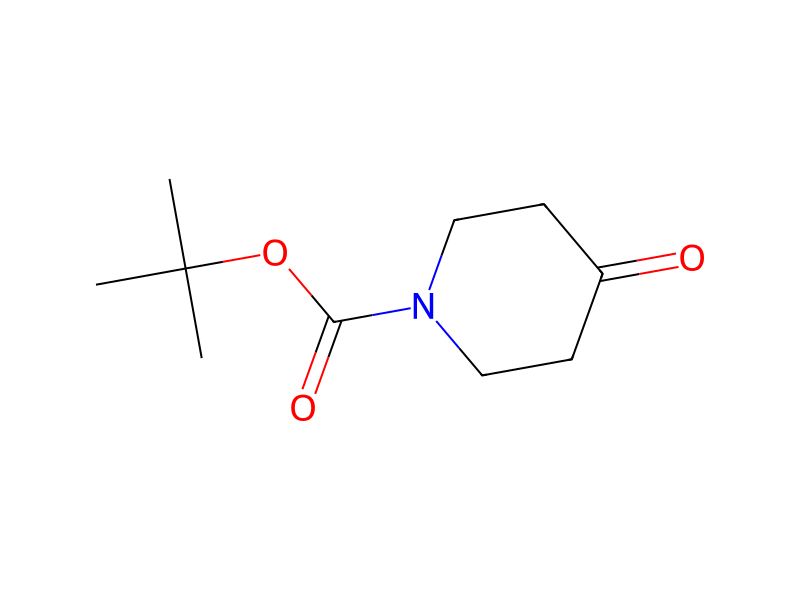
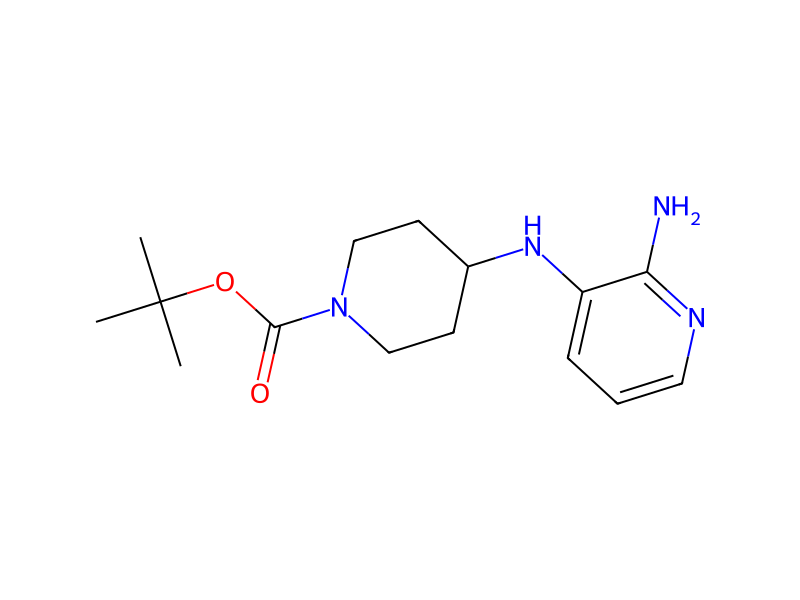
2,3-Diaminopyridine → tert-Butyl 4-[(2-aminopyridin-3-yl)amino]piperidine-1-carboxylate
Reaction equation

[NH2:1][C:2]1[C:7]([NH2:8])=[CH:6][CH:5]=[CH:4][N:3]=1.O=[C:10]1[CH2:15][CH2:14][N:13]([C:16]([O:18][C:19]([CH3:22])([CH3:21])[CH3:20])=[O:17])[CH2:12][CH2:11]1>ClCCCl>[NH2:1][C:2]1[C:7]([NH:8][CH:10]2[CH2:15][CH2:14][N:13]([C:16]([O:18][C:19]([CH3:22])([CH3:21])[CH3:20])=[O:17])[CH2:12][CH2:11]2)=[CH:6][CH:5]=[CH:4][N:3]=1Participants
4
Reactant 2
Product 1
Reagents, catalysts & solvents 1

Procedure
To a solution of 2,3-diaminopyridine (3.0 g, 27.5 mmol) in DCE (45 ml) was added tert-butyl 4-oxopiperidine-1-carboxylate (5.75 g, 28.8 mmol) and the reaction mixture stirred for min at RT before the portion-wise addition of NaBH(Oac)3 (8.7 g, 41.7 mmol) and continued stirring at RT until the reaction judged complete by LCMS. The reaction was quenched with 5% NaOH, the layers separated and the organic layer was dried over Na2SO4. Evaporation gave the desired product as a brown solid (4.96 g). LC/MS (10% to 99%): M/Z (M+H)+ (obs)=293; tR=2.31.
Workup
- customThe reaction was quenched with 5% NaOH
- customthe layers separated
- dry with materialthe organic layer was dried over Na2SO4
- customEvaporation
Sources & evidence
- ORD record
- ord-13691eb28d9e461da3de2f011c7fb27b
- Source dataset
- uspto-grants-2012_04
- Patent number
- US08163737B2
Reaction notes
Loading…